Is The Costanera Sur Reserve Free?
Yes, the Reserva Ecológica Costanera Sur is free for everyone. What the free entry includes, what still costs money, opening days and how the free walks connect to it.
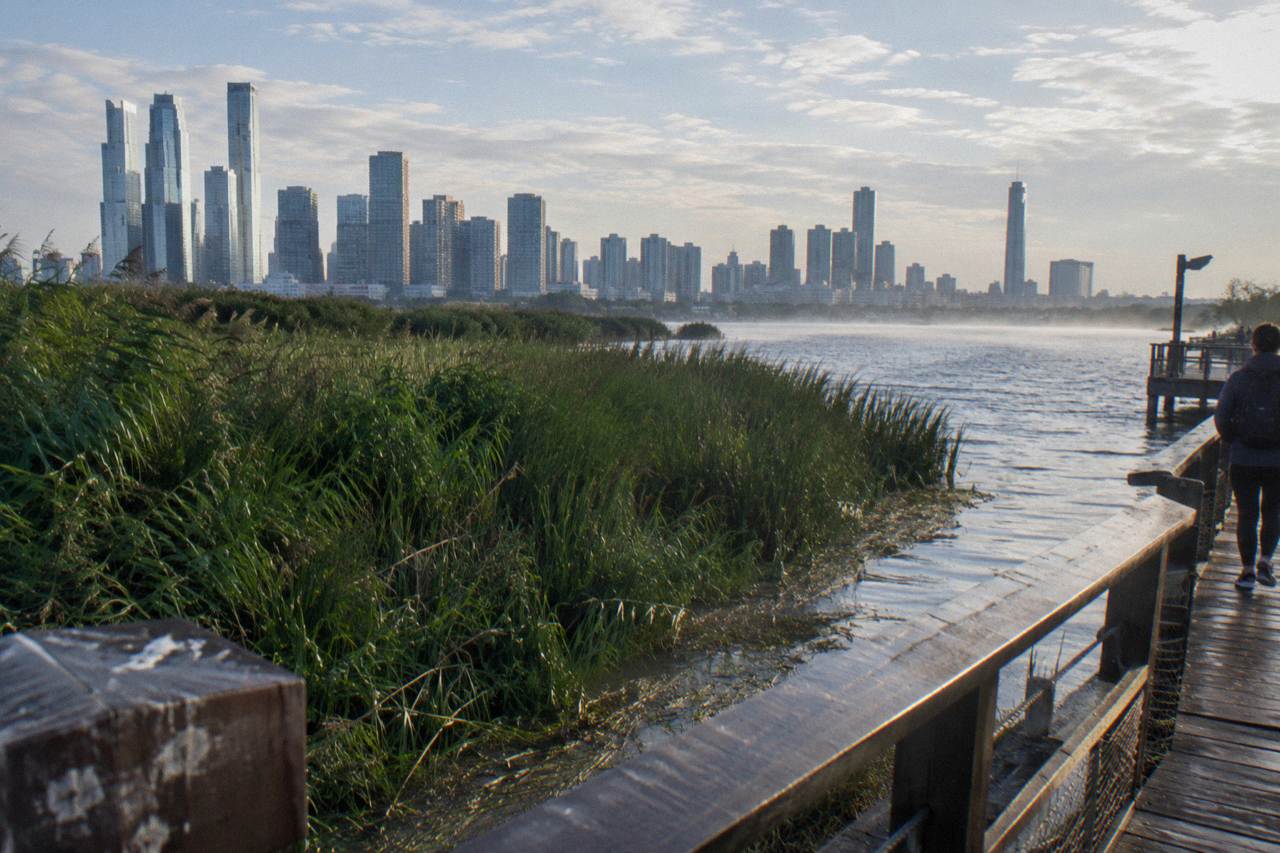
Is the city's largest nature reserve really free to enter? Yes. The Reserva Ecológica Costanera Sur is free for all visitors, with no admission charge for tourists or residents, on every day it opens. The reserve is open Tuesday to Sunday and on holidays, from 8:00 to 19:00 in the November to March summer schedule and 8:00 to 18:00 from April to October. It closes Mondays, except holidays, plus a short list of public dates.
In Short
The Reserva Ecológica Costanera Sur is free for everyone, tourist or resident, on every open day. It opens Tuesday to Sunday and holidays, 8:00 to 19:00 under the summer schedule in force from November to March and 8:00 to 18:00 from April to October. Mondays are closing days, except holidays, and the reserve also shuts in bad weather. Nothing inside charges admission; the paid extras are transport and anything you buy.
This question sits inside the Costanera Sur Ecological Reserve guide. For comparison, see the wider free things to do in Buenos Aires list.
Quick Facts
| Question | Answer |
|---|---|
| Is entry free? | Yes, for all visitors, no admission charge |
| Who is it free for? | Everyone, tourists and residents alike |
| What costs money? | Transport to the reserve, food and drink, guided extras you book |
| Opening days | Tuesday to Sunday and holidays |
| Closed | Mondays except holidays, 1 May, 24 and 25 December, 31 December and 1 January, and in bad weather |
| Summer hours (Nov to Mar) | 8:00 to 19:00 |
| Nearest free walk platform | GuruWalk, via the Costanera Sur nature walk meeting at the reserve |
Is The Costanera Sur Reserve Free?
Yes, entry to the Reserva Ecológica Costanera Sur is completely free for every visitor, with no resident-only rule, no DNI check, and no suggested donation at the gate. Argentine residents and foreign tourists pay nothing and skip the ticket window entirely. The only limits are the reserve's fixed closing days and possible shutdowns in bad weather.
That unconditional free status is worth pausing on, because so much of what looks free in this city carries a catch. The MALBA is half price on Wednesdays, never free, and only students, teachers and retirees enter at no charge, and only on that day. The city museums are free on Wednesdays for Argentine residents with DNI only. The Cementerio de la Recoleta is free for residents with DNI and paid for foreign visitors through the city's Entradas BA system. Against that backdrop, the reserve stands out: the city's own tourism listing shows it simply as free, with hours and no fee attached, as does the Buenos Aires city tourism site, which is the page to check before any visit because hours and closures are published there. One of the free walks starts in this part of the city: Costanera Sur Nature Walk.
The reserve sits on reclaimed land along the Río de la Plata waterfront, next to Puerto Madero, and it is one of the largest green spaces in the city that is free to walk. Its paths, lagoons and reed beds cost nothing to roam, and there is no separate paid zone, no paid viewpoint and no paid trail inside. That distinguishes it from places like the Parque Tres de Febrero, where the park and its lakes are free but the paddle boats are a paid business, or Tigre, where the Puerto de Frutos market is free to browse while the train and boat rides are paid.
For visitors planning a first day or two in the city, the reserve pairs naturally with a free guided walk. The walks below are pay-what-you-want tours on GuruWalk that cover the downtown core, and they are a good way to build the city's story before heading to the waterfront for the nature half of the day. The reserve itself is also the meeting ground of a free nature walk, covered further down this page.
What Does The Free Part Include?
Everything inside the reserve boundary is free: the full network of walking and cycling paths, the lagoon-side trails, the interpretive signage along the routes, the viewpoints over the Río de la Plata, and the birdlife that is the reserve's main draw. There is no entrance gate fee, no map charge and no paid inner area. Whatever the reserve offers on foot is included in the zero-peso entry, for every visitor on every open day.
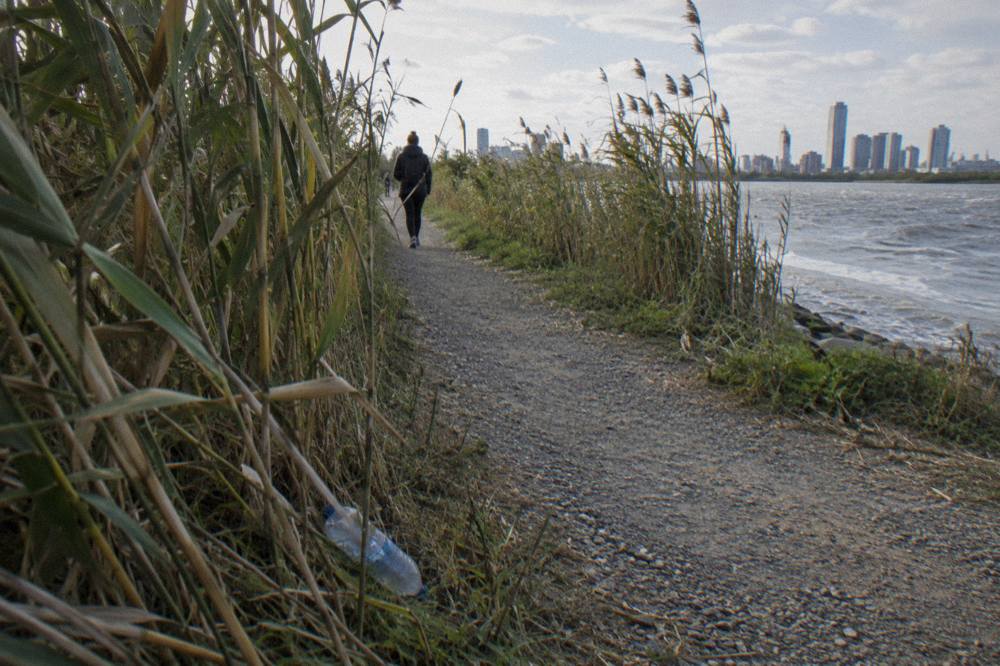
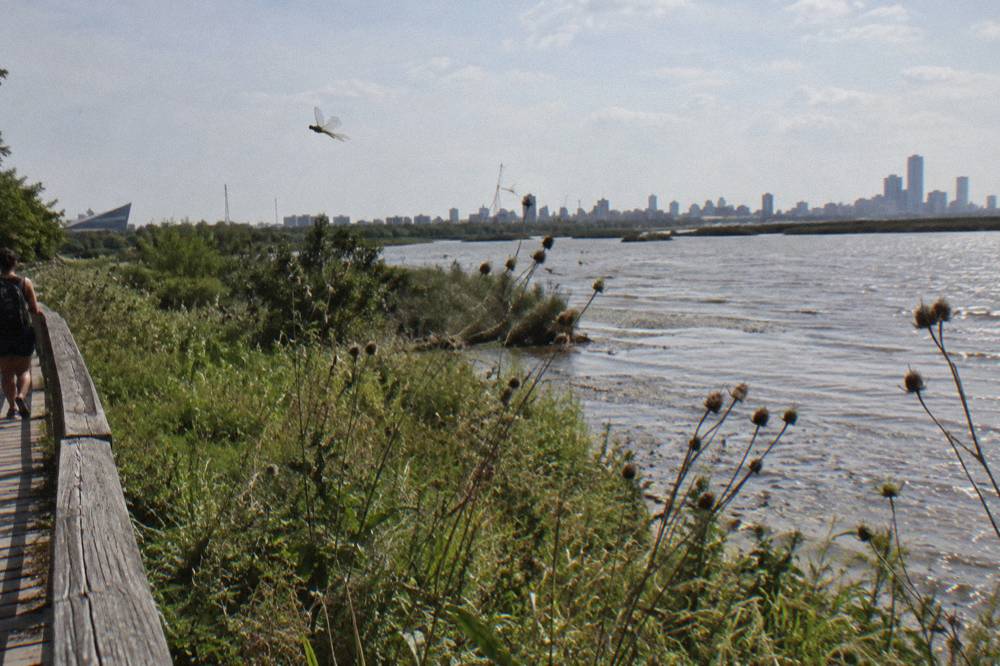
The practical experience is simple. You arrive at one of the reserve's entrances, you walk in, and the paths are yours. The trails run between reed beds and lagoons, and the signage along them explains the wetland ecosystem. Birdwatchers come for the waterbirds; walkers come for the flat, quiet gravel paths that feel far from the city even though the towers of Puerto Madero sit just behind the tree line. None of it is ticketed, fenced off or metered.
Two comparisons help set expectations. The Obelisco is free to see from the outside, but no mirador entry was ever found, so the viewing is from the street only. Caminito in La Boca is free to walk as an open street, while the museum and the stadium experience in the same barrio are paid. The reserve follows the same logic at a larger scale: the free thing is the whole outdoor space, and nothing inside tries to sell you a second layer of access.
If the reserve fills the nature half of your day, the Palermo Soho street art walk fills the urban-culture half. It is a GuruWalk pay-what-you-want tour rated 4.91 out of 5 across 161 GuruWalk reviews, it runs in English and Spanish, and it meets at Plaza Serrano, which keeps it in the same free-outings register as the reserve itself.
What Do You Still Have To Pay For?
Nothing inside the reserve, but the money questions live at the edges: getting there, eating and drinking, and any guided activity you book beyond the free walk. Public transport to the reserve is a paid fare, the reserve has no admission to waive, and food or drink you carry in or buy nearby is your own cost. There is no ticket, no deposit and no booking fee for ordinary entry.
Transport is the first line item. The reserve sits at the eastern edge of Puerto Madero, and reaching it by subte or colectivo means a paid fare, the same as any trip across the city. Unlike Tigre, where the travel advice comes with a service warning, there is no long-distance train question here: the reserve is inside the city, so the cost is ordinary urban transport. Cycling in is an option too, though the Ecobici bike-share scheme's rules and prices are contested in current sources, so treat cycling logistics as something to confirm rather than assume.
Food and drink are the second. The reserve is a walking destination without restaurants inside its free perimeter, so whatever you eat comes from your own bag or from the businesses around Puerto Madero. A coffee before entering or lunch after is a normal city purchase, not part of the visit. Water, sunscreen and comfortable shoes are the standard kit, and none of it is sold as a condition of entry.
The third is optional guiding. A free, pay-what-you-want nature walk of the reserve exists on GuruWalk, described in its own section below; the payment there is the tip you choose to give the guide at the end, which is how every GuruWalk walk in this directory works. Beyond that, any paid boat ride, private guide or tour package you find elsewhere is a separate commercial product with no connection to the reserve's free entry.
| Item | Free or paid |
|---|---|
| Reserve entry, all trails and signage | Free for everyone |
| Public transport to the reserve | Paid fare |
| Food and drink | Paid, your own purchase |
| GuruWalk nature walk of the reserve | Free, pay what you want to the guide |
| Boat rides or private tours sold elsewhere | Paid, separate from the reserve |
When Is The Free Option Available?
The reserve is open Tuesday to Sunday and on holidays, under two seasonal schedules: 8:00 to 19:00 from November to March, and 8:00 to 18:00 from April to October. It closes on Mondays, except when a holiday falls on a Monday, and additionally on 1 May, 24 and 25 December, 31 December and 1 January. It can also close in bad weather, so the city page is the final word before a visit.
The seasonal split matters for planning. The November to March summer schedule, which is in force across the southern summer, gives evening light until 19:00, enough for a late-afternoon walk after a morning spent downtown. The April to October winter schedule pulls the closing time back to 18:00. Neither schedule changes the price, which is nothing, but both change what kind of day you can build around the reserve.
The closing days deserve the same care. Monday is the standard weekly closure, shared with the Museo Casa Rosada, the Cabildo and the Jardín Botánico Carlos Thays, so a Monday in Buenos Aires needs a different plan; the MALBA, MAMBA and the city museums close Tuesdays instead, and PROA plus the national museums run Wednesday to Sunday only. Layered onto the weekly pattern are the fixed holiday closures: 1 May, Christmas Eve and Christmas Day, and New Year's Eve and New Year's Day. The bad-weather closure is the wildcard, since a storm can shut the reserve on an otherwise open day, and the reserve's own notice or the city tourism site is where that shows first.
One seasonal event deserves a mention even though it belongs to the museums rather than the reserve: Noche de los Museos, the annual November night when museums across the city open free of charge in the evening and into the early hours. It is a city-wide museum event, not a reserve event, but it shapes November weekends, and a free evening of museums combines neatly with a free afternoon in the reserve on the same day.
Where Does The Free Visit Start?
The free visit starts at the reserve itself: the nature walk that covers this ground meets at the Reserva Ecológica Costanera Sur, on Avenida Dr. Tristán Achával Rodríguez, the road that runs along the Puerto Madero waterfront to the reserve's edge. There is no separate meeting point, no office to sign in at and no assembly point away from the site; the reserve is both the destination and the starting place.
The meeting point is worth stating plainly because free-walk logistics in Buenos Aires vary. Some walks in this city meet at the Biblioteca del Congreso on Avenida Hipólito Yrigoyen, others at the Casa Rosada in Plaza de Mayo, at the Obelisco, at the Teatro Colón or at Plaza Serrano in Palermo. The reserve walk is one of the few that meets at a natural site rather than a downtown monument, which also makes it one of the easiest to plan around: you travel to the reserve once, and the walk and the free visit happen in the same place.
Getting the geography right saves a wasted leg. The reserve sits behind Puerto Madero, the regenerated dock district whose own landmarks, including the Puente de la Mujer, are free to see in the same outing. That makes a natural free itinerary: the bridge and docks of Puerto Madero first, then the reserve paths beyond them, all on foot, all at no cost. The reverse works too, ending a reserve walk with the waterfront skyline at dusk.
Which Free Walking Tours Cover This?
One pay-what-you-want tour in this directory covers the reserve directly: GuruWalk's Costanera Sur nature walk meets at the Reserva Ecológica Costanera Sur, runs about 2 hours 30 minutes, is offered in English and Spanish, and holds a 4.82 out of 5 rating from 44 GuruWalk reviews. Beyond it, other free walks cover the surrounding barrios, and the reserve shares a directory category with the Palermo green spaces.
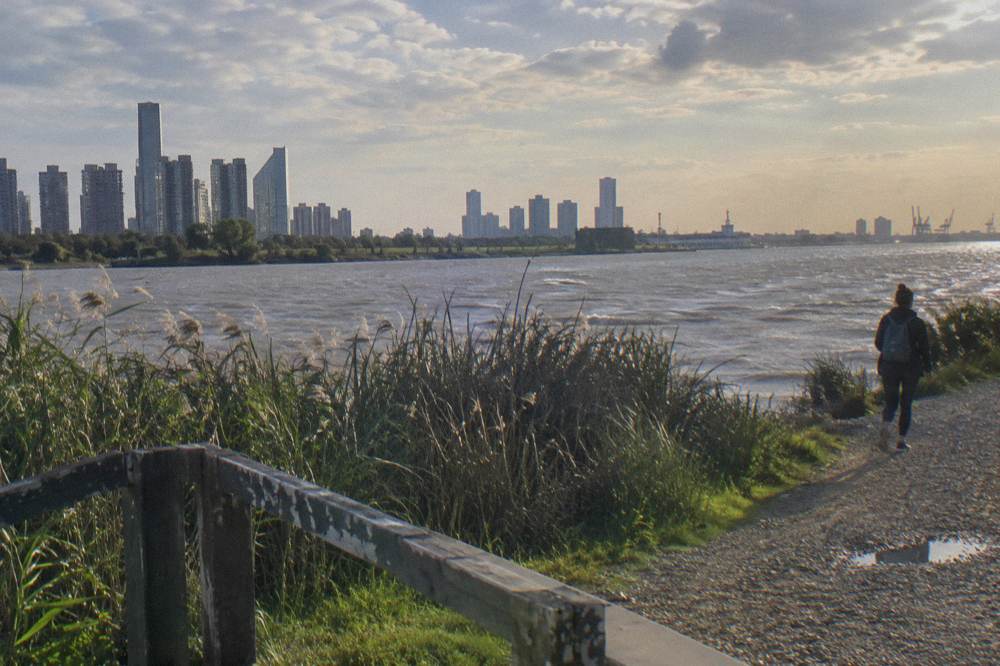
The reserve walk itself needs a careful description, because routes vary from guide to guide, and each walk's page shows its meeting point and neighbourhood. What can be said is what the listing states: it is a GuruWalk walk by an independent local guide, it meets at the reserve, it lasts about 2 hours 30 minutes, it runs in English and Spanish, and guiding is pay what you want, with the tip settled at the end. Its category in the walk directory groups it with the Palermo parks and green spaces walks.
Among those park walks, one stands out for visitors building a green itinerary: the Palermo Parks and Green Spaces walk on GuruWalk, rated 4.91 out of 5 across 53 GuruWalk reviews, a 2-hour English-language pay-what-you-want walk meeting at the Jardín Botánico Carlos Thays on Avenida Santa Fe. It is the natural companion piece, covering the city's other great free green quarter while the reserve walk covers this one.
For a different register after a day of paths and reeds, the street art side of the city also runs on the same free model. The Palermo Soho Street Art walk, this site's recommended walk, is a GuruWalk tour rated 4.91 out of 5 across 161 GuruWalk reviews, running in English and Spanish and meeting at Plaza Serrano. GuruWalk is where every one of these walks is listed and run by its own independent guide; this site writes about them but neither operates nor is affiliated with the platform.
If your day in the green spaces is one piece of a longer stay, the evening side of the city also has free walks, from a night walk themed on the city after dark to small-group welcome walks for first-time visitors. They are all pay what you want, and they slot into the hours after the reserve closes.
Mistakes That Trip People Up At The Costanera Sur Reserve
The mistakes are calendar mistakes, mostly. Turning up on a Monday, assuming the summer hours apply year-round, treating a storm day as an open day, or confusing the reserve's unconditional free entry with the resident-only free days that govern the city's museums: each of these turns a free plan into a closed gate. The second cluster is money mistakes, chiefly expecting transport and food to be free because the reserve is.
The Monday trap is the commonest. Visitors often assume a public park keeps park hours, open every day, but the reserve's Monday closure is fixed, holidays excepted. The sister mistake is the seasonal one: the 19:00 summer closing belongs to November through March only, and a 2-hour window squeezed in before an 18:00 winter close feels very different from the same walk in high summer. Checking the city tourism page on the day is the habit that avoids both.
The comparison mistake is subtler. Because so much "free" in Buenos Aires is conditional, some visitors assume the reserve must be too, and show up braced for a foreigner fee that does not exist. The reverse error also happens: people who learned that the reserve is free for everyone then assume MALBA or the city museums must be free for everyone too, when MALBA is half price on Wednesdays, never free for general visitors, and the city museums' Wednesday free entry is for Argentine residents with DNI only. Each rule stands alone.
The last mistake is the oldest one in free tourism: forgetting that "free" describes the entry, not the day. The transport fare is paid, the food is paid, and the pay-what-you-want walk still ends with a tip to the guide, an amount you choose. Budget for those, and the reserve stays exactly what it claims to be: the city's biggest genuinely free open space, as covered across Free Things To Do In Buenos Aires.
Common Questions On This Topic
Is The Costanera Sur Reserve Free?
Yes. Entry to the Reserva Ecológica Costanera Sur is free for every visitor, tourist or resident, with no DNI condition and no admission charge on any open day. The only limits are the calendar: the reserve closes Mondays except holidays, plus 1 May, 24 and 25 December, 31 December and 1 January, and can shut in bad weather.
What are the reserve's opening hours?
From November to March the reserve opens 8:00 to 19:00; from April to October it opens 8:00 to 18:00. It is open Tuesday to Sunday and on holidays. Mondays are closing days unless a holiday falls on them, and bad weather can close the reserve on an otherwise open day.
Is the reserve free for foreign tourists or only residents?
Free for everyone. Unlike the city museums, whose Wednesday free entry is for Argentine residents with DNI only, or the Cementerio de la Recoleta, which is free for residents with DNI and paid for foreign visitors, the reserve makes no distinction. No admission is charged to anyone.
Is there a free walking tour of the reserve?
Yes. A nature walk of the reserve runs on GuruWalk, meeting at the Reserva Ecológica Costanera Sur. It lasts about 2 hours 30 minutes, runs in English and Spanish, and works on a pay-what-you-want basis, meaning the guide is tipped at the end at an amount you choose.
What costs money at the Costanera Sur Reserve?
Nothing inside the reserve charges admission, but transport to get there is a paid fare, food and drink are your own purchases, and any paid boat ride or private tour sold elsewhere is a separate commercial product. The pay-what-you-want walk's tip is voluntary and set by you.
Can you visit the reserve on a Monday?
No, not on an ordinary Monday. Monday is the reserve's weekly closing day, shared with the Jardín Botánico Carlos Thays and the Cabildo, except when a holiday falls on a Monday. Plan a Monday around places that close Tuesdays instead, such as MALBA or MAMBA, keeping their own entry rules in mind.