Is Tigre Free To Visit?
Tigre itself costs nothing to walk: the Puerto de Frutos market, the promenade and the riverside views are free, while the train out and the delta boats are paid. Here is the exact split.
In Short
Yes, Tigre is free to visit in the sense that walking its promenade, browsing the Puerto de Frutos market and looking out over the delta cost nothing. Getting there is not free: the train from Buenos Aires and the delta boats are paid, and neither has a published figure on the official Tigre pages. Budget for transport only and the visit itself costs nothing to walk.
This question sits inside the Free Things To Do In Buenos Aires guide, which covers what costs nothing across the city.
Quick Facts
| Question | Answer |
|---|---|
| Is Tigre itself free? | Yes, walking the town, promenade and Puerto de Frutos market costs nothing |
| Who is it free for? | Everyone, the market and waterfront are open public space |
| What costs money? | The train from Buenos Aires and the delta boat rides, both paid, no published figure |
| Puerto de Frutos hours | Weekdays 10:00 to 18:00, weekends and holidays 10:00 to 20:00 |
| Market closed days | 25 December and 1 January |
| Direct Retiro to Tigre train | The official page says the service is interrupted, check before travelling |
| Free guided walks in Tigre | None, the free walks run in Buenos Aires itself |
Is Tigre Free To Visit?
Yes, Tigre is free to visit once you are there. The Puerto de Frutos market is free to browse, the riverside promenade is free to walk, and the delta views from the waterfront cost nothing. The paid parts are the journey and the boats: the train from Buenos Aires and the delta boat rides both take money, and neither carries a published price on the official Tigre tourism pages. Free walking tours do not run in Tigre.
Tigre sits in Buenos Aires Province, outside the city proper, at the mouth of the Paraná delta. It functions as the classic day trip: you leave the city in the morning, spend a few hours among the waterways, and come back in the evening. The town answers the free question with a clean split. The land-side experience, the market, the walkways, the views of boats and islands from the shore, is an open public space that charges nobody. The water-side experience, the boat rides through the delta channels, and the journey to get there, are paid services.
That split matters because a lot of quick answers online blur it. "Tigre is free" is true of the visit and false of the transport. "Tigre costs money" is true of the train and boats and false of everything you do on foot once you arrive. Getting the split right is the difference between a day that costs a train fare and a day that costs a train fare plus whatever the boat operators charge, which the official Tigre tourism site does not price for you.
For context on how this city's free layer works overall, including the museums and plazas that cost nothing, the Free Things To Do In Buenos Aires guide covers the full picture. Tigre is the one entry in that picture where the free part starts only after a paid ride.
There is one more thing worth saying plainly. No free walking tour operates in Tigre itself. The free, pay what you want walks listed on this site, all of them, run in Buenos Aires neighbourhoods from Centro to La Boca. If a morning in the city centre appeals before or after a Tigre trip, the Downtown Intro, 3 Hours walk by Vive Buenos Aires, rated 4.84 out of 5 across 1,332 GuruWalk reviews, meets at the Biblioteca del Congreso and runs three hours on a pay what you want basis. GuruWalk hosts the listing, and this site is independent of both the platform and the guide.
Before the delta, though, the city itself deserves a walk, and the strongest introductions run on GuruWalk as free, pay what you want tours:
Each of these is a real listing run by an independent local guide: the Max 6 People small-group walk at 4.97 out of 5 across 551 reviews, the Never Sleep theme walk at 4.76 out of 5 across 269 reviews, and the Paris of Latin America theme at 4.69 out of 5 across 155 reviews, all on the five-point GuruWalk scale.
What Does The Free Part Include?
The free part of Tigre is the pedestrian layer: the Puerto de Frutos market, free to browse every day it is open; the waterfront promenade along the Luján river; and the views of the delta channels and boats from the shore. None of it charges entry, none of it distinguishes residents from foreign visitors, and all of it is open-air walking territory.
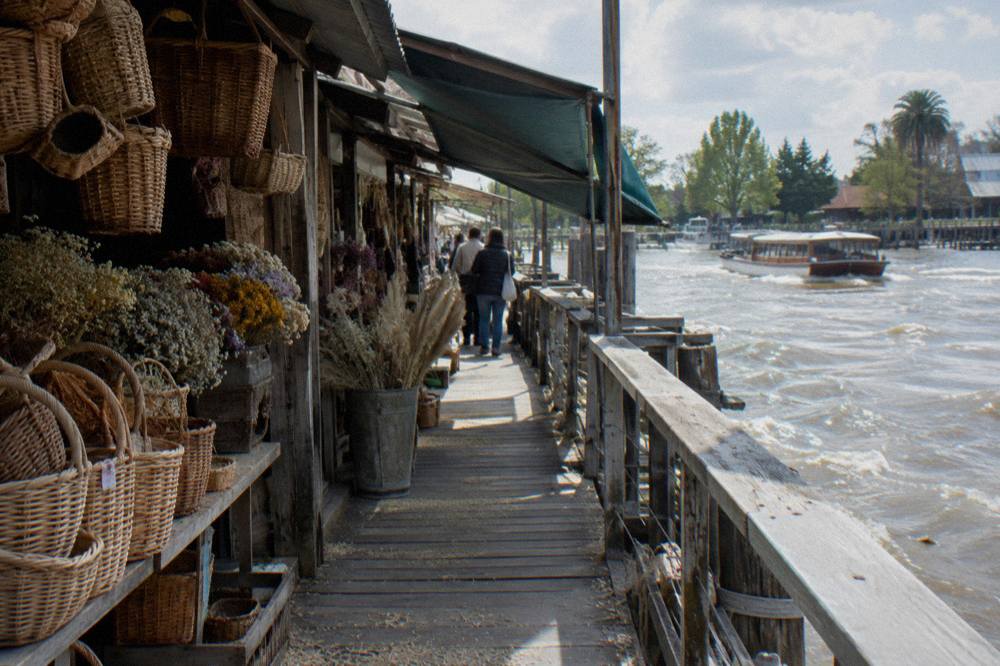
The Puerto de Frutos is the anchor. It is a market of stalls selling wicker furniture, mate gourds, dried flowers, woodworking and delta produce, spread through covered and open-air sections by the water. Entry costs nothing and browsing is the point: the market is a public commercial space in the same way the Mercado de San Telmo is in the city, where walking in and looking costs nothing and only what you buy takes money. The official Tigre pages give its hours as 10:00 to 18:00 on weekdays and 10:00 to 20:00 on weekends and holidays, with closures on 25 December and 1 January.
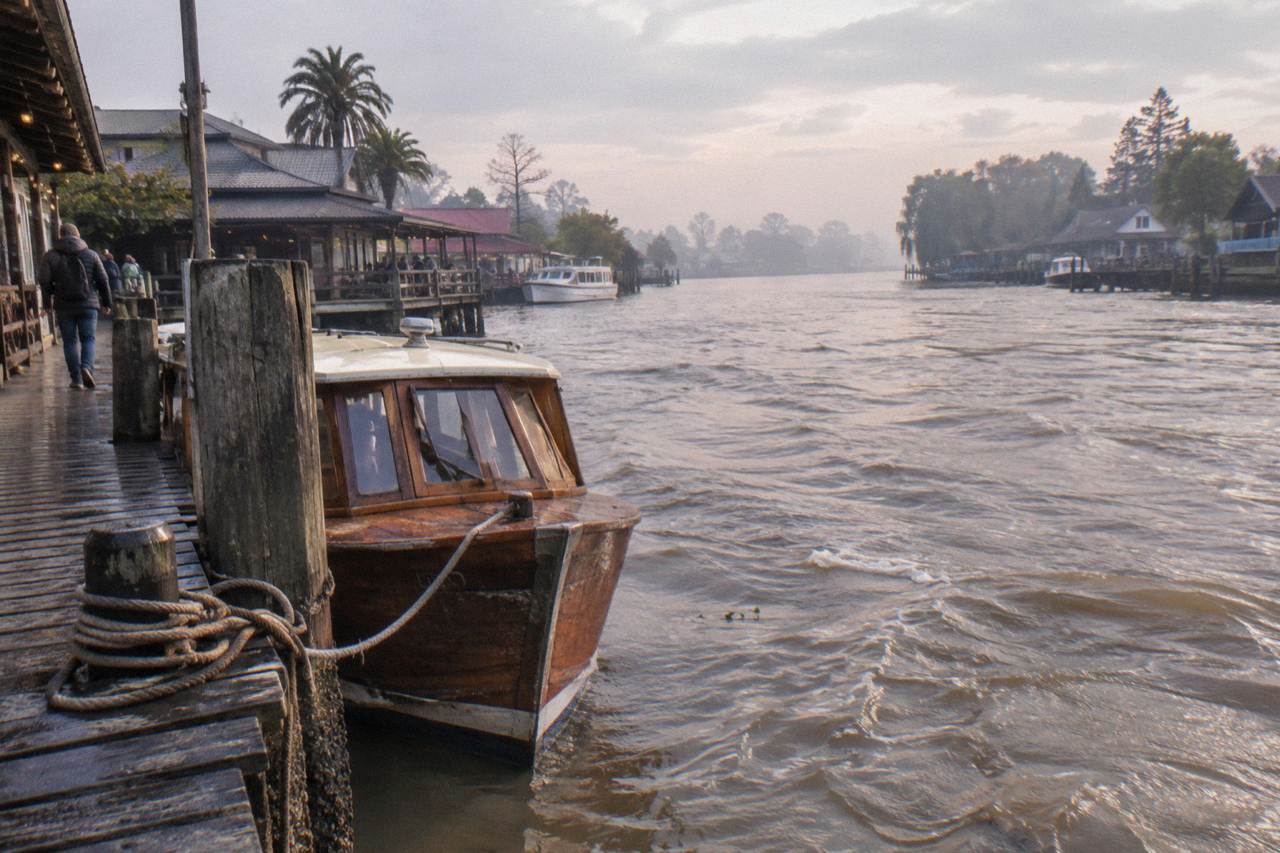
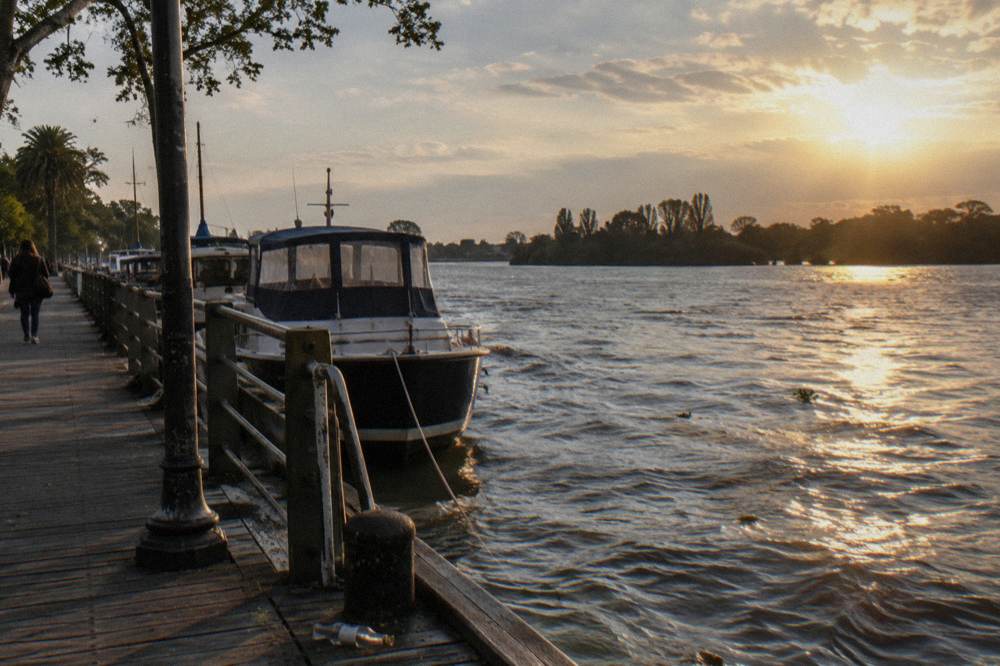
The promenade is the second free piece. The waterfront walk along the river lets you see the delta's signature sight from dry land: the wooden passenger boats, lanchas, loading and unloading at the piers, and the islands behind them. Watching the boat traffic from the shore costs nothing, and for many visitors it is the better half of the day. The delta is a working landscape of island houses, grocery boats and school boats, and the shore gives you a clear view of its rhythm without a ticket.
What the free part does not include is the water itself. Everything that floats is a paid service, and the market's food and crafts are purchases like any other. The distinction is the same one that runs through this site's Puerto Madero waterfront guide: the public walkway is free, the commercial parts cost what they cost. In Tigre the walkway happens to come with one of the region's best markets attached.
One honest caveat on the market's own status: the official Tigre page describes the Puerto de Frutos and its hours but does not state an entry charge, and the free-to-browse reading comes from the tourism description of it as a public market. In practice a market of this type does not and cannot charge admission; treat it as free to enter and pay only for what you carry out.
What Do You Still Have To Pay For?
You pay for three things in Tigre: the train or bus from Buenos Aires, the delta boat rides, and anything you buy in the market. The boats are paid services that charge through the SUBE card, with children up to 5 free. No official price figure exists for the train or the boats on the pages this site's facts rely on, so no number is printed here.
The transport is the unavoidable cost. The classic route out is the Mitre railway line from Retiro, which the official Tigre tourism page describes as roughly 50 minutes to Tigre station. The page also describes an alternative: the Mitre line to Maipú station and a connection onto the Tren de la Costa, the riverside tourist train that runs toward the delta. Colectivos 60, 343 and 21 also serve Tigre. All of these are paid, and none carries a published fare on the material this site is allowed to quote.
There is a live trap in that route, and it is worth its own paragraph. The official Tigre page states that the direct Retiro to Tigre service is interrupted, with a date but no year on the notice. That means the description of the line as a simple one-train trip may not hold on the day you travel, and the Maipú plus Tren de la Costa connection, or a colectivo, may be the working route instead. Check the operator's current service notice before you build a day around a direct train.
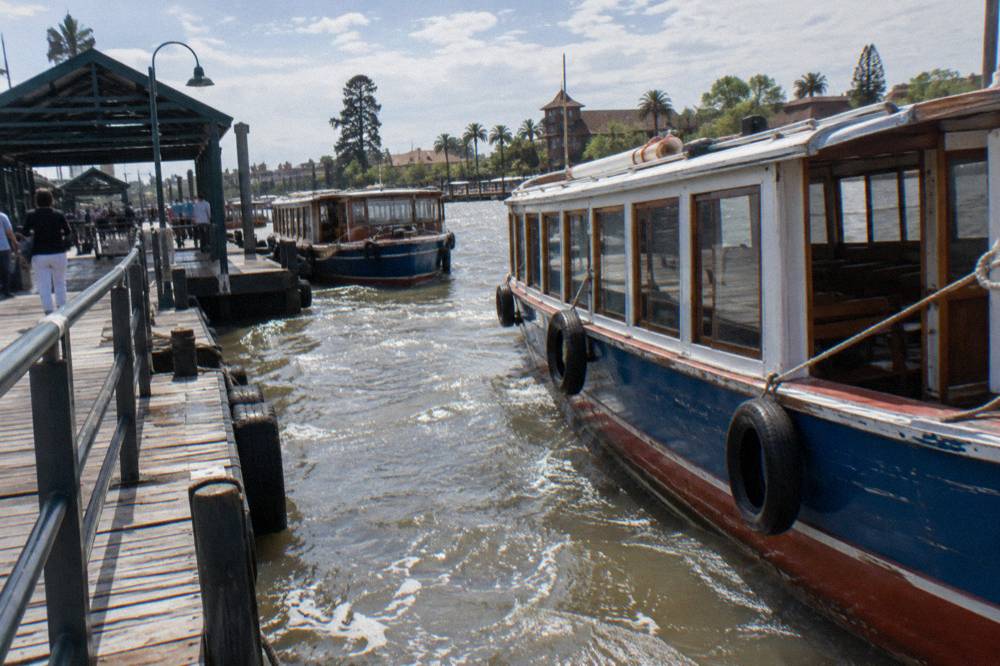
The boats are the second paid layer. The lanchas that run the delta channels from the Tigre waterfront are commercial services that charge through the SUBE card, with children up to 5 travelling free. The rides vary in length and route, and the operators price their own trips; the official page names the system but not the figures, so none appears here. If the delta channels are the reason you are going, plan on paying for that part, and expect to pay at the pier rather than online.
The third paid part is simply shopping and food. The market's stalls and the waterfront cafés are businesses, and the free-to-browse status of the market says nothing about the prices inside it. Add to that list the Museo de Arte Tigre, whose admission terms are not established in any source this site can print, so no claim of free or paid entry appears here: check directly with the museum before counting on it either way.
Before or after a Tigre day, the city's own downtown layer is genuinely free to walk, and the strongest pay what you want introduction to it is the Downtown Intro, 3 Hours walk by Vive Buenos Aires on GuruWalk, 4.84 out of 5 across 1,332 reviews, meeting at the Biblioteca del Congreso.
When Is The Free Option Available?
The Puerto de Frutos market is open weekdays 10:00 to 18:00 and weekends and holidays 10:00 to 20:00, closing only on 25 December and 1 January. The promenade and waterfront are public space with no hours at all. In practice weekends give you the longest market day, and the summer schedule of the surrounding parks and reserves runs November to March.
The market's hours are the only fixed clock in a Tigre day. A weekday visit gives you the market from 10:00 to 18:00, and a weekend or holiday visit extends it to 20:00, which is why weekend days are the natural fit for a slower trip: the market, the promenade and a late look at the boat traffic fit inside one long afternoon. The two closure dates, 25 December and 1 January, are the only days the anchor attraction shuts entirely.
The promenade and the river views have no schedule. The waterfront is open public space, free to walk at any hour you would want to walk it, and the sight of the delta from the shore does not depend on any opening time. The paid parts keep their own clocks: the trains and colectivos run to timetables, and the boats run daylight schedules set by their operators, so the shape of a Tigre day is really set by when the last boat and the last train return rather than by the free layer.
Seasonally, the relevant schedule is the summer one. The city's own open spaces, including the Reserva Ecológica Costanera Sur back in Buenos Aires, run a November to March schedule with longer evening hours, and Tigre sits in the same seasonal rhythm: the summer months give longer daylight for the waterfront and the 20:00 weekend market close earns its keep. Nothing in the free layer of Tigre carries a seasonal price, because nothing in the free layer carries any price at all.
A note on the annual calendar: this question is about Tigre's everyday free layer, not events, and no Tigre festival or seasonal event carries a verified free status in official sources this site uses. If you are timing a visit around a specific event, check the official Tigre tourism pages for that event's own terms rather than assuming the everyday rules extend to it.
Where Does The Free Visit Start?
The free visit starts at Tigre station and the waterfront immediately around it. The Puerto de Frutos market sits by the river within easy walking of the station area, and the promenade runs along the water from there. No transport within Tigre is needed for the free layer, everything worth walking to is on foot along the river.
The geography is simple and it favours the free visitor. The train arrives in the middle of town, the river is a short walk away, and the market sits at the water's edge. From the station area the day organises itself around one axis: walk to the river, turn along the promenade, and let it carry you to the market piers. Everything free, the views, the promenade, the market, sits on that axis, and no internal transport, no bus, no taxi, no boat, is needed to reach any of it.
The piers are where the free and paid layers touch. The lanchas load at the waterfront by the market, so the shore gives you the fullest picture of delta life for nothing: boats arriving, unloading, and departing for the islands, all watched from the promenade. The step from watching to riding is the step from free to paid, and it happens at the pier, with the SUBE card, at the operators' own prices.
For the return, the same route logic applies in reverse. Whichever way you came out, the Mitre line direct if it is running, the Maipú and Tren de la Costa connection, or a colectivo, the station end of town is where the free visit ends. The interruption notice on the direct service makes it worth checking the operator's notice for the return leg too, not just the outbound, before the evening gets late.
Which Free Walking Tours Cover This?
No free walking tour covers Tigre. Every free, pay what you want walk on this site runs inside Buenos Aires itself, across the Centro, Recoleta, Retiro, San Telmo, La Boca and Palermo neighbourhoods, on GuruWalk and, for a handful of listings, freetour.com. Tigre is a self-guided day trip on foot, with the market and promenade as its own walking route.
GuruWalk
Most walks here, run by independent guides
Pay what you want
freetour.com
A smaller set, mostly Spanish-led
Pay what you want
That is not a gap in the directory, it is a fact of the platforms. The 55 walks this site lists, the total as it ships, all meet in the city: at the Plaza de Mayo, at the Teatro Colón, at the Mercado de San Telmo, at Plaza Serrano in Palermo. Tigre, an hour out in the province, hosts none of them. Its free layer is walked alone, and honestly it walks well alone, because the promenade-and-market axis is short, signposted and obvious.
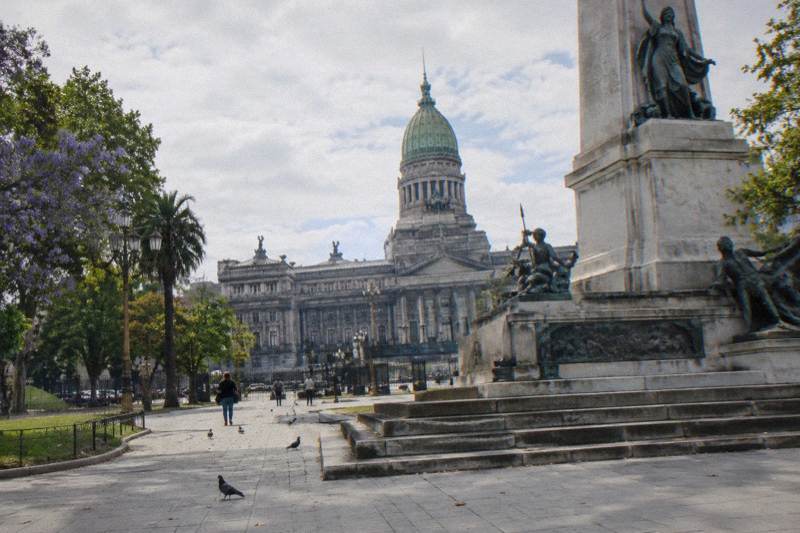
What the city end does offer is a free walk that pairs naturally with a Tigre day. The Short City Center History Walk by WalkBa Tours runs on GuruWalk in English, rated 4.91 out of 5 across 621 reviews, an hour and three quarters from the Congress Monument in Plaza del Congreso, pay what you want. A morning walk downtown and an afternoon train to Tigre is a full day built almost entirely on free guiding.
If your Tigre day starts from the Retiro end of downtown, the pairing works in the other direction too: the Downtown Intro, 3 Hours walk by Vive Buenos Aires meets at the Biblioteca del Congreso and covers the city centre before you head for the trains. Both walks, like every walk on this site, are pay what you want, with the guide paid by tip at the end rather than by a booking fee, and both run on GuruWalk, which hosts listings by independent local guides; this site operates no walks and is affiliated with none.
Mistakes That Trip People Up At Tigre
The mistakes that cost money or a wasted morning: assuming the direct Retiro to Tigre train is running when the official notice says it is interrupted, assuming the delta boats are part of a free visit when they are paid services, expecting a free walking tour in Tigre when none exists, and arriving on 25 December or 1 January expecting an open market. Each of these is avoidable with one check or one expectation reset.
The train mistake is the most common. The official Tigre page carries an interruption notice on the direct Retiro to Tigre service, and a traveller who plans around a one-train trip without checking the operator's current notice can lose an hour discovering the connection route at Maipú. The fix is a single check of the railway operator's service notice before leaving, on the day, not the night before.
The boat mistake is the opposite error, in the generous direction. Visitors who read that "Tigre is free" sometimes expect the delta ride to be included in the free layer. It is not: the lanchas are commercial services charging through SUBE, children up to 5 free, at the operators' own prices. The free delta experience is the one from the shore, and it is a good one, but it is not the boat.
The tour mistake is smaller but real: searching for a free walking tour in Tigre and finding none, then assuming the search was done wrong. None exists on either platform this site covers. The self-guided promenade and market walk is the substitute, and it needs no guide. The calendar mistake is the last one: the market closes on 25 December and 1 January, and a holiday-morning trip on those two days meets a closed waterfront. Every other day of the year, the free layer is open on the hours above.
And if the Tigre trip is one leg of a longer stay, the city's own free walks are the deepest free layer in the region, with English-language options across the downtown and neighbourhood routes:
All three are GuruWalk listings by independent guides: the Small Group Welcome at 4.78 out of 5 across 28 reviews, the First-Timer Welcome at 4.92 out of 5 across 743 reviews, and the Origins walk through San Telmo and Monserrat at 4.96 out of 5 across 51 reviews, each pay what you want.
Common Questions On This Topic
Is Tigre Free To Visit?
Yes, the visit itself is free. Walking the town, the promenade and the Puerto de Frutos market costs nothing for anyone. The paid parts are the transport from Buenos Aires and the delta boat rides, both commercial services without published official figures.
Is the Puerto de Frutos market free to enter?
Yes, the market is free to browse and entry costs nothing. It opens weekdays 10:00 to 18:00 and weekends and holidays 10:00 to 20:00, closing only on 25 December and 1 January. Whatever you buy inside is a normal purchase.
How much does the train to Tigre cost?
The Mitre line trip from Retiro, roughly 50 minutes, is a paid service, and no fare figure appears on the official Tigre pages this site's facts rely on. Note that the direct Retiro to Tigre service is listed as interrupted, so check the operator's notice and the Maipú plus Tren de la Costa alternative before travelling.
Are the Tigre delta boats free?
No, the lanchas that run the delta channels are paid services charging through the SUBE card, with children up to 5 free. The operators set their own prices and no official figure is published. Watching the boats from the shore is the free alternative.
Are there free walking tours in Tigre?
No. Every free, pay what you want walk this site lists runs inside Buenos Aires, on GuruWalk and, for a few listings, freetour.com. Tigre is walked self-guided, and the promenade-and-market axis makes an easy route without a guide.
What is the free part of a Tigre day trip?
The free part is everything on foot: the waterfront promenade along the river, the views of the delta channels and boat traffic from the shore, and browsing the Puerto de Frutos market. The paid part starts the moment you board a train, a colectivo or a boat.