When Is La Noche De Los Museos In Buenos Aires?
La Noche de los Museos is Buenos Aires' annual November night of free museum entry. What is free, what still costs money, and which free walking tours pair with it.
In Short
La Noche de los Museos is the annual November night when museums across Buenos Aires open free of charge, running from the evening into the early hours. Entry is free for everyone on this night, residents and foreign visitors alike. Individual venues may stop admitting earlier than the night's official end, so treat each museum's own door as the final word on timing.
This question sits inside the Free Museums In Buenos Aires guide.
Quick Facts
| Question | Answer |
|---|---|
| What is free | Museum entry on the annual November night, for all visitors |
| Who gets in free | Everyone, residents and foreign visitors alike, on this night |
| What still costs money | Food, drinks, transport, and any paid shows or workshops inside venues |
| When | One night each November, evening into the early hours |
| Who sets the rules | The city tourism authority publishes the programme each year |
| Nearest free walk platform | GuruWalk and freetour.com both list free walking tours downtown |
When Is La Noche De Los Museos In Buenos Aires?
La Noche de los Museos takes place on one Saturday night each November, when museums across Buenos Aires open their doors free of charge and stay open from the evening into the early hours. There is no fixed calendar date that repeats every year, so the specific Saturday changes from one edition to the next, and the city tourism authority publishes the programme each year as the only reliable source for the exact date.
The night is a citywide event rather than a single-museum open evening. Museums, cultural centres and other venues join in, and entry is free of charge for the night. The city's official tourism site, turismo.buenosaires.gob.ar, carries the programme for each edition, including which venues are participating and any special events planned inside them.
A practical point worth knowing: individual venues may stop admitting visitors earlier than the night's official closing time. A museum can be nominally open until the small hours but stop letting new visitors in well before that. The safe approach is to start early in the evening and to check each venue's own notice for its last entry. Not every museum in the city joins every edition either, so a museum you have read about in a past programme is not guaranteed to appear in the next one.
If the timing of your trip is flexible, November is a strong month to visit for free things generally. The night sits alongside the weekly free-entry schemes that run through the rest of the year, which the Free Museums In Buenos Aires guide sets out in full, including which museums are free for all visitors and which are free only for Argentine residents with DNI.
One way to build the day is a free walking tour in the afternoon, timed so it ends near your first museum of the night. The walks below all run in and around the downtown area where many participating venues sit.
- Noche de los MuseosNovember19:00 to 02:00
- Venues taking part250+museums and cultural spaces, free entry
- Edition22ndannual November night
What Does Entry Cost During The Night Of The Museums?
Entry is free of charge during La Noche de los Museos, and it is free for everyone, Argentine residents and foreign visitors alike, with no DNI requirement on this night. That is the whole point of the event. On every other day of the year the city's museums run several different pricing regimes, some free for all, some free only for residents, and some half price or paid, which is why the night stands out so sharply.
For foreign visitors the difference is especially large. Museums that normally charge tourists, or that reserve their free day for Argentine residents with DNI, drop those distinctions for the night. The Free Things To Do In Buenos Aires site covers the day-to-day rules elsewhere, but the short version is that the night flattens them all into a single rule: free entry at the door.
That said, "free entry" means entry, and nothing more. It does not mean free food, free drinks, free transport between venues or free access to every activity inside a building. Some venues host ticketed performances or workshops during the night, and those keep their own prices even while the galleries themselves are free to walk into.
The night also does not change the paid status of the city's commercial attractions. Teatro Colón guided tours stay paid, at ARS 37,000 general, ARS 18,000 for residents and ARS 8,000 for resident retirees and students in November 2026. The Jardín Japonés stays paid as well, at ARS 24,000 for non-residents and ARS 8,000 for residents. Cementerio de la Recoleta remains free for Argentine residents with DNI and paid for foreign visitors, with the fee handled through the city's Entradas BA system. None of these are waived by the November night.
What Do You Still Have To Pay For?
The things that still cost money during La Noche de los Museos are food and drink, transport between venues, ticketed performances or workshops inside participating buildings, and any paid attraction that never joined the free scheme in the first place. Museum entry itself is not one of them. In practice, a visitor who walks, skips the bars and sticks to the free galleries can spend the entire night without paying for culture at all.
Food is the biggest budget line. The night draws people into the streets around the participating venues, and restaurants, cafes and street food sellers do brisk business. Nothing about the event makes any of that free. The same applies to drinks inside the museums: a venue may sell wine or coffee as part of its night programme, and those sales are regular commerce.
Transport is the other line. The Subte is a paid service, as are buses and taxis, and no event night changes that. Visitors moving between distant venues will either pay for transport or plan a route that stays walkable. The downtown cluster around Plaza de Mayo, Avenida de Mayo and the Congress end keeps many participating venues within walking distance of one another.
| Cost item during the night | Free or paid |
|---|---|
| Entry to participating museums | Free for everyone |
| Special exhibitions inside venues | Free with entry, unless separately ticketed |
| Ticketed performances and workshops | Paid, set by each venue |
| Food, drinks and bars | Paid |
| Subte, buses and taxis | Paid |
| Teatro Colón guided tours | Paid, not part of the free night |
| Jardín Japonés | Paid, not part of the free night |
Performances deserve a careful read. A venue can advertise a concert or a tango show as part of its night programme while selling separate tickets for it, even though the galleries an hour earlier were free. The programme listing for each venue usually distinguishes the two, and it is worth checking before you queue.
When Is The Free Option Available?
The free option, meaning free museum entry for everyone, is available only on the November night itself. For the rest of the year, free museum access in Buenos Aires depends on which museum you visit and who you are: the national museums are free for all visitors every day they are open, MAMBA and PROA are free for all on Wednesdays, and the city museums are free on Wednesdays only for Argentine residents with DNI.
The day-to-day landscape is genuinely uneven, and travellers who assume one rule applies everywhere get caught out. The national museums, including the Museo Nacional de Bellas Artes, the Museo Nacional del Cabildo and the Museo Nacional de Arte Decorativo, are free for all. MAMBA is free on Wednesday and on the last Sunday of the month for all visitors, and charges foreign visitors ARS 16,000 on other days. PROA is free on Wednesday for all, and ARS 7,000 from Thursday to Sunday. The city museums, including the Museo de la Ciudad, Casa Museo Carlos Gardel and Museo Quinquela Martín, are free on Wednesday only for Argentine residents with DNI, and tourists pay. MALBA is never free for general visitors: Wednesday is half price, ARS 7,000 against ARS 14,000 other days, with the same rate for tourists and residents. Other pages covering the same trip are gathered on Free Things To Do In Buenos Aires.
Closing days matter as much as free days, because a free day you cannot reach is worthless. MALBA, MAMBA and the city museums close on Tuesdays. PROA and the national museums open Wednesday to Sunday only. The Museo Casa Rosada is open Wednesday to Sunday, 11:00 to 18:00. The Cabildo, the Reserva Ecológica Costanera Sur and the Jardín Botánico close on Mondays. These schedules hold through the year and are only overridden by the November night itself.
The free art days in Buenos Aires guide goes deeper on which museums give which days to whom, and the free museums guide lists the resident-versus-visitor splits in one place. For a foreign visitor whose Spanish is limited or whose stay is short, the November night is often the single easiest way to see museums that are otherwise closed to free entry.
Where Does The Free Visit Start?
The free visit starts at the entrance of whichever participating venue you choose, because no central starting point, ticket, or wristband exists for the night. Each museum admits visitors on its own, free of charge, during its published hours, so open the city's programme, pick a cluster of venues within walking distance, and begin at the one you most want to see full rather than rushed.
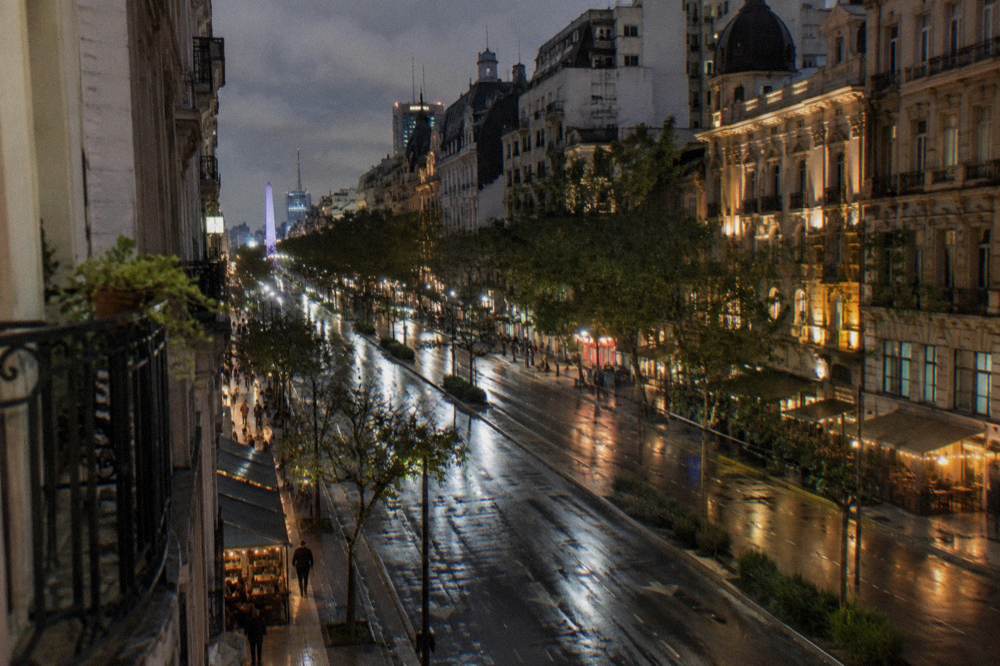
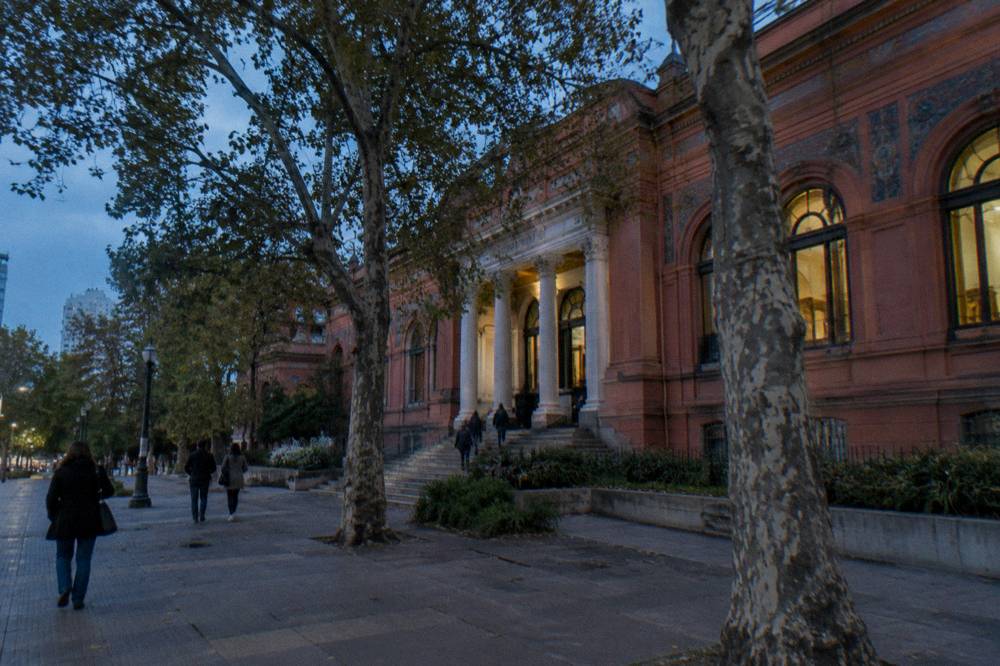
Downtown is the natural cluster for most visitors, because it holds the densest concentration of cultural buildings. Venues around Plaza de Mayo, along Avenida de Mayo and up towards the Congreso end put a full night's route within a walkable stretch. Recoleta adds another cluster around the Museo Nacional de Bellas Artes and the Cementerio de la Recoleta. San Telmo and La Boca hold their own venues and a different atmosphere after dark.
A free walking tour can serve as the warm-up. The Downtown Intro, 3 Hours walk by Vive Buenos Aires on GuruWalk is rated 4.84 out of 5 across 1,332 GuruWalk reviews, runs 3 hours in English and Spanish, and meets at the Biblioteca del Congreso, Av. Hipólito Yrigoyen 1750, right in the downtown cluster. Guiding is pay what you want; you tip the guide what you choose at the end.
Starting with a walk has a second advantage: you finish the evening already oriented, knowing how the downtown grid connects, which makes hopping between museums much less disorienting in the dark. Guides on GuruWalk are independent locals running their own walks, and this site neither operates nor is affiliated with GuruWalk.
Which Free Walking Tours Cover This?
No free walking tour is a Noche de los Museos tour, but several free walks cover the neighbourhoods where the participating venues sit, and they pair naturally with the night. The walks below run in the downtown, Plaza de Mayo and Recoleta ground where the densest clusters of venues are found, on GuruWalk and, for some listings, on freetour.com. All of them are free, pay what you want.
GuruWalk
Most walks here, run by independent guides
Pay what you want
freetour.com
A smaller set, mostly Spanish-led
Pay what you want
The clearest pairing is a short downtown walk that ends in time for the museums to open. The Short City Center History Walk by WalkBa Tours on GuruWalk is exactly that: 1 hour 45 minutes, in English, rated 4.91 out of 5 across 621 GuruWalk reviews, meeting at the Congress Monument in Plaza del Congreso. It costs nothing to join, and guiding is pay what you want.
For visitors who want more context than a single evening allows, the First-Timer Welcome by Buenos Aires Horizon Tours, rated 4.92 out of 5 across 743 GuruWalk reviews, meets at the Casa Rosada on Plaza de Mayo and runs 2 hours 30 minutes in English, Spanish and Portuguese. The Origins: San Telmo and Monserrat walk by Vive Buenos Aires, 4.96 out of 5 across 51 GuruWalk reviews, meets at the Cabildo de Buenos Aires and covers ground where several cultural buildings sit. Spanish-speaking visitors will also find strong options on freetour.com, whose Free City Center Walk is listed with 9.6 out of 10 across 10,227 reviews shown on its freetour.com listing; freetour.com ratings are on a ten-point scale and are never summed with GuruWalk figures.
The practical rule is simple: the tour shows you the neighbourhood, the night shows you the museums, and neither charges a fixed price. The free walking tours guide explains how the pay what you want model works in practice.
Mistakes That Trip People Up At La Noche De Los Museos
The mistakes that cost visitors the most are assuming the night has a fixed date, assuming every museum joins, assuming last admission equals closing time, and assuming the free entry extends to food, shows or the city's permanently paid attractions. Each of these is easy to avoid with the current year's programme in hand. People also mistake the night for a change in the year-round free-day rules, which it is not.
The date mistake is the most common. The night always falls in November, but the specific Saturday moves, and articles from past years circulate with old dates. Only the city tourism authority's own page, turismo.buenosaires.gob.ar, settles it for the current edition. A related mistake is assuming all museums participate; some join one year and sit out the next, so a venue you remember from a past programme may not be on the list.
The last-admission mistake wastes more evenings than any other. The night runs into the early hours, but venues can stop admitting well before the end, and late arrivals find doors closed to new entry even while lights are still on inside. Start early and front-load the museums you care about most.
The third mistake is expecting the night to make other things free. It does not touch the Teatro Colón tour price, the Jardín Japonés entry fee or the foreign-visitor entry at Cementerio de la Recoleta, and it does not cover dinner or the ride home. Visitors on a strict budget should also remember that MALBA is half price on Wednesday, never free, and full price on every other day. Finally, do not confuse the night with the Centro Cultural Kirchner's or other venues' regular conditional schemes, whose terms are their own; the Ministry of Culture's agenda at cultura.gob.ar is the place to check those events.
Common Questions On This Topic
When Is La Noche De Los Museos In Buenos Aires?
It takes place on one night each November, from the evening into the early hours. The specific date changes each year, and the city tourism authority publishes the programme for each edition, which is the only reliable source for the exact Saturday. Never rely on a date from a previous year's coverage.
Is entry really free for foreign visitors on the night?
Yes. Entry is free of charge for everyone, Argentine residents and foreign visitors alike, with no DNI requirement. This is the one night when the resident-versus-visitor pricing that applies at many museums through the rest of the year does not apply at the participating venues' doors.
Do all museums in Buenos Aires participate?
No. Participation varies by edition, and a museum that joined one year may sit out the next. The city's published programme for the current edition lists the participating venues, and it is the only way to confirm a specific museum is open free on the night.
Can you stay until the official closing time?
Not reliably. Individual venues may stop admitting visitors earlier than the night's official end, and late arrivals can be turned away even while a building is still lit and open inside. Start early in the evening and check each venue's own notice for its last admission.
Does the night make Teatro Colón or the Jardín Japonés free?
No. Teatro Colón guided tours remain paid, ARS 37,000 general in November 2026, and the Jardín Japonés remains paid, ARS 24,000 for non-residents. Commercial and paid attractions keep their own pricing regardless of the museum night.
Is there a free walking tour for the night itself?
No walk is a Noche de los Museos tour. However, free pay what you want walks on GuruWalk and freetour.com cover the downtown, Plaza de Mayo, Recoleta and San Telmo ground where participating venues cluster, and a walk ending in the late afternoon pairs naturally with the first museum of the night.