Free Events And Concerts In Buenos Aires: The Full Guide
Buenos Aires runs a steady calendar of genuinely free events, from the annual November museum night to Sunday tango on Plaza Dorrego and the weekend milonga at the Barrancas de Belgrano bandstand.
In Short
Free events in Buenos Aires centre on a few fixed anchors: Noche de los Museos, the annual November night when museums open free of charge; the Sunday Patio de Tango on Plaza Dorrego, free to watch; and the Sunday milonga at La Glorieta in Barrancas de Belgrano, run a la gorra. The Festival y Mundial de Tango brings free activities each year, typically around August or September. All 55 free walking tours in this directory are pay what you want.
Part of the Free Things To Do In Buenos Aires guides, this page covers the events calendar: what runs free, where it happens, and the walks that meet beside the venues.
Quick Facts
| Question | Answer |
|---|---|
| What is free | Noche de los Museos entry, Patio de Tango on Plaza Dorrego, La Glorieta milonga, Feria de San Pedro Telmo, Feria de Mataderos |
| For whom | Noche de los Museos is free entry for everyone on the night; the tango events are free to watch, performers take tips |
| What costs money | Festival y Mundial de Tango semifinals, finals and shows need reservation; tango shows are paid; food at every fair |
| Closing days to know | The national museums are open Wednesday to Sunday only; MALBA, MAMBA and the city museums close Tuesdays |
| Nearest free walk platform | GuruWalk for the English-language walks near event spaces; freetour.com for the Spanish-language market walks |
Which Free Events Run In Buenos Aires?
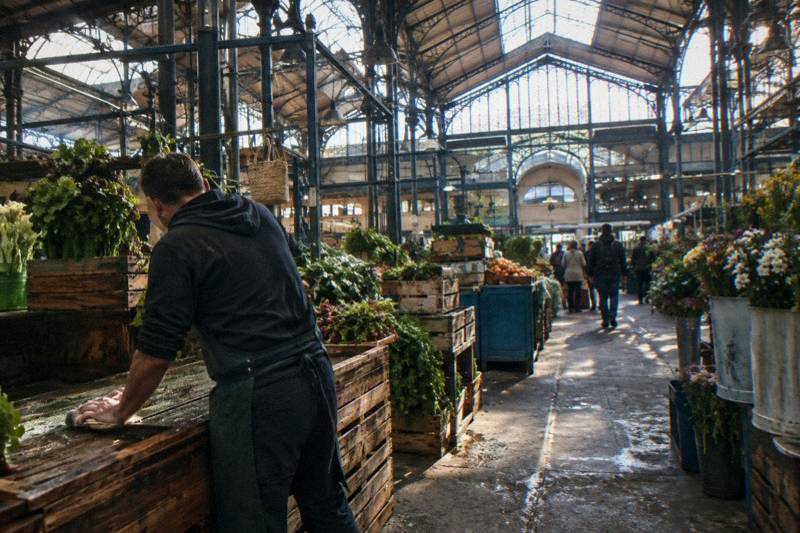
The fixed free anchors are Noche de los Museos, the annual November night when museums open free of charge; the Sunday Patio de Tango on Plaza Dorrego; the Sunday milonga a la gorra at La Glorieta in Barrancas de Belgrano; and the weekend fairs, Feria de San Pedro Telmo and Feria de Mataderos. The Festival y Mundial de Tango adds free activities around August or September each year. None charges entry, though tips and food cost money.
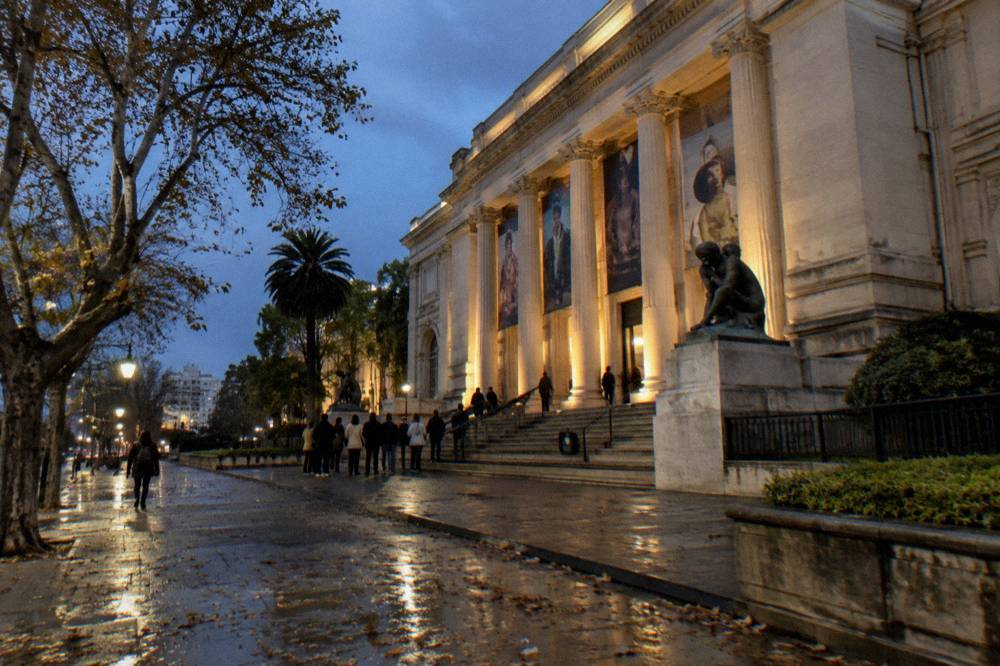
The city's free calendar is not one programme run by one body, and that matters for planning. Noche de los Museos is a single night each November, published by the city's tourism authority on its official events page, when museums across Buenos Aires open their doors free of charge from the evening into the early hours. Individual venues may stop admitting earlier than the official closing hour, so the night rewards an early start rather than a late one.
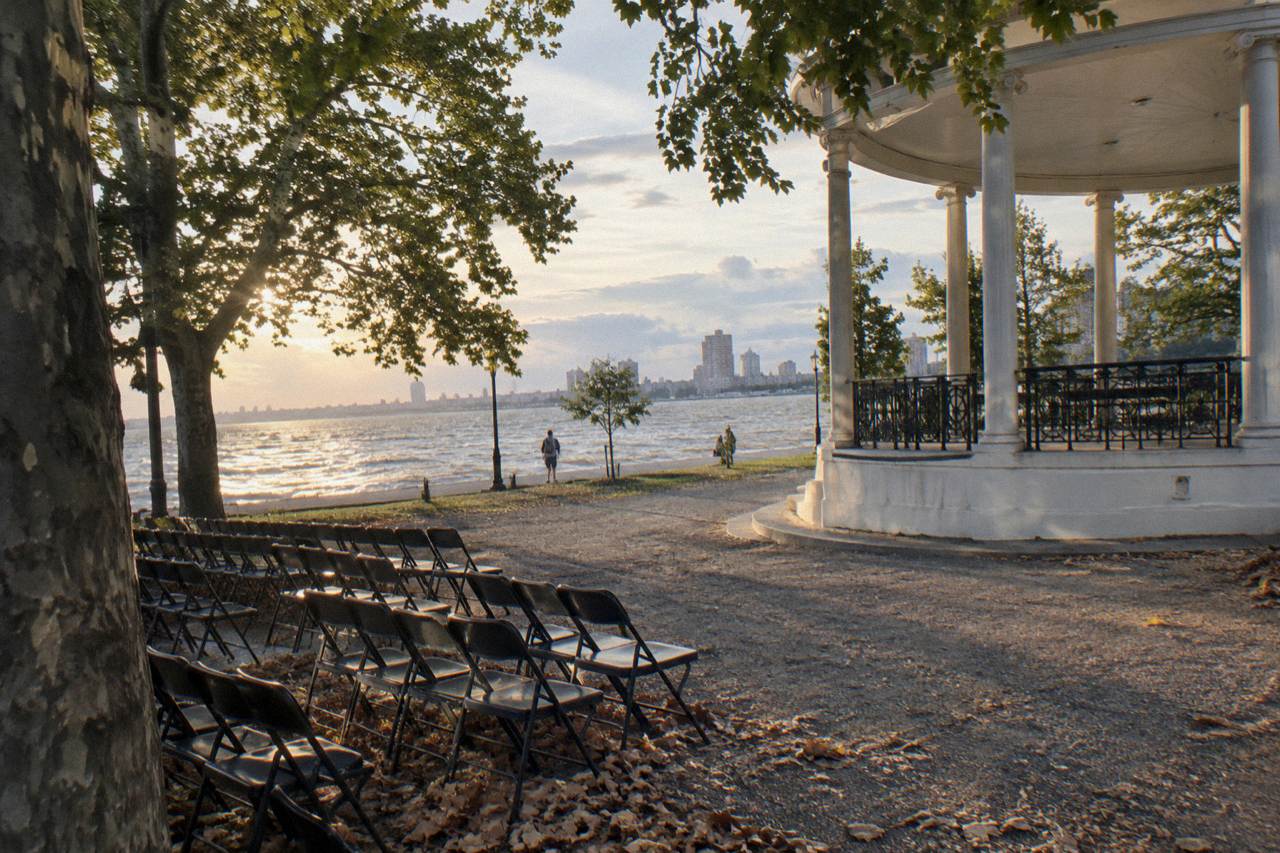
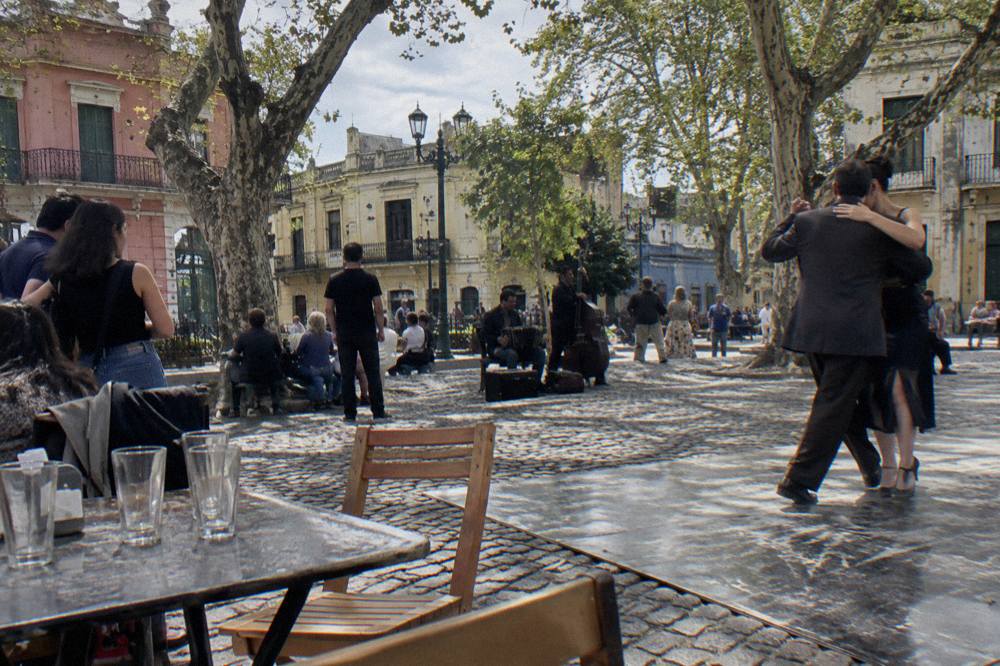
The tango anchors are smaller and weekly. The city tourism page confirms a Patio de Tango every Sunday on Plaza Dorrego in San Telmo, free to watch, with performers taking tips. In Belgrano, the bandstand at Barrancas de Belgrano, La Glorieta, hosts a milonga that runs on Sundays, organised a la gorra, meaning voluntary contributions, by community organisers rather than the city. Both are outdoor, weather-dependent and free in the plain sense: nobody sells you a ticket.
The fairs complete the picture. The Feria de San Pedro Telmo fills San Telmo on Sundays, and the Feria de Mataderos, also a Sunday fair with folk music and dance, is free to browse in its own barrio. Stalls, food and crafts cost money everywhere; walking through costs nothing. The Festival y Mundial de Tango sits between the weekly and the annual: its activities are free, while semifinals, finals and shows need a reservation through tangoba.org, the official tango body's site.
| Free event | Where | When, as official sources state it | What is free |
|---|---|---|---|
| Noche de los Museos | Museums citywide | Annual November night, evening into the early hours | Museum entry |
| Patio de Tango | Plaza Dorrego, San Telmo | Every Sunday | Watching, performers take tips |
| La Glorieta milonga | Barrancas de Belgrano | Sundays | Watching or dancing, a la gorra |
| Feria de San Pedro Telmo | San Telmo | Sundays | Browsing the fair |
| Feria de Mataderos | Mataderos | Sundays | Browsing, music and dance |
| Festival y Mundial de Tango | Various venues | Typically August or September | Activities; finals need reservation |
Is Noche De Los Museos Free?
Yes, Noche de los Museos is free: it is the annual November night when museums across Buenos Aires open free of charge, from the evening into the early hours, and no ticket is sold for entry. Individual venues may stop admitting before the official end of the night, and paid extras inside some buildings are still paid. It is the single largest free event on the city's calendar.
The free part is entry to the participating museums on that one night. What it is not, and what this site is careful to separate, is a change to the ordinary rules of the rest of the year. On every other day the three Wednesday regimes apply in full: the city museums are free on Wednesdays for Argentine residents with DNI only, MAMBA is free on Wednesdays and the last Sunday of the month for all visitors, and MALBA on Wednesday is half price, never free for general visitors. Noche de los Museos overrides all of that for one night and lets everyone in.
Not every museum in the city joins, and the programme changes each year, so the practical move is to read the city's published list for the current edition before planning a route. The buildings on the free-night list cluster where you would expect: the downtown and Recoleta museum corridors, plus neighbourhood museums further out.
A word on timing. The night runs from the evening into the early hours, but venues can close their queues earlier, and the most popular buildings draw the longest lines. Anyone pairing the night with a walk should treat the early hours of the evening as the working window.
Because the museums sit downtown and in Recoleta, the night pairs naturally with the evening-themed free walks. Buenos Aires "Never sleep", a GuruWalk walk by Hernán rated 4.76 out of 5 across 269 GuruWalk reviews, and Buenos Aires, "The Paris of Latin America", rated 4.69 out of 5 across 155 GuruWalk reviews, both meet at Teatro Colón, and both run on a pay what you want basis. A smaller alternative is the Welcome to Buenos Aires walk capped at 12 people, rated 4.78 out of 5 across 28 GuruWalk reviews, meeting at Plaza del Congreso.
All three are English-capable GuruWalk walks, each run by an independent local guide, and this site neither operates nor is affiliated with GuruWalk. Booking a spot is free; the guide is paid by tip at the end.
Where Do Free Concerts And Events Happen?
The recurring free event spaces are Plaza Dorrego and the San Telmo fair streets, Parque Lezama, the Barrancas de Belgrano bandstand, the Feria de Mataderos grounds, and the open plazas of the downtown core: Plaza de Mayo, Plaza del Congreso and Plaza San Martín. The festival venues move each year, while the weekly tango and fair spaces are fixed.
San Telmo is the densest free-events neighbourhood. Plaza Dorrego hosts the Sunday Patio de Tango, the Feria de San Pedro Telmo fills the surrounding streets, and the Mercado de San Telmo sits a few blocks away, free to walk through. Parque Lezama, at the neighbourhood's southern edge, is a meeting point for several free walks, including the San Telmo In-Depth Walk by Emanuel, rated 4.83 out of 5 across 705 GuruWalk reviews, which meets at the Monument to Cordiality in the park.
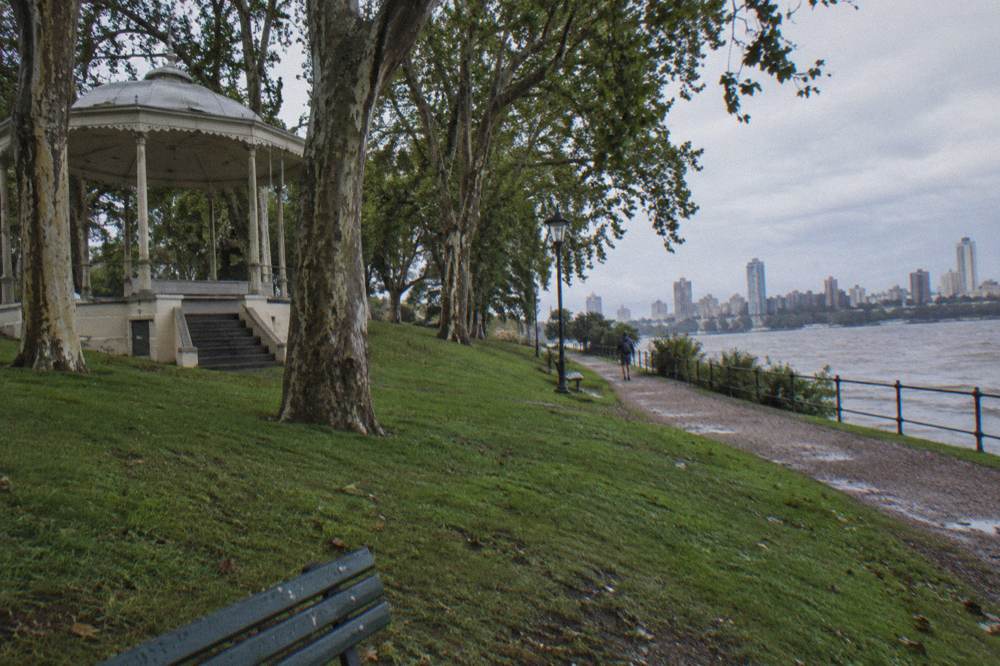
Belgrano belongs on the list for one reason: La Glorieta, the historic bandstand in the Barrancas de Belgrano park, where the Sunday milonga runs a la gorra. The organisers are community groups, not the city, and they change the schedule, so Sundays is as specific as any published planning should get.
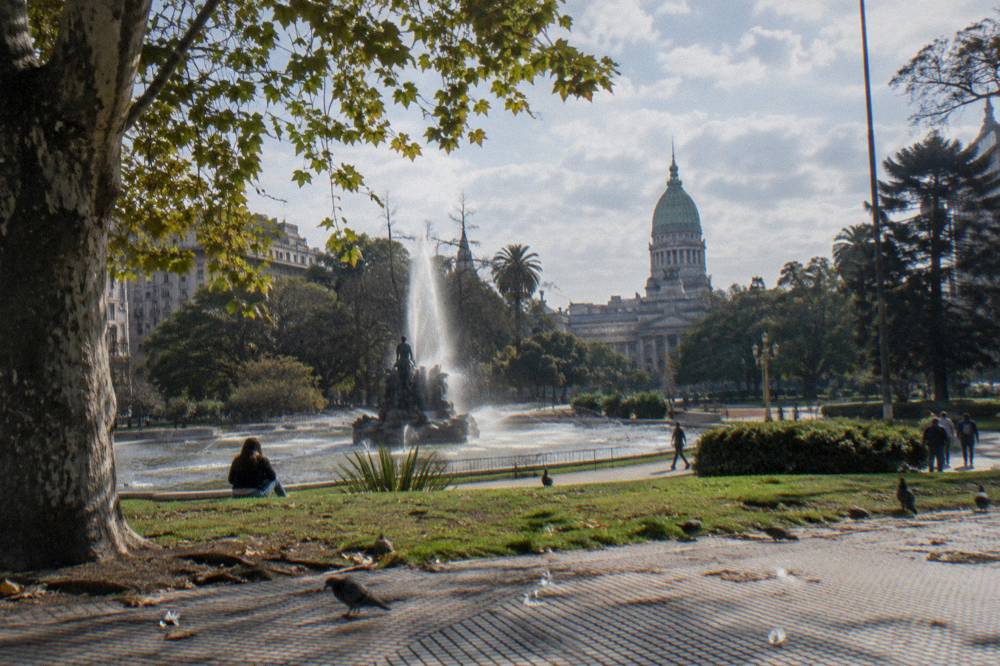
Downtown, the plazas do the work. Plaza de Mayo and Plaza del Congreso anchor the civic and political spaces, and the streets around Avenida de Mayo and the Teatro Colón carry the evening walks. The free concerts themselves, when the festival programme publishes them, are spread across the city's cultural venues, several of which, like the Centro Cultural Kirchner and the Usina del Arte, have conditional or limited details on record and should be checked against their own pages rather. than assumed free. The Planetario Galileo Galilei in Palermo is another conditional listing: state it as a landmark, not as a free-events promise.
Parque de la Memoria, the riverside sculpture park dedicated to the victims of the dictatorship, is free to visit and hosts periodic cultural activity. It sits in the Costanera Norte stretch, a different outing from the Reserva Ecológica Costanera Sur further south, which is free for all visitors, open Tuesday to Sunday, and in the November to March summer schedule runs 8:00 to 19:00, closing Mondays except holidays.
For orientation before an event night, the free walks are the cheapest briefing available. The Downtown Intro by Vive Buenos Aires, three hours, rated 4.84 out of 5 across 1,332 GuruWalk reviews, meets at the Biblioteca del Congreso and covers the downtown core on a pay what you want basis.
What Might You Still Pay For At Free Events?
At the free events themselves, nothing is charged for entry or for watching: Noche de los Museos entry, the Patio de Tango, the La Glorieta milonga and both Sunday fairs are free. The paid edges are tips for performers, food and crafts at the fairs, and the Festival y Mundial de Tango's semifinals, finals and shows, which need reservation. Separately, museums that are free on event night revert to their ordinary paid rules the next day.
Free to do
- Walk guiding (tip only)
- Plazas and street art
- Outside views of landmarks
Paid separately
- Food on food walks
- Show tickets
- Museums that charge
The clearest way to hold this in mind is that free events are free in the entry sense, and the money sits at the edges. At the Patio de Tango on Plaza Dorrego, watching costs nothing and performers take tips. At La Glorieta, the milonga is a la gorra, voluntary, while the classes that some organisers run alongside it are paid. At the fairs, browsing is free and everything on a stall is a purchase. On Noche de los Museos, entry is free and any café, guide or special exhibition inside a building follows its own price.
| Item at a free event | Free or paid | Note |
|---|---|---|
| Noche de los Museos entry | Free | One night a year, everyone |
| Museums the day after | Back to normal rules | Wednesday regimes and paid days resume |
| Patio de Tango, Plaza Dorrego | Free to watch | Tips for performers |
| La Glorieta milonga | Free, a la gorra | Classes alongside are paid |
| Fair browsing, San Telmo and Mataderos | Free | Food and crafts are purchases |
| Festival y Mundial de Tango finals | Paid edge | Reservation through the official tango body |
The trap that catches visitors is the day after, or the day before. Foreign visitors arriving with the idea that museums are generally free will meet the ordinary regime: MALBA at ARS 14,000 general other days and ARS 7,000 on Wednesday, which is half price rather than free; the city museums free on Wednesdays for Argentine residents with DNI only, with tourists paying; Cementerio de la Recoleta free for residents with DNI and paid for foreign visitors through the city's Entradas BA system, with no published figure to print. The event night is the exception, and it is worth building a trip day around it if the November timing allows.
No free walking tour ever charges, on any night. Every walk in this directory of 55 is pay what you want, including those carrying an additional-costs chip for extras bought separately, such as cemetery entry or food on the Recoleta and Retiro walk by WalkBa Tours, where guiding is pay what you want while the extra is bought separately.
When Should You Go To Free Events In Buenos Aires?
Go in November for Noche de los Museos, on any Sunday for the tango anchors, Plaza Dorrego's Patio de Tango, the La Glorieta milonga and both fairs, and around August or September for the Festival y Mundial de Tango's free activities. Sunday is the single busiest free day in the city's week, and November is the single biggest free night of its year.
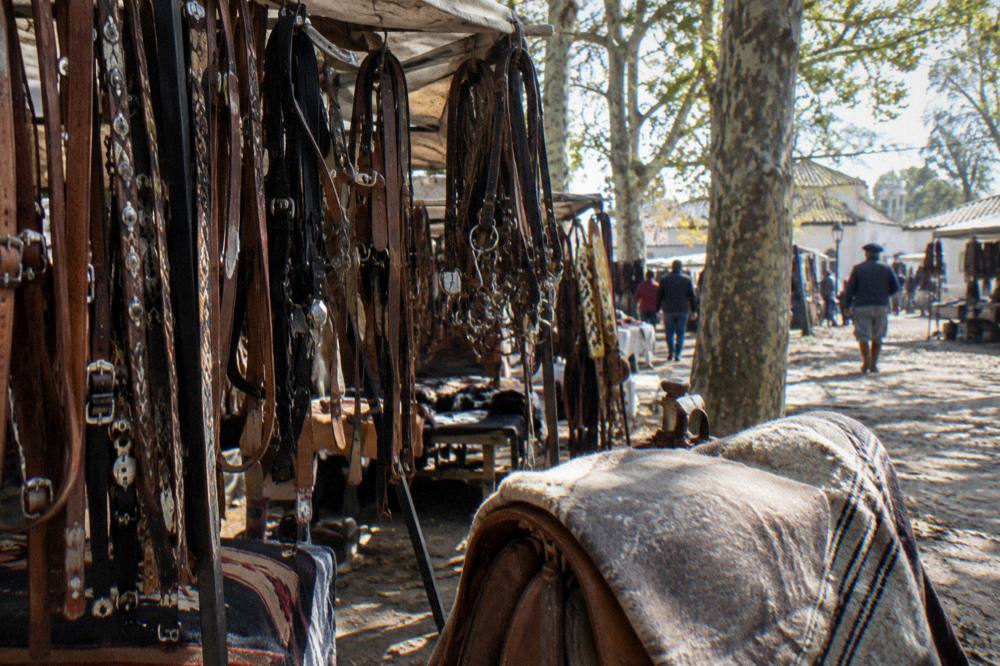
Sundays reward an early arrival in San Telmo, where the Feria de San Pedro Telmo and the Patio de Tango share the neighbourhood with the Mercado de San Telmo. In Belgrano, the La Glorieta milonga runs on Sundays, and the schedule beyond that day is the organisers' own, so check their pages rather than any fixed timetable. Mataderos is likewise a Sunday fair, further from the centre, and free to browse with folk music and dance as part of the fair itself.
November belongs to Noche de los Museos. Because the night is annual, a visitor who lands in the wrong month simply misses it, and the next best free museum day depends on the Wednesday regimes: MAMBA is free on Wednesdays and the last Sunday of the month for all visitors, PROA is free on Wednesdays for all, and the national museums, including the Museo Nacional de Bellas Artes and the Museo Casa Rosada, are free for all whenever they are open, Wednesday to Sunday. The Museo Casa Rosada keeps hours of 11:00 to 18:00 on those days.
The tango festival is a late-winter fixture, typically August or September, with free activities published in its programme and the ticketed finals requiring reservation. The Semana de las Milongas sits in August, with some activities free on booking. Between the anchors, the free standing attractions fill any week: Caminito in La Boca is free to walk, the Obelisco is free to see from the outside, and El Ateneo Grand Splendid and Galerías Pacífico are free to enter and walk through, shops and books aside.
Planning around a first visit is easier with a walk booked for day one. The Short City Center History Walk by WalkBa Tours, one hour and 45 minutes, English only, rated 4.91 out of 5 across 621 GuruWalk reviews, meets at the Congress Monument and works as a compact orientation before an event evening.
Which Free Walking Tours Meet Near Event Spaces?
The walks that meet closest to the free event spaces are the downtown cluster around Plaza de Mayo, Plaza del Congreso and Teatro Colón, the San Telmo cluster around the Mercado de San Telmo and Parque Lezama, and the Recoleta cluster around Plaza San Martín and the Recoleta museums. All of them are pay what you want, and the English-capable options can be reserved on their GuruWalk pages.
GuruWalk
Most walks here, run by independent guides
Pay what you want
freetour.com
A smaller set, mostly Spanish-led
Pay what you want
San Telmo has the tightest fit, because its walks meet inside the event neighbourhood itself. The San Telmo Essentials in English walk, rated 4.87 out of 5 across 209 GuruWalk reviews, meets at the Mercado de San Telmo on Adolfo Alsina, the same market visitors browse on a Sunday. The Spanish-language San Telmo Market Walk, listed on freetour.com and rated 9.6 out of 10 across 10,059 reviews shown on its freetour.com listing, meets at the Iglesia de San Ignacio on Bolívar. The Origins: San Telmo and Monserrat walk by Vive Buenos Aires, rated 4.96 out of 5 across 51 GuruWalk reviews, meets at the Cabildo de Buenos Aires. One of the free walks starts in this part of the city: Free City Center Walk.
Downtown, the meeting points line up with the civic plazas. The First-Timer Welcome walk, rated 4.92 out of 5 across 743 GuruWalk reviews, meets at the Casa Rosada on Plaza de Mayo. The Max 6 People Small Group walk by Andreas, rated 4.97 out of 5 across 551 GuruWalk reviews, meets at the Obelisco and runs three and a half hours, the longest of the options. Recoleta's cluster meets at the San Martín Monument in Plaza San Martín, shared by the Short Retiro and Recoleta Walk, rated 4.87 out of 5 across 385 GuruWalk reviews and carrying an additional-costs chip, and the Aristocratic Retiro and Recoleta walk, rated 4.87 out of 5 across 212 GuruWalk reviews.
| Walk | Platform | Rating and reviews | Meets at | Fits which event space |
|---|---|---|---|---|
| San Telmo Essentials in English | GuruWalk | 4.87 out of 5, 209 reviews | Mercado de San Telmo | Patio de Tango, fair streets |
| First-Timer Welcome | GuruWalk | 4.92 out of 5, 743 reviews | Casa Rosada, Plaza de Mayo | Downtown museum night |
| Max 6 People Small Group | GuruWalk | 4.97 out of 5, 551 reviews | Obelisco | Downtown and Avenida 9 de Julio |
| Short Retiro and Recoleta Walk | GuruWalk | 4.87 out of 5, 385 reviews | San Martín Monument, Plaza San Martín | Recoleta museums |
| Downtown Intro, 3 Hours | GuruWalk | 4.84 out of 5, 1,332 reviews | Biblioteca del Congreso | Congreso and Avenida de Mayo |
The small-group format suits visitors who want room to ask questions before an event night. The Max 6 People Small Group walk caps numbers at six, runs three and a half hours in English and Spanish, and covers the downtown core on the usual pay what you want basis.

For everything else on the calendar, the events pages collected by Free Things To Do In Buenos Aires group the year's free anchors, and the Sunday-specific options are pulled together in the free Sunday activities guide. If a museum night is what brought you here, the free museums guide sorts which ones are free for whom on ordinary days.
Mistakes That Trip People Up At Free Events
The recurring mistakes are assuming the museums stay free after Noche de los Museos, treating MALBA's Wednesday as a free day when it is half price, expecting a schedule for the La Glorieta milonga beyond Sundays, and mixing up the two Sunday fairs' neighbourhoods. Each one is avoidable with the regime table above.
The first mistake is the day-after error. Noche de los Museos is one night; from the next morning the ordinary rules return, and for foreign visitors those rules mostly mean paying. The second is MALBA, which is half price on Wednesday, ARS 7,000 general against ARS 14,000 other days, the same rate for tourists and residents, and free only for students, teachers and retirees, and only on Wednesday. Calling it free misprices a visit.
The third is the La Glorieta schedule. The milonga runs on Sundays, organised a la gorra by community organisers who change the details, so any published hour beyond the day itself would go stale. The fourth is assuming the festival is entirely open: the Festival y Mundial de Tango's activities are free, but the semifinals, finals and shows need reservation through the official tango body. The fifth is forgetting that a free walking tour does not cover paid extras: the Recoleta Cemetery walks on GuruWalk, for instance, are pay what you want for guiding while cemetery entry for foreign visitors is bought separately, and no walk's tip covers it.
A final one worth naming: arriving at the tango anchors expecting a stage show. The Patio de Tango and the La Glorieta milonga are community events, free to watch, tip-based, and different in kind from the paid tango shows around them. The comparison between the two is laid out in the can you see a tango show for free post, and the wider tango picture sits in the free tango guide.
If an evening walk is the plan, three English-capable options below cover the formats: the longest small-group walk, the theme walk, and the capped welcome walk, all on GuruWalk and all pay what you want.
Common Questions About Free Events In Buenos Aires
Is Noche de los Museos free?
Yes. It is the annual November night when museums across Buenos Aires open free of charge, from the evening into the early hours, with entry free for everyone on the night. Individual venues may stop admitting earlier than the official end, and the ordinary entry rules, including the Wednesday regimes and resident-only free days, resume the next day.
Where do free concerts happen in Buenos Aires?
The recurring free event spaces are Plaza Dorrego in San Telmo for the Sunday Patio de Tango, the La Glorieta bandstand in Barrancas de Belgrano for the Sunday milonga, the Feria de Mataderos grounds, and the downtown plazas. Festival venues move each year and are listed in the official programme when published.
When is Noche de los Museos held?
Each November, on a single night, running from the evening into the early hours. The exact date changes yearly and is published by the city's tourism authority, so check the official page for the current edition rather than relying on last year's date.
Is the tango at Plaza Dorrego free?
Yes, free to watch. The city tourism page confirms a Patio de Tango every Sunday on Plaza Dorrego, with performers taking tips. It is a community event rather than a ticketed show, weather dependent, and it shares the plaza with the Feria de San Pedro Telmo on Sundays.
Does the Festival y Mundial de Tango cost anything?
The festival's activities are free, while the semifinals, finals and shows need a reservation through the official tango body's site, tangoba.org. It runs annually, typically in August or September, and the programme is published ahead of each edition.
Are free walking tours available on event days?
Yes. All 55 walks in this directory are pay what you want, run by independent local guides on GuruWalk and, for a handful of Spanish-language walks, on freetour.com. Several meet inside the event neighbourhoods themselves, including at the Mercado de San Telmo and on Plaza de Mayo, and can be reserved without paying anything up front.