Free And Cheap Things To Do In Recoleta, Buenos Aires
Recoleta is the most visited neighbourhood in Buenos Aires after the downtown core, and a surprising share of it costs nothing: a world-class national museum, a giant steel flower, Parisian plazas and a cemetery that is free for one group of visitors and paid for another.
In Short
The neighbourhood itself, its plazas, Floralis Genérica and the Museo Nacional de Bellas Artes are free for everyone. Cementerio de la Recoleta is free for Argentine residents with DNI and paid for foreign visitors through the city's Entradas BA system, with no published amount. Free pay-what-you-want walking tours by independent guides meet at Plaza San Martín and the Fine Arts museum.
Part of the Free Things To Do In Buenos Aires guides.
Quick Facts
| Question | Answer |
|---|---|
| Is the neighbourhood itself free? | Yes, Recoleta's plazas, streets and Floralis Genérica are free public space |
| Cementerio de la Recoleta | Free for Argentine residents with DNI; paid for foreign visitors via Entradas BA, no published amount |
| Museo Nacional de Bellas Artes | Free for all visitors; open Wednesday to Sunday |
| Floralis Genérica | Free, open public space |
| What costs money here | Cemetery entry for foreign visitors, Jardín Japonés, Teatro Colón tours, MALBA general entry |
| Nearest free walk platforms | GuruWalk and freetour.com, both with walks meeting in Recoleta and Retiro |
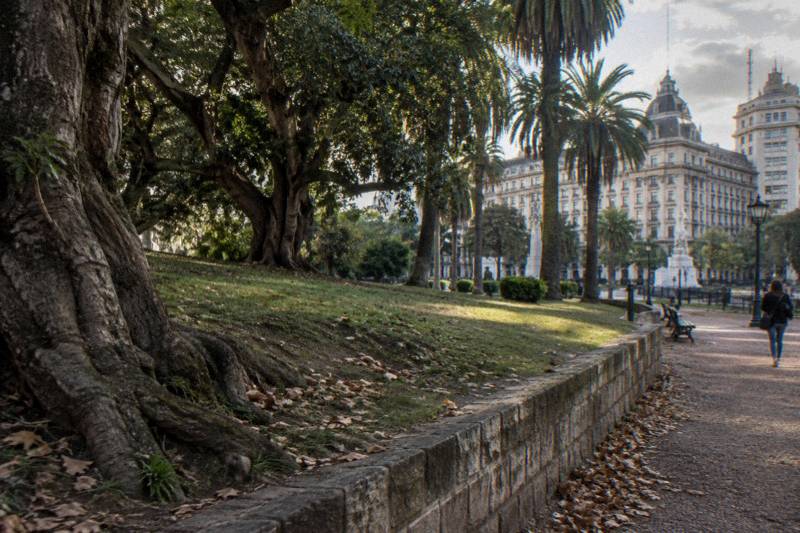
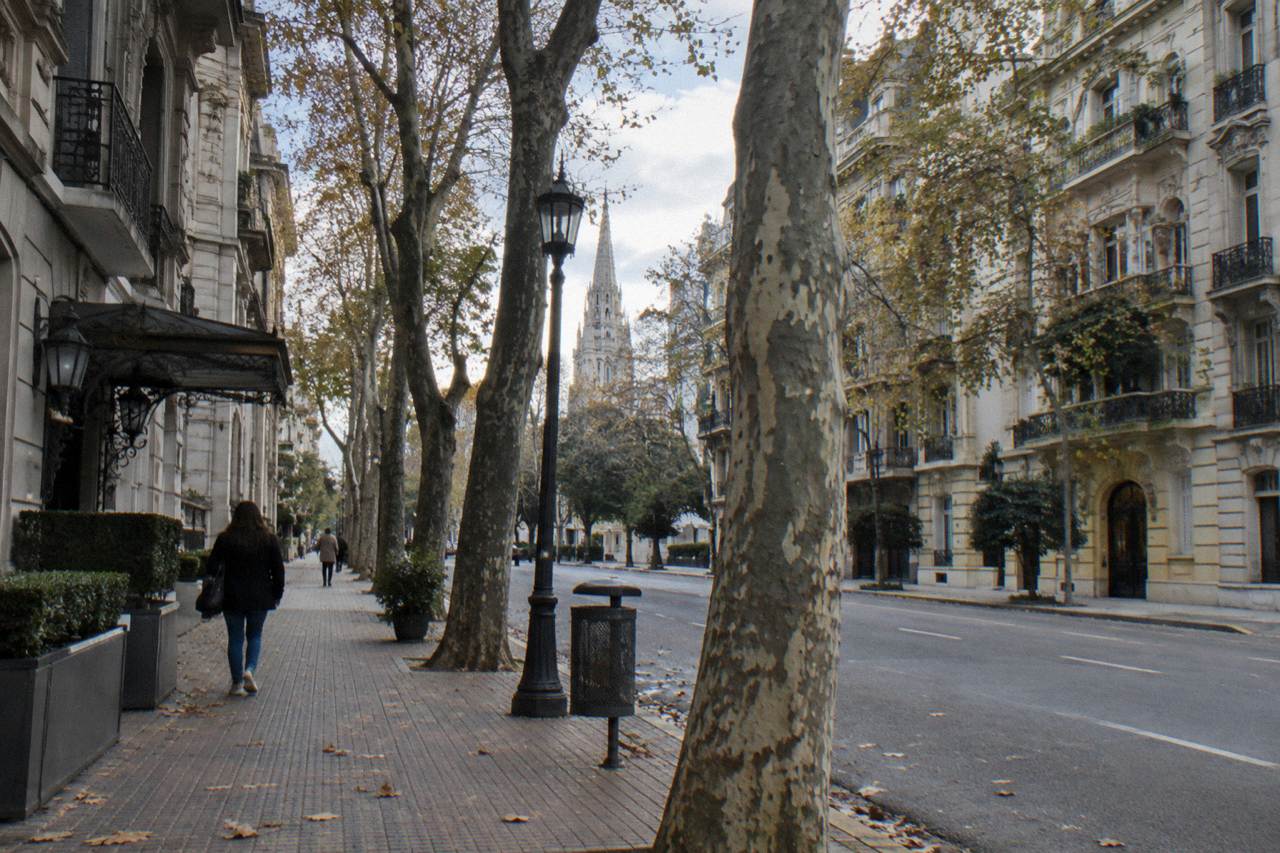
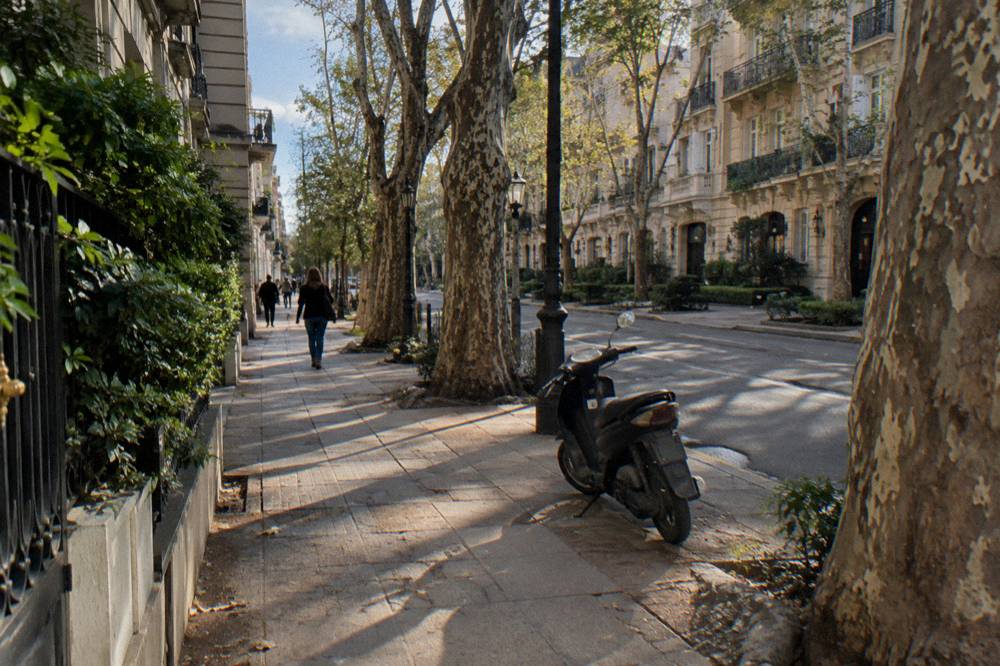
Recoleta was built to look like Paris, and the porteño aristocracy that built it succeeded so well that the neighbourhood now works as a free open-air museum of mansions, church spires and plane-tree avenues. Almost everything worth photographing here stands in public space. The exceptions, the cemetery's foreigner entry rule and the paid museums and gardens at the edges of the barrio, are exactly where visitors lose money by not knowing the split, so this guide separates the free from the paid line by line.
Is Recoleta Free To Visit?
Yes, Recoleta the neighbourhood is entirely free to visit, and so are its best-known outdoor sights: Plaza Francia, Plaza San Martín, the avenue of embassies and the Floralis Genérica steel flower are all free public space, open to walk at any hour with no ticket, gate or guided requirement anywhere among them. A free walk meets in this neighbourhood: Recoleta-Only Free Walk.
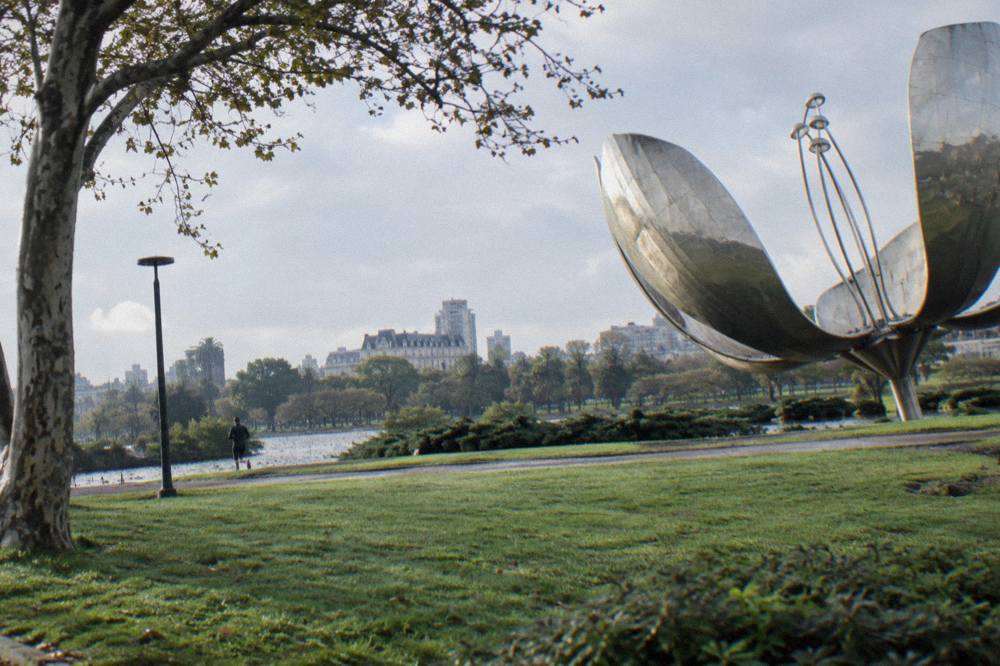
The barrio costs nothing to enter because there is nothing to enter. Recoleta is a residential neighbourhood of Belle Epoque apartment blocks and mansions, and its sights are its streets. Floralis Genérica, the enormous silver flower that opens its petals by day and closes them at night, stands in a public plaza beside the Museo Nacional de Bellas Artes and is one of the most photographed objects in the city precisely because it is accessible, unpaid and always there. The plazas around it, Plaza Francia and Plaza Intendente Alvear, host the Recoleta Cultural Centre building and the facade of the Basílica Nuestra Señora del Pilar, both of which can be seen and photographed from outside for nothing.
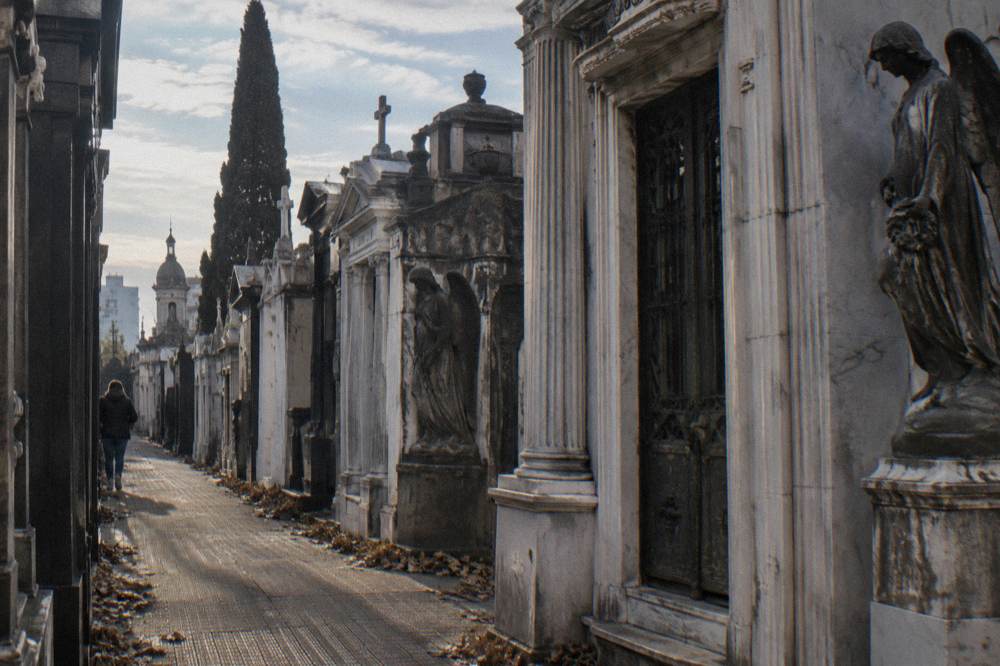
The one genuinely famous thing here that carries an entry condition is Cementerio de la Recoleta, the city-within-a-city of mausoleums where Eva Perón is buried. It is free for Argentine residents with DNI and paid for foreign visitors, who book through the city's Entradas BA system; no official figure has been published for the foreigner ticket, so treat any number you see on a third-party site with caution. The cemetery has its own Recoleta Cemetery guide on this site, which goes deeper into the layout and the entry rule.
For everything else, the practical answer is simple: walk in. The pedestrian scale of the barrio, its low-rise avenues and the shade of its plane trees are the attraction, and none of it is ticketed. The Plaza de Mayo and Casa Rosada guide covers the downtown equivalent further south, where the same rule holds, the plaza is free and the museum behind the palace carries its own opening days.
What Is Free Around Recoleta?
The free list in and around Recoleta is longer than most visitors expect: the Museo Nacional de Bellas Artes is free for everyone, Floralis Genérica and the surrounding plazas are free public space, and a short walk south brings you to the Obelisco, Galerías Pacífico and El Ateneo Grand Splendid, all free to see or enter.
GuruWalk
Most walks here, run by independent guides
Pay what you want
freetour.com
A smaller set, mostly Spanish-led
Pay what you want
The Museo Nacional de Bellas Artes is the headline free item. It is a national museum, which in Buenos Aires means free entry for all visitors, foreign or resident, with no free day to time your visit around. It holds one of the largest collections of European and Argentine art in the country, and it sits directly across the plaza from Floralis Genérica, so the two combine naturally into a single free afternoon. Like the other national museums, it opens Wednesday to Sunday, so plan it away from a Monday or Tuesday. There is a dedicated Museo Nacional de Bellas Artes guide on this site with the details.
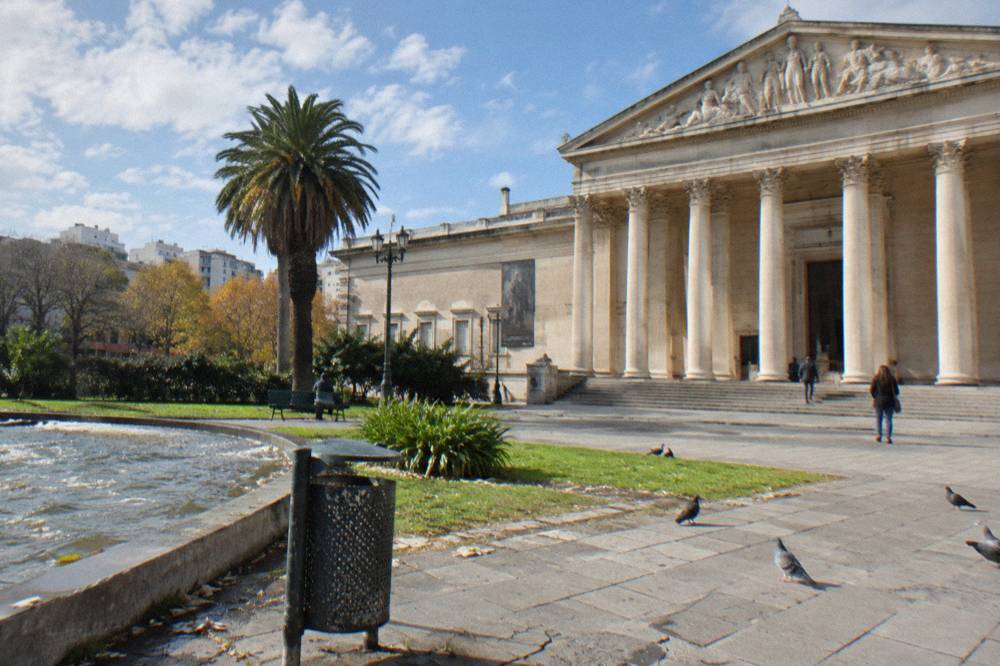
Around the museum, the free surface of the barrio spreads out: Plaza Francia's broad steps, the front of the Basílica Nuestra Señora del Pilar (its entry terms are not published, so view it from outside), and the garden approaches toward Palermo. Heading downhill toward Retiro brings you to Plaza San Martín, another free open plaza framed by the Clock Tower and the mansions of Avenida Libertador. A free walk called Fine Arts Museum, One Hour, listed on GuruWalk with a rating of 4.74 out of 5 across 23 GuruWalk reviews, even meets at the museum's entrance for a pay-what-you-want guided hour in English and Spanish. One of the free walks starts in this part of the city: Recoleta in Spanish and Italian.
| Free sight in or near Recoleta | Who gets in free | Notes |
|---|---|---|
| Museo Nacional de Bellas Artes | Everyone | Open Wednesday to Sunday |
| Floralis Genérica | Everyone | Open public plaza, no hours or tickets |
| Plaza Francia and Plaza San Martín | Everyone | Open public space |
| Caminito street tango, La Boca | Everyone, to watch | Tips for performers are voluntary |
| Galerías Pacífico | Free to enter and walk through | Shops and the café cost money |
| El Ateneo Grand Splendid | Free to enter and walk through | Books and the café cost money |
Two blocks of practical advice shape any Recoleta day. First, the Wednesday free-entry landscape in this city has several different regimes, and if you are timing museums around a Wednesday, read the free art days guide before assuming a museum is free that day. Second, the neighbourhood's free walking tours, covered in full below, are themselves free things to do, pay what you want at the end, and they run on both GuruWalk and freetour.com with regular meeting points inside the barrio.
The trio above are the site's featured downtown walks, all on GuruWalk, all pay what you want, and all useful as a first-day orientation before you strike out into Recoleta on your own. They are shown here because most visitors pair Recoleta with a downtown walk on the same trip, and booking both on the same platform keeps your plans in one place.
What Costs Money At Recoleta?
The paid list around Recoleta is short but sharp: cemetery entry for foreign visitors, the Jardín Japonés at ARS 24,000 for non-residents, Teatro Colón guided tours at ARS 37,000 general, MALBA general entry at ARS 14,000 other days and ARS 7,000 on Wednesday, and the paid museums and stadium experiences in neighbouring La Boca if you continue that direction.
Start with the cemetery, because it is the one people get wrong. The rule is not "free" and not "paid": it is free for Argentine residents with DNI, and paid for foreign visitors who buy through Entradas BA. No official amount is published, so say nothing when someone quotes you a number on a tour-brochure website. The free Recoleta Cemetery walking tours listed on GuruWalk and freetour.com do not cover that entry fee; the walk itself is pay what you want, but foreign visitors still buy their own entry. Two of those walks, the Spanish-only Free Tour of the Recoleta Cemetery and the English Hidden Stories of the Recoleta Cemetery, carry an additional-costs chip on their listings for exactly this reason.
The Jardín Japonés sits a pleasant walk north through the Bosques de Palermo. It charges ARS 24,000 for non-residents and ARS 8,000 for residents, so it belongs on the paid list even though the parkland around it, Parque Tres de Febrero and its lakes, is free to walk while only the paddle boats are paid. The parks and gardens guide covers the free green spaces in full. Teatro Colón, on the Retiro edge of the barrio, is paid for tours at ARS 37,000 general, ARS 18,000 for residents and ARS 8,000 for resident retirees and students; the Teatro Colón guide explains what that ticket buys.
| Sight near Recoleta | Free part | Paid part |
|---|---|---|
| Cementerio de la Recoleta | Entry for Argentine residents with DNI | Foreign visitors pay via Entradas BA, no published figure |
| Museo Nacional de Bellas Artes | All entry, all visitors | Special exhibitions may differ, check the museum |
| MALBA | Students, teachers and retirees, Wednesdays only | ARS 7,000 Wednesday general, ARS 14,000 other days |
| Jardín Japonés | The surrounding parkland | ARS 24,000 non-residents, ARS 8,000 residents |
| Parque Tres de Febrero | Walking the lakes and lawns | Paddle boats |
| Teatro Colón | Seeing the building from outside | Tours ARS 37,000 general, ARS 18,000 residents |
MALBA deserves its own sentence because it is the most misunderstood museum in the city: Wednesday is half price, never free, at ARS 7,000 general against ARS 14,000 on other days, with the same rate for tourists and residents. Only students, teachers and retirees enter free, and only on Wednesday. The figures above are the current prices in November 2026; they move often, so treat them as a planning range rather than a promise, and check the museum's own page before you go.

When Should You Go To Recoleta?
Go Wednesday to Sunday if museums matter to you, because the Museo Nacional de Bellas Artes and the other national museums are open only those days; go any day for the plazas, Floralis Genérica and the cemetery's street-facing facades; and if your trip falls in November, the city's Noche de los Museos opens museums free of charge on one evening into the early hours.
The closing-day map decides most Recoleta itineraries. The national museums, including the Fine Arts museum, run Wednesday to Sunday. MALBA, the city museums and MAMBA close Tuesdays. PROA in La Boca opens Wednesday to Sunday only. Monday belongs to Recoleta's outdoor side: the plazas, the flower, the cemetery's exterior walls and the long walk down Avenida Alvear through the embassy district. None of that closes. The wider set of guides lives on Free Things To Do In Buenos Aires.
The season matters less here than in the parks, because Recoleta's sights are architectural rather than botanical. Still, the November-to-March stretch brings longer daylight for walking the barrio, and November brings the one date worth structuring a trip around: Noche de los Museos, the annual November night when museums across Buenos Aires open free of charge from the evening into the early hours, with venues across the city participating. No specific date or venue list belongs in a plan this far out, but if you are in the city in November, check the city tourism calendar at turismo.buenosaires.gob.ar before assuming anything about that evening.
For the cemetery specifically, go whenever the rest of your day allows, with one practical note: foreign visitors now buy through Entradas BA, so factor the booking into your timing rather than walking up assuming the old free-for-all still applies. The Recoleta Cemetery questions are covered in full on this site's is Recoleta Cemetery free post, which stays current on the entry rule.
How Do You Combine Recoleta With Other Free Sights?
The natural free route runs downhill from Recoleta to Retiro and Plaza San Martín, then along Avenida de Mayo's building facades toward Plaza de Mayo, or north through the Bosques de Palermo to the Jardín Botánico, which is free and closes Mondays; both directions chain free public sights together with no tickets at any link.
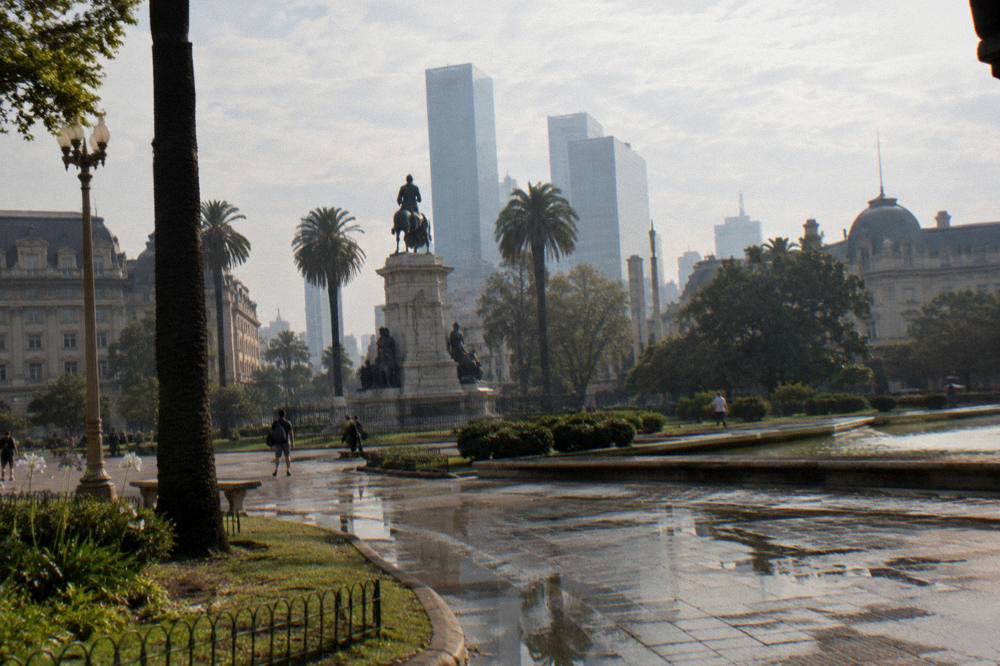
Southbound first. From the Fine Arts museum and Floralis Genérica, walk down through Plaza San Martín, past the Clock Tower, and into the downtown microcentro, where the Obelisco is free to see from the outside (no mirador entry exists), Galerías Pacífico is free to enter and walk through, and Plaza de Mayo is free public space anchored by the Casa Rosada, whose free museum sits behind the palace. The full sequence, and the Wednesday-to-Sunday opening days of the free museums along it, is laid out in the free things to do in Buenos Aires overview guide. A free walk meets close to this area, Parisian-Style Recoleta, Spanish.
Northbound, Recoleta flows into Palermo's green belt. The walk takes you past the Museo Nacional de Arte Decorativo, free for all as one of the national museums, and on to the Jardín Botánico Carlos Thays, free and open to everyone, closed Mondays. The Bosques de Palermo and the Rosedal lakes are free public parkland; only the paddle boats cost money. The free things to do in Palermo guide maps that half of the chain.
A free walking tour is the third way to combine, and it is the one that costs nothing but the tip. The Downtown Intro, 3 Hours walk by Vive Buenos Aires, listed on GuruWalk with a rating of 4.84 out of 5 across 1,332 GuruWalk reviews, runs three hours in English and Spanish from the Biblioteca del Congreso, and it covers the downtown half of the chain before you continue to Recoleta on your own.
Whether you walk the chain alone or with a guide, the same budget logic applies: everything on the route above is free public space or a free national museum, and the only places money enters are the cemetery's foreigner entry, the Jardín Japonés and Teatro Colón if you choose to add them.
Which Free Walking Tours Meet Near Recoleta?
Several pay-what-you-want walks meet inside Recoleta and Retiro, on both GuruWalk and freetour.com: featured options include the Aristocratic Retiro and Recoleta walk at Plaza San Martín, the Short Retiro and Recoleta Walk by WalkBa Tours at the same monument, and the Recoleta Architecture Walk, while freetour.com lists its own Recoleta and Retiro walks from the Teatro Colón corner and Plaza Estado del Vaticano.
The Aristocratic Retiro and Recoleta walk, by Vive Buenos Aires, meets at the San Martín Monument in Plaza San Martín and runs 2 hours 30 minutes in English and Spanish, rated 4.87 out of 5 across 212 GuruWalk reviews. Guiding is pay what you want, you decide the amount at the end, and the walk covers the Retiro and Recoleta neighbourhoods. Like every walk on this site's directory, it is run by an independent local guide through their GuruWalk page, and this site neither operates nor is affiliated with GuruWalk.
The Short Retiro and Recoleta Walk by WalkBa Tours also meets at the San Martín Monument, runs 1 hour 45 minutes in English, and is rated 4.87 out of 5 across 385 GuruWalk reviews. It carries an additional-costs chip on its listing, meaning guiding is pay what you want while any extra, such as an entry fee, is bought separately; the walk is never fully free in that sense, and no amount is stated for the extras. It suits a visitor who wants the barrio's outline in under two hours.
Beyond the featured options, the directory lists additional walks across Recoleta and Retiro in several languages, including Spanish-only and Italian-language walks on GuruWalk, and the freetour.com listings: the Recoleta and Retiro Free Walk, meeting at the Teatro Colón corner, rated 9.3 out of 10 across 10,126 reviews shown on its freetour.com listing, and the Recoleta-Only Free Walk from Plaza Estado del Vaticano, rated 9.5 out of 10 across 10,132 such reviews. Those figures are freetour.com's own, out of 10, and are never comparable with GuruWalk's five-star scale, which is why they are printed here exactly as their platform shows them.
| Free walk near Recoleta | Platform | Meets at | Duration | Language |
|---|---|---|---|---|
| Aristocratic Retiro and Recoleta | GuruWalk | San Martín Monument, Plaza San Martín | 2 hours 30 minutes | English and Spanish |
| Short Retiro and Recoleta Walk | GuruWalk | San Martín Monument, Plaza San Martín | 1 hour 45 minutes | English |
| Recoleta Architecture Walk | GuruWalk | Plazoleta Carlos Pellegrini | 2 hours 15 minutes | English and Spanish |
| Recoleta and Retiro Free Walk | freetour.com | Teatro Colón, Viamonte and Libertad | 2 hours 30 minutes | English and Spanish |
| Recoleta-Only Free Walk | freetour.com | Plaza Estado del Vaticano | 2 hours 30 minutes | English and Spanish |
The national culture ministry's own site, cultura.gob.ar, is the source for the national museums' free entry if you want to confirm a museum's status independently before your walk.
Mistakes That Trip People Up At Recoleta
The costly mistakes at Recoleta are assuming the cemetery is still free for everyone, assuming Wednesday means free at MALBA, planning the national museums for a Monday or Tuesday, and paying for a walk that claims to include cemetery entry it does not cover, each of which costs real money or a wasted morning.
The cemetery mistake is the most common. The old "free Recoleta Cemetery" advice is out of date: residents with DNI enter free, foreign visitors pay through Entradas BA, and the free walking tours do not cover that fee. Write the rule as two facts, never one. The second mistake is MALBA, where Wednesday is half price rather than free; Is MALBA Free? covers the whole regime. Third, the national museums, including the Fine Arts museum, keep a Wednesday-to-Sunday week, so a Monday or Tuesday museum day in Recoleta finds them shut. Fourth, visitors sometimes pay for a commercial tour out of the assumption that free walks are unreliable; the walks above carry four-digit review pools on their platforms, on pay-what-you-want terms, and the featured ones run in English. The last mistake is treating the Recoleta walk list as complete; GuruWalk advertises more free tours in Buenos Aires than any directory lists, so check the platform itself for new additions before you commit to a day.
A word on walking the barrio itself: it is ordinary city streets, and the usual big-city precautions apply anywhere. The Recoleta walks run on fixed meeting points in public plazas, in groups, with a local guide, which is how all of them operate.
Common Questions About Recoleta
Is Recoleta free to visit?
Yes, the neighbourhood and its outdoor sights, including Floralis Generica, Plaza Francia and Plaza San Martin, are free public space. The exceptions are Cementerio de la Recoleta, free only for Argentine residents with DNI and paid for foreign visitors, and the paid museums and gardens around the barrio's edges.
Do tourists pay to enter the Recoleta Cemetery?
Yes. Argentine residents with DNI enter free, and foreign visitors pay through the city's Entradas BA booking system. No official amount is published, so budget flexibly, and note that free cemetery walking tours do not cover the entry fee.
Is the Museo Nacional de Bellas Artes free?
Yes, for all visitors, residents and foreigners alike, with no free day to time around. It is open Wednesday to Sunday and closed Monday and Tuesday, like the other national museums in the city.
What is free to do in Recoleta on a Monday?
The plazas, Floralis Generica, Avenida Alvear and the cemetery's street-facing facades are all free public space with no closing day. The national museums are shut Monday and Tuesday, so spend Monday outdoors and save the Fine Arts museum for Wednesday onward.
Are there free walking tours of Recoleta?
Yes. Pay-what-you-want walks meet at Plaza San Martin and the Teatro Colon corner, on both GuruWalk and freetour.com, in English, Spanish and other languages. They last about two to three hours and you pay the guide what you choose at the end.
Is Floralis Genérica free to see?
Yes. The giant steel flower stands in open public space beside the Museo Nacional de Bellas Artes, with no ticket, gate or opening hours. It is one of the few major Buenos Aires sights that is free for absolutely everyone, at any hour.