Is Recoleta Cemetery Free?
Recoleta Cemetery is free for Argentine residents with DNI and paid for foreign visitors through the city's Entradas BA system. Here is exactly who pays, when it is open, and the free walking tours that meet nearby.
In Short
Recoleta Cemetery is free for Argentine residents with DNI and paid for foreign visitors, who book through the city's Entradas BA system. No official price for foreign visitors has been published, so treat any figure you see online with caution. The cemetery is an open-air landmark you can also appreciate fully from its surrounding plaza, and free pay what you want walking tours of Recoleta meet nearby on both GuruWalk and freetour.com.
This question sits inside the Recoleta Cemetery visitor guide, which owns the full place rundown. This post owns the one question: is it free?
Quick Facts
| Question | Answer |
|---|---|
| Is Cementerio de la Recoleta free? | Free for Argentine residents with DNI only |
| What do foreign visitors do? | Pay through the city's Entradas BA system, no official figure published |
| Can a free walking tour cover entry? | No. Free walks are pay what you want guiding; cemetery entry for foreign visitors is separate |
| Free guided walks nearby? | Yes, Recoleta and Retiro walks on GuruWalk and freetour.com meet in the surrounding neighbourhood |
| What else is free around it? | Plaza Juan XXIII, Plaza Francia, Floralis Genérica and the Museo Nacional de Bellas Artes are free for all |
| Closed days to remember? | The nearby national museums are open Wednesday to Sunday only; the cemetery keeps its own published calendar |
Is Recoleta Cemetery Free?
For Argentine residents with DNI, yes, Cementerio de la Recoleta is free to enter. For foreign visitors it is not: entry is paid and handled through the city's Entradas BA ticketing system. No official price has been published on a fetched government page, so this site does not print a number, and any figure circulating online should be checked against the official channel before you budget for it.
This is one of the clearest resident-versus-visitor splits in Buenos Aires, and it is a recent change to how the cemetery worked for decades. For years the site was simply open and free to everyone, which is why so many older travel articles still describe it that way. The city moved to a two-tier system in which locals show their DNI, the national identity document, and walk in, while everyone else buys entry through Entradas BA, the city's official ticketing platform. One of the free walks starts in this part of the city: Recoleta-Only Free Walk.
The practical consequence for a visitor from abroad is straightforward. You cannot assume free entry, and you should not assume a specific price either, because the amount is not stated on an official page this site could verify. What is certain is the mechanism: foreign visitors go through Entradas BA, not a cash booth where the price is whatever someone says it is that morning.
That split is the single biggest trap in this question, and it runs through half the attractions in this city. Museums here routinely charge Argentine residents one rate and foreign visitors another, and several city museums are free on Wednesdays for residents with DNI only, while tourists keep paying. The museum free days explained post breaks that system down museum by museum, because the rules genuinely differ house by house and merging them produces wrong advice.
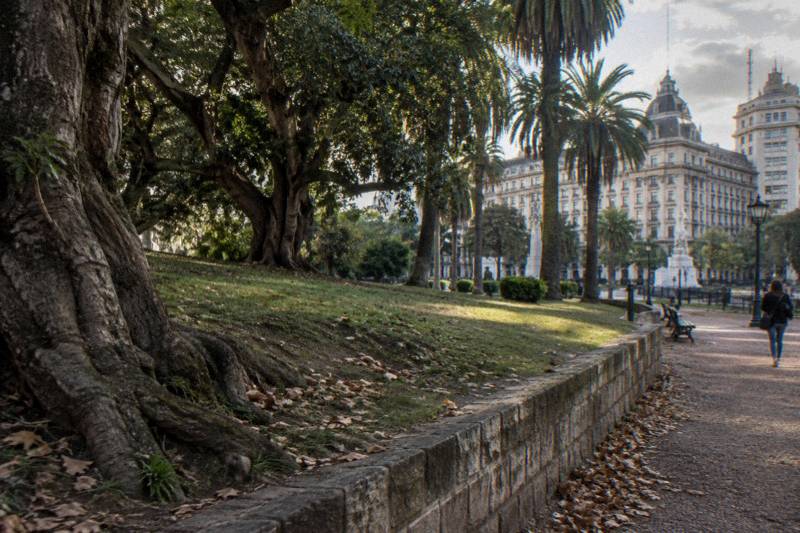
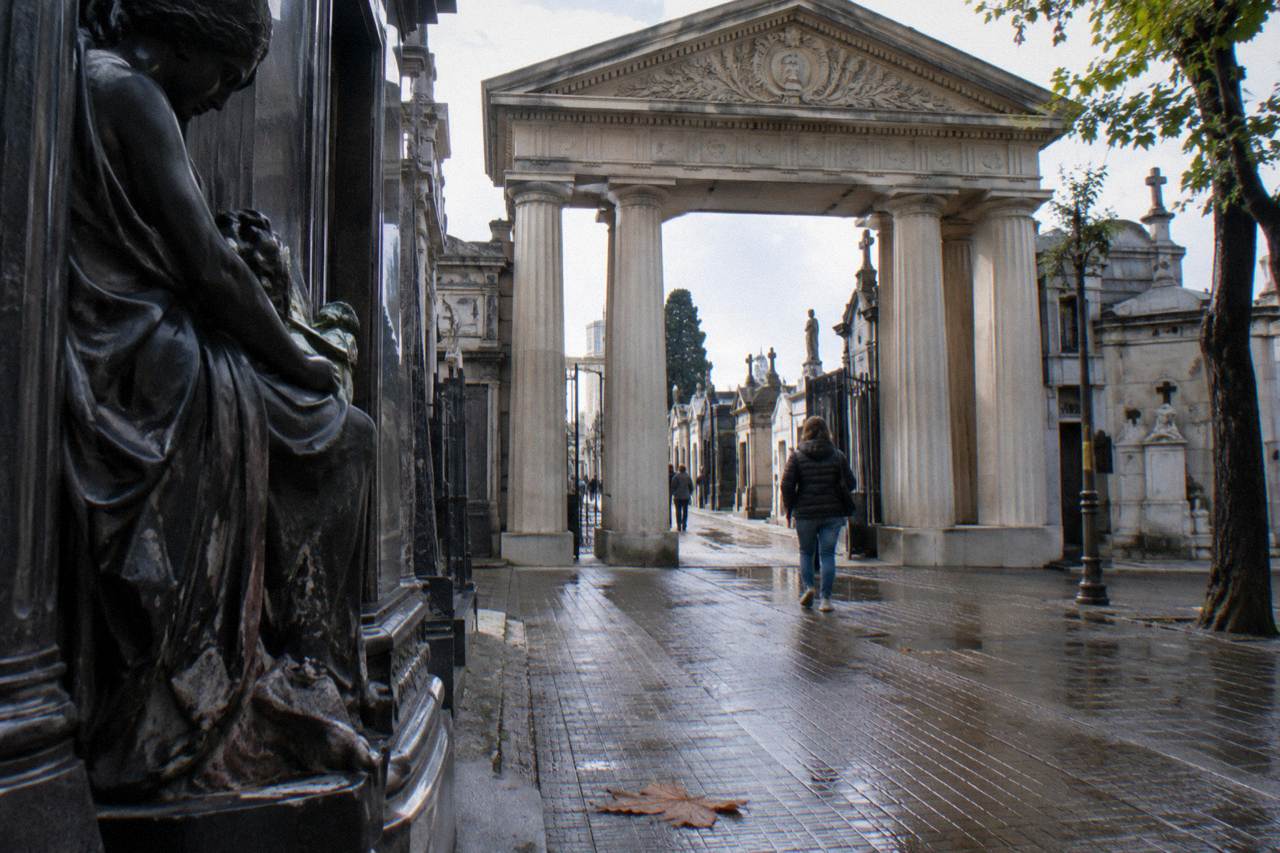
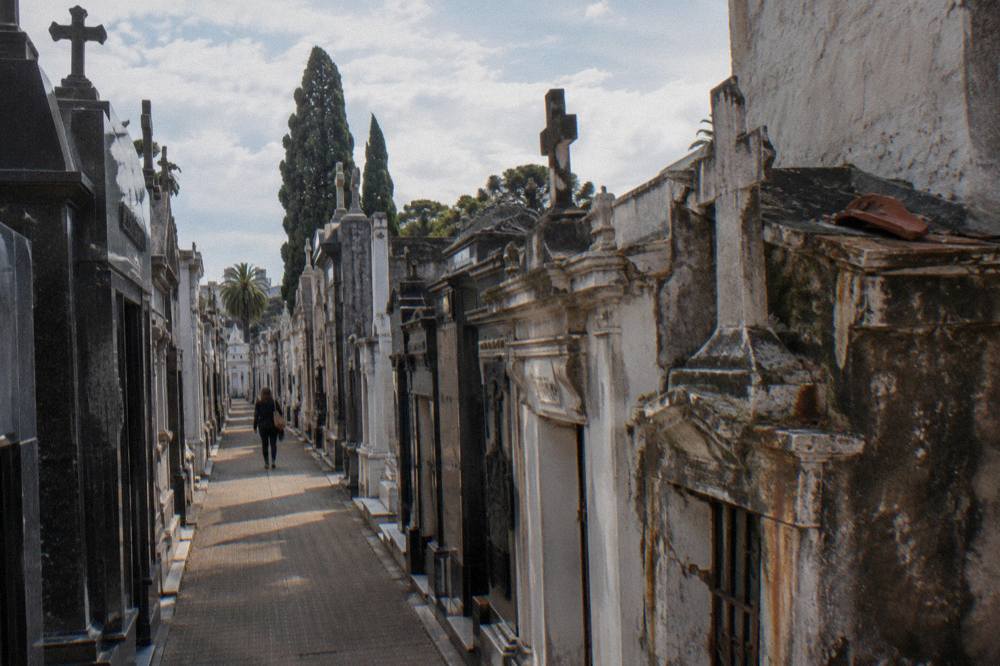
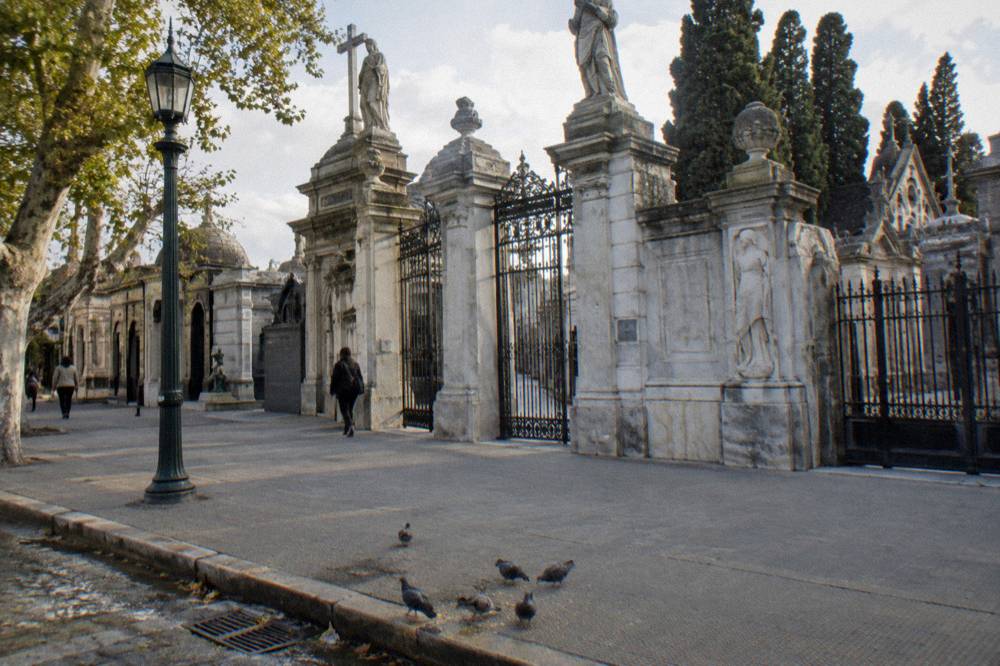
The cemetery itself, formally Cementerio de la Recoleta, remains one of the most visited landmarks in the city either way. It is an open-air city of marble mausoleums laid out in grids like streets, and even the exterior, the tall walls, the ornate gate and the neighbouring plazas, costs nothing to see. If the entry fee gives you pause, the surrounding Recoleta neighbourhood delivers a great deal without a ticket, from the Floralis Genérica monument to the Museo Nacional de Bellas Artes, which is free for all visitors.
The three walks above are downtown introductions on GuruWalk, the platform where most of this city's pay what you want walks run. They will not take you into the cemetery, but they frame the city whose most famous cemetery this is, and pairing a downtown orientation walk with a later Recoleta afternoon is a common pattern among visitors trying to see the city on a small budget.
Who Gets In Free, And Who Pays?
Argentine residents with DNI enter free, every day the cemetery is open, with no booking. Foreign visitors pay, regardless of age or nationality, through Entradas BA. There is no middle category listed: a resident is someone who can present a DNI at the gate, and everyone else uses the ticketing system. That is the whole rule, and it does not bend for students, seniors or children of tourists.
The distinction is documentary, not residential in the loose sense. A foreigner living in Buenos Aires on a visa but holding no DNI is still a paying visitor under this rule as recorded. An Argentine citizen abroad who flies home and visits the cemetery walks in free on their DNI. The system is built around the document, which is exactly how the city's museum pricing works too: the Wednesday free day at city museums such as Museo de la Ciudad, Casa Museo Carlos Gardel and Museo Quinquela Martín is for DNI holders, and tourists pay the posted rate instead.
For foreign visitors, the honest position is that the amount is unverified. This site only prints figures confirmed on an official page, and no official Recoleta Cemetery price appears in the verified facts. Treat blog numbers and forum posts from other sites as unreliable; ARS prices across Buenos Aires attractions move often, sometimes monthly, and a figure copied from an ageing article can be wrong the week you travel. The safe plan is to check the city's official tourism channel, turismo.buenosaires.gob.ar, which carries the current visitor information for the site.
Set the cemetery's fee against its neighbourhood and the picture improves. Plaza Juan XXIII, the leafy square right at the gates, is free. Plaza Francia and its weekend craft fair space are free. The Floralis Genérica, the giant kinetic flower sculpture in nearby United Nations Plaza, is a free open public space. And the Museo Nacional de Bellas Artes, a short walk away, is free for all visitors. A full Recoleta half-day can be built where the cemetery entry is the only ticket you buy.
Free walking tours of the surrounding barrio give you the neighbourhood's aristocratic history without any entry fee at all, since guiding is pay what you want. The Aristocratic Retiro and Recoleta walk by Vive Buenos Aires, rated 4.87 out of 5 across 212 GuruWalk reviews, meets at the San Martín Monument in Plaza San Martín and runs about 2 hours 30 minutes in English and Spanish. Its focus is the neighbourhood rather than the cemetery interior.
What Do You Still Have To Pay For?
Beyond the entry split, the paid items cluster in two groups: things inside and around the cemetery grounds, and extras attached to some free walking tours. The cemetery does not sell a recorded internal tour on the facts this site holds. The free walks that carry an additional-costs chip, including the cemetery-focused walks, are pay what you want for guiding while the extra, such as entry, is bought separately. Never read "free tour" as covering a paid entry.
GuruWalk
Most walks here, run by independent guides
Pay what you want
freetour.com
A smaller set, mostly Spanish-led
Pay what you want
The additional-costs rule matters most here, because the walks most likely to appeal to a cemetery visitor are the ones that carry it. The Spanish-language Free Tour of the Recoleta Cemetery, 4.73 out of 5 across 45 GuruWalk reviews, and the English-language Hidden Stories of the Recoleta Cemetery, 5 out of 5 across 14 GuruWalk reviews, are both pay what you want for the guide while cemetery entry for foreign visitors is a separate purchase. The same chip sits on the Recoleta and Retiro walk by WalkBa Tours, where an extra beyond guiding is bought separately, and no amount for any of these extras is published.
Around the cemetery, the paid neighbours are easy to name. The Jardín Japonés is paid, ARS 24,000 for non-residents and ARS 8,000 for residents in November 2026. Café Tortoni, the historic downtown café, is a business you pay in. Palacio Barolo offers paid visits with no verified figure. None of these are cemetery costs, but they sit on the same walking routes, and a day that bundles Recoleta with Palermo parks can quietly accumulate tickets unless you plan around the free layer.
The free layer is genuinely thick. Galerías Pacífico and El Ateneo Grand Splendid are free to enter and walk through, with shopping and the café as the paid parts. Caminito in La Boca is free to walk while the Boca museum and the stadium experience are paid. The pattern across this city is consistent: the outdoor landmark is free, the door behind it has a price. Recoleta Cemetery now fits the pattern more tightly than it used to, since even its gates have joined the paid layer for foreign visitors.
A pay what you want walk does not remove the cemetery's entry rule for foreign visitors, but it does remove every other cost from the neighbourhood: the guide's fee is whatever you choose to tip at the end, and nothing is booked in advance with money. More questions about how that model works are answered in the free walking tours explained post, including the tipping conventions visitors ask about most.
When Is The Free Option Available?
For residents with DNI, the free option is simply the cemetery's normal opening schedule, which the site publishes on its own official channel. For foreign visitors there is no free window listed: no free day, no free hour, no seasonal exemption appears in the verified facts. This is unlike MAMBA, which is free on Wednesdays and the last Sunday of the month for all visitors, and unlike PROA, free on Wednesdays for all.
That contrast is worth spelling out because travellers often hope a Wednesday trick exists here. In this city Wednesdays carry a complicated set of meanings: city museums are free for DNI holders only, MAMBA and PROA are free for everyone, and MALBA is half price rather than free, ARS 7,000 on Wednesday against ARS 14,000 other days. The cemetery sits outside all of these regimes. Its rule is identity-based every day, not day-based, so timing your visit to a Wednesday changes nothing at the gate.
| Site | Free for all? | Free day | Who pays |
|---|---|---|---|
| Cementerio de la Recoleta | No | None listed | Foreign visitors via Entradas BA |
| MAMBA | Yes, Wednesday and last Sunday | Wednesday | Foreigners ARS 16,000, residents ARS 5,000 other days |
| PROA | Yes, Wednesday | Wednesday | ARS 7,000 Thursday to Sunday |
| MALBA | No, half price Wednesday | None | ARS 7,000 Wednesday, ARS 14,000 other days |
| Museo Nacional de Bellas Artes | Yes, every open day | None needed | Nobody |
Seasonal timing still matters for comfort and crowds, though this site publishes no crowd or weather claims, since none are verified. What is listed: the Reserva Ecológica Costanera Sur, the other big free outdoor landmark, runs a summer schedule from November to March and a winter one from April to October, and the city's big November museum night, Noche de los Museos, opens museums free of charge on one evening each November with no date printed here because it changes yearly.
For planning a Recoleta day, the reliable anchor points are the museum calendars nearby. The national museums, including the Museo Nacional de Bellas Artes, are open Wednesday to Sunday only, so a Monday or Tuesday visitor to the cemetery will find that free museum shut. MAMBA and the city museums close Tuesdays. If your cemetery visit falls early in the week, check the surrounding closures before assuming a full free day can be built around it.
The walks, by contrast, run on their guides' own schedules, published on each walk's live listing. Pay what you want tours in this city generally run multiple days a week in high season, but slots are the guide's to set, and the only way to know is the listing itself, which shows dates, times and languages before you commit.
Where Does The Free Visit Start?
For a resident, the free visit starts at the cemetery gate on Junín, where the DNI is shown. For a foreign visitor, the paid visit starts online at Entradas BA, before you leave your hotel. For everyone else, the free version of Recoleta starts in the plazas around the walls: Plaza Juan XXIII at the gates, Plaza Francia beside it, and the walk down Avenida Alvear towards the Retiro end of the neighbourhood.
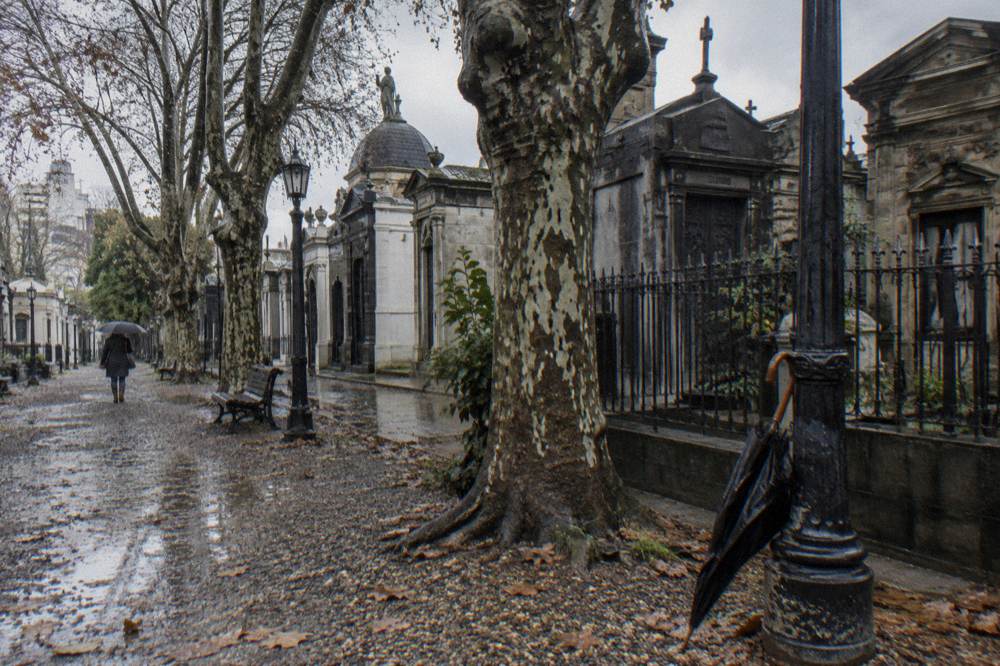
The gate address matters because the free walks use it as a landmark. The Spanish-language cemetery walk by Maximo meets at Junín 1867, right by the entrance. The English-language Hidden Stories walk meets at Plaza Juan XXIII, the square at the gates. These are additional walks on GuruWalk, listed here so you know they exist, not featured as bookable cards; both carry the additional-costs chip described earlier, so entry for foreign visitors is separate.
The neighbourhood walks meet further out and work their way through Recoleta's streets. The Short Retiro and Recoleta Walk by WalkBa Tours, 4.87 out of 5 across 385 GuruWalk reviews, meets at the San Martín Monument in Plaza San Martín and runs 1 hour 45 minutes in English. It too carries an additional-costs chip, so treat anything beyond the guiding itself as a separate buy. The freetour.com Recoleta walks meet at points including Plaza Estado del Vaticano and the corner of Viamonte and Libertad beside Teatro Colón, and their figures, 9.3 to 9.5 out of 10, are on a different scale from GuruWalk's five-star fills and are never mixed.
If you would rather walk alone, the free geography stitches together easily. The cemetery walls border Plaza Francia; from there the Museo Nacional de Bellas Artes and the Floralis Genérica sit within the same district; and the Retiro end delivers Plaza San Martín and the monuments around it, all free open public space. None of this requires a ticket, a booking or a DNI.
One caution that belongs in any Recoleta paragraph: this site publishes no safety claims of its own, and the general government travel advice for Buenos Aires, which you can paraphrase as warning about petty theft such as pickpocketing in busy tourist areas, applies to crowded landmarks everywhere in the city. The city tourism site carries the official practical guidance, and national foreign-ministry pages carry country-level advice. Nothing in official sources singles out Recoleta Cemetery itself.
Which Free Walking Tours Cover This?
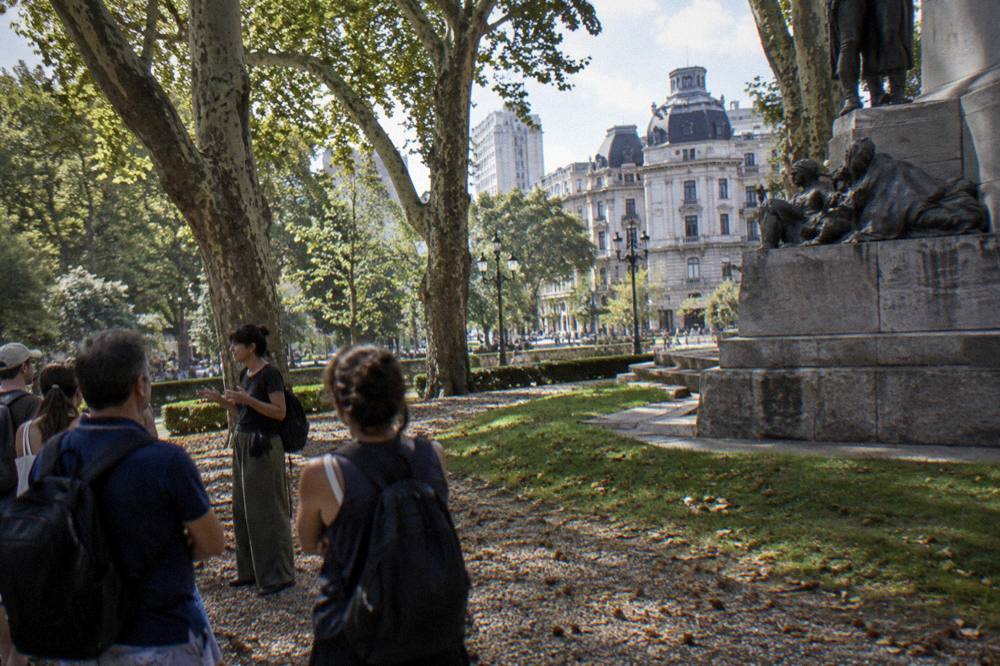
No walk's verified route extends inside the cemetery beyond what its own listing states, and this site never prints a route. What official sources do show is a family of Recoleta and Retiro walks on GuruWalk and freetour.com whose meeting points cluster around Plaza San Martín, the cemetery gates and Teatro Colón, and whose titles place them in the Recoleta and Retiro barrio. Two cemetery-titled walks exist on GuruWalk, both with additional-costs chips.
Read that carefully, because "cover" is a word worth being precise about. A walk titled for Recoleta is a walk in Recoleta; that is all any official source here licenses. Whether any specific walk pauses at a specific mausoleum, or enters at all, is a question for the guide's own live listing, not for a summary article. The same honesty applies to the cemetery walks themselves: their titles name the place, their chips say entry is extra, and their listings carry the detail.
The options in this category are the two already shown above, both GuruWalk walks in English. Around them sits a deeper bench of further walks: Recoleta in Spanish and Italian at 4.96 out of 5 across 358 reviews, the trilingual Recoleta Icons walk at 4.99 across 258, the Recoleta Architecture Walk at 4.88 across 276, and the freetour.com trio whose review counts, above 10,000 on each listing, aggregate other sources and are never compared against GuruWalk totals. The full list of 55 walks in this directory lives on Free Things To Do In Buenos Aires.
Choosing among them comes down to language and depth. English speakers have the two walks plus the English cemetery walk. Spanish speakers have the largest pool, including the Che-themed downtown walk at 4.93 across 1,084 reviews for a completely different angle on the city. Portuguese speakers have the trilingual Welcome tour at 4.92 across 743. Italian speakers have walks by Silvia and Inés in Recoleta. Filter by language first, then by meeting point, and the choice usually collapses to one or two candidates.
The meeting-point table below gives each meeting point exactly as GuruWalk and freetour.com publish it, with no transport directions added, because the official sources give none.
| Walk | Platform | Language | Meets at |
|---|---|---|---|
| Aristocratic Retiro and Recoleta | GuruWalk | English, Spanish | San Martín Monument, Plaza San Martín |
| Short Retiro and Recoleta Walk | GuruWalk | English | San Martín Monument, Plaza San Martín |
| Recoleta Cemetery Walk, Spanish | GuruWalk | Spanish | Cementerio de la Recoleta, Junín 1867 |
| Recoleta Cemetery Secrets, English | GuruWalk | English | Plaza Juan XXIII, Cementerio de la Recoleta |
| Recoleta-Only Free Walk | freetour.com | English, Spanish | Plaza Estado del Vaticano |
Mistakes That Trip People Up At Recoleta Cemetery
The recurring mistakes are all versions of trusting old information: assuming free entry because an earlier article said so, assuming a Wednesday free day exists because museums have them, and assuming a free walking tour covers the entry fee. Each mistake has a factual correction: residents only, no free day listed, and additional-costs chips on the cemetery walks that say entry is bought separately.
The first mistake is the resident Wednesday confusion in reverse. Travellers learn that some Buenos Aires museums are free on Wednesdays and extend the pattern to everything. The cemetery has no day-based free window for foreign visitors at all; its split is identity-based. The second is printing or trusting a price. No official figure exists in official sources, so a number quoted in a forum is a number nobody official has stood behind.
The third is the tour-covers-entry assumption. A pay what you want walk pays the guide, nothing else. The additional-costs chip on the cemetery walks exists precisely because entry is separate, and the same applies to the WalkBa Recoleta walk. The fourth is mixing rating scales: a 9.5 on freetour.com is out of 10 and a 4.87 on GuruWalk is out of 5, and putting them in one sentence as though comparable is misleading. The fifth is assuming the cemetery is the only thing in Recoleta worth a ticket decision; the free layer around it, from Plaza Francia to the Museo Nacional de Bellas Artes, is large enough that a whole free day can be built in the same district.
Common Questions On This Topic
Is Recoleta Cemetery Free?
Free for Argentine residents with DNI, paid for foreign visitors through the city's Entradas BA system. No official price for foreign visitors has been published on a verified page, so no figure is printed here. The surrounding plazas and the nearby Museo Nacional de Bellas Artes are free for everyone.
Do I need to book Recoleta Cemetery in advance?
Residents with DNI do not; they show the document at the gate. Foreign visitors go through Entradas BA, the city's official ticketing platform, and the current procedure and price, where stated, is on the official channel. Checking before travelling is the safe plan, since procedures change more often than landmarks do.
Can a free walking tour get me into the cemetery for free?
No. Free walks in Recoleta are pay what you want for guiding only. The cemetery walks on GuruWalk carry an additional-costs chip meaning entry is bought separately, and no walk page promises to cover the foreign-visitor entry fee. Treat guiding and entry as two different purchases.
Is there a free day for tourists at Recoleta Cemetery?
None is listed. Unlike MAMBA, which is free on Wednesdays and the last Sunday of the month for all visitors, or PROA, free on Wednesdays for all, the cemetery's rule is identity-based rather than day-based. Timing a visit to a Wednesday does not change the entry situation for foreign visitors.
What free things are near Recoleta Cemetery?
Plaza Juan XXIII at the gates, Plaza Francia, the Floralis Genérica sculpture, and the Museo Nacional de Bellas Artes, free for all visitors and open Wednesday to Sunday. Pay what you want walking tours of Recoleta and Retiro meet nearby on GuruWalk and freetour.com. The Jardín Japonés, by contrast, is paid for non-residents.
Are there English-language free tours of Recoleta?
Yes. The Short Retiro and Recoleta Walk by WalkBa Tours runs in English, 4.87 out of 5 across 385 GuruWalk reviews, and Hidden Stories of the Recoleta Cemetery also runs in English. Both carry additional-costs chips for extras beyond guiding. Several other Recoleta walks run in English and Spanish together.