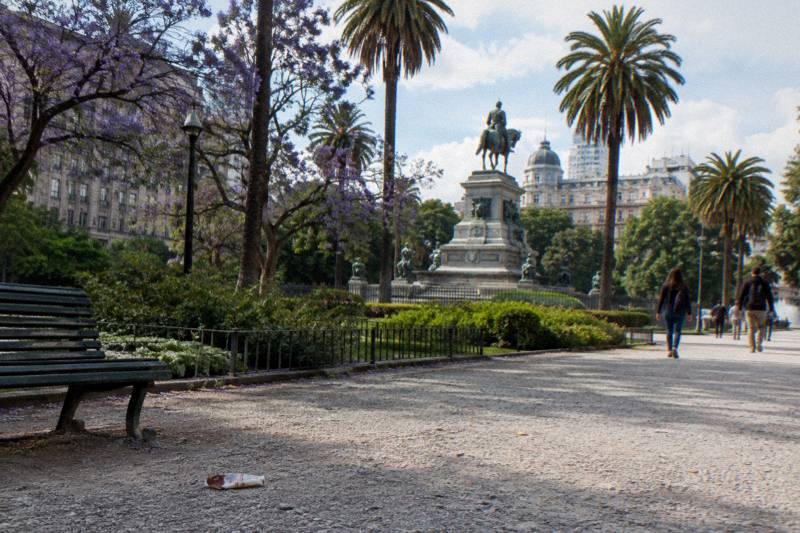
Is Floralis Genérica Free?
Yes, Floralis Genérica is free to see at any hour, as open public space in a Recoleta plaza. Here is what the free visit includes, what stays paid nearby, and which free walks cover the area.
In Short
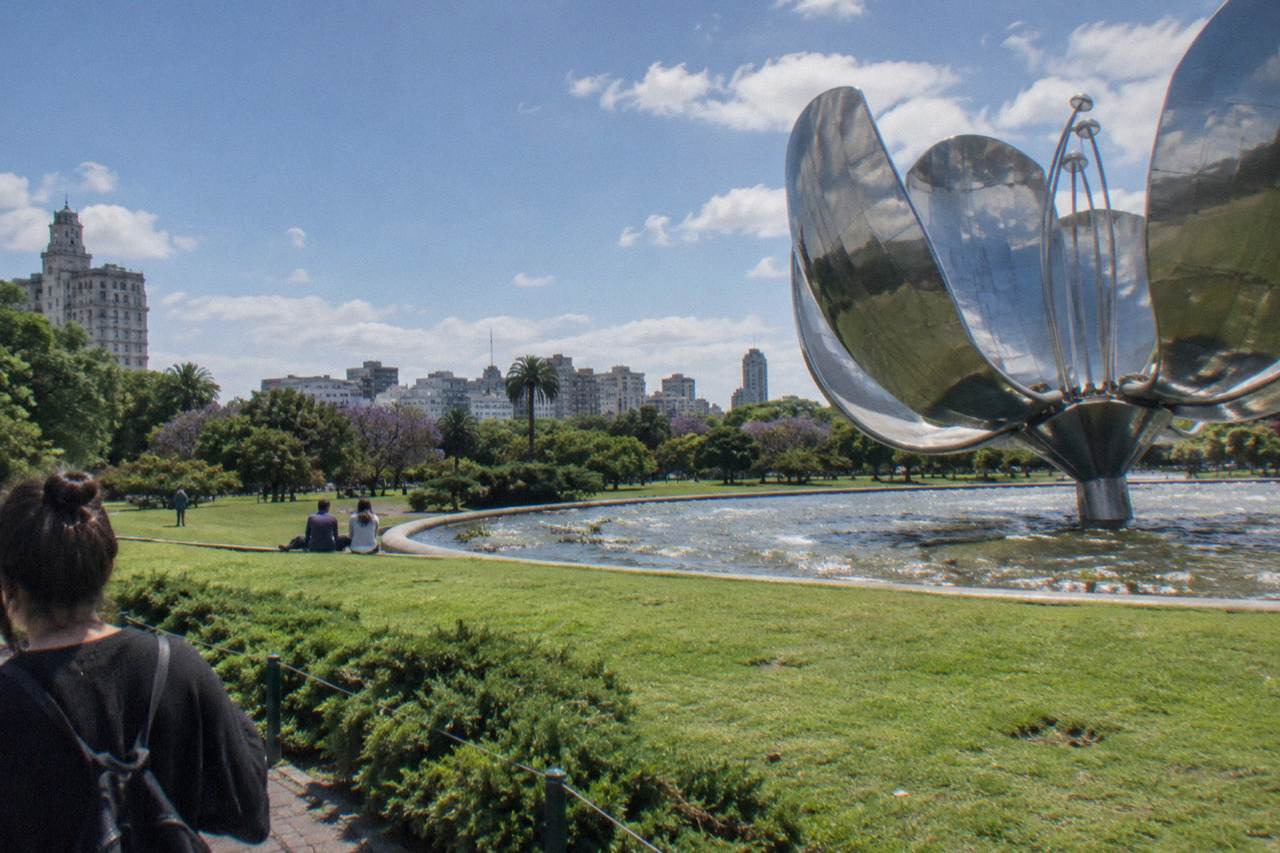
Yes. Floralis Genérica is completely free, for everyone, with no ticket, no gate and no resident condition. It sits in open public space in Recoleta, so the free view is available whenever the plaza itself is reachable. The traps are all nearby: the Jardín Japonés is paid, the paddle boats on the Parque Tres de Febrero lakes are paid, and museum Wednesday rules vary building by building.
This question sits inside the Parks And Gardens In Buenos Aires guide, which covers free green space across the city and the paid gates that sit inside it.
Quick Facts
| Question | Answer |
|---|---|
| Is Floralis Genérica free? | Yes, free for everyone, all the time |
| What kind of space is it? | Open public space, no gate or ticket desk |
| Any resident-only condition? | None, unlike the Wednesday museum schemes |
| What costs money nearby? | Jardín Japonés, paddle boats, MALBA outside Wednesday discounts |
| When can you see it? | Any time, the plaza is open public space |
| Nearest free walk platform | GuruWalk walks in Recoleta, Retiro and Palermo |
Is Floralis Genérica Free?
Yes, Floralis Genérica is free, and it is free in the simplest sense that exists in this city: it is open public space, with no ticket desk, no gate, no opening hours of its own and no resident-only condition. Anyone can walk up to it at any hour and pay nothing. That makes it unusual among Buenos Aires headline sights, because so many of the others carry a condition or a price. The Recoleta Cemetery is free only for Argentine residents with DNI and paid for foreign visitors. The Teatro Colón charges for its guided tours at ARS 37,000 general in November 2026. The Jardín Japonés a short distance away charges ARS 24,000 for non-residents. The flower asks for nothing.
The reason this question gets asked at all is that Buenos Aires has several different meanings of the word free, and visitors who have just read that a museum is "free on Wednesday" are right to be suspicious of the next claim. The city museums, including Museo de la Ciudad and Casa Museo Carlos Gardel, are free on Wednesday for Argentine residents with DNI only, while tourists pay. MAMBA is free on Wednesday and the last Sunday of the month for all visitors. PROA is free on Wednesday for all. MALBA on Wednesday is half price, never free for general visitors, at ARS 7,000 general. Against that patchwork, a sight that is simply and unconditionally free stands out, and it is worth saying plainly: this one is.
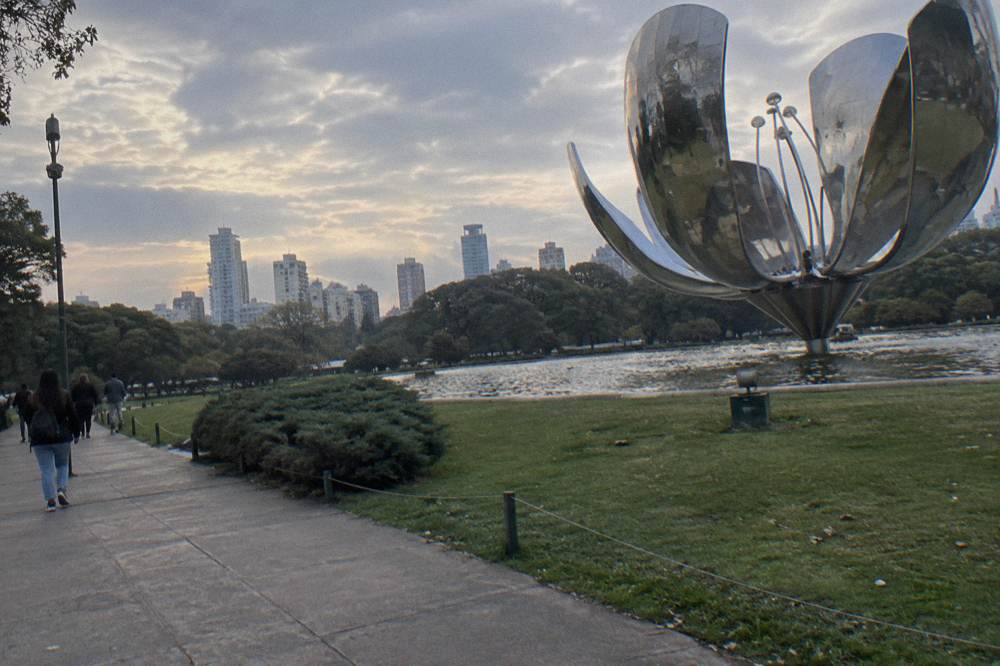
The sculpture sits in Recoleta parkland, in the band of green space that also holds the Jardín Botánico Carlos Thays, the Parque Tres de Febrero lakes and the rose gardens, all of which are free to enter as open space themselves. The Buenos Aires city tourism authority lists these green spaces among the city's open, walkable attractions on its official tourism pages, and the flower is part of that same public landscape rather than a ticketed installation inside it. There is no separate operator, no entrance fee schedule and no booked time slot. What you see from the plaza is the whole attraction.
For anyone planning a day around it, the practical consequence is freedom of timing. Paid attractions in this city come with closing days: the Jardín Botánico and the Reserva Ecológica Costanera Sur close Mondays, MALBA and the city museums close Tuesdays, PROA and the national museums open Wednesday to Sunday only. The flower has none of that. A Monday visit, a Tuesday visit, a late-evening visit after a walk ends, all work the same way, which makes it a useful filler on the days when the museums around it are shut. A free walk meets in this neighbourhood: Recoleta-Only Free Walk.
What Does The Free Part Include?
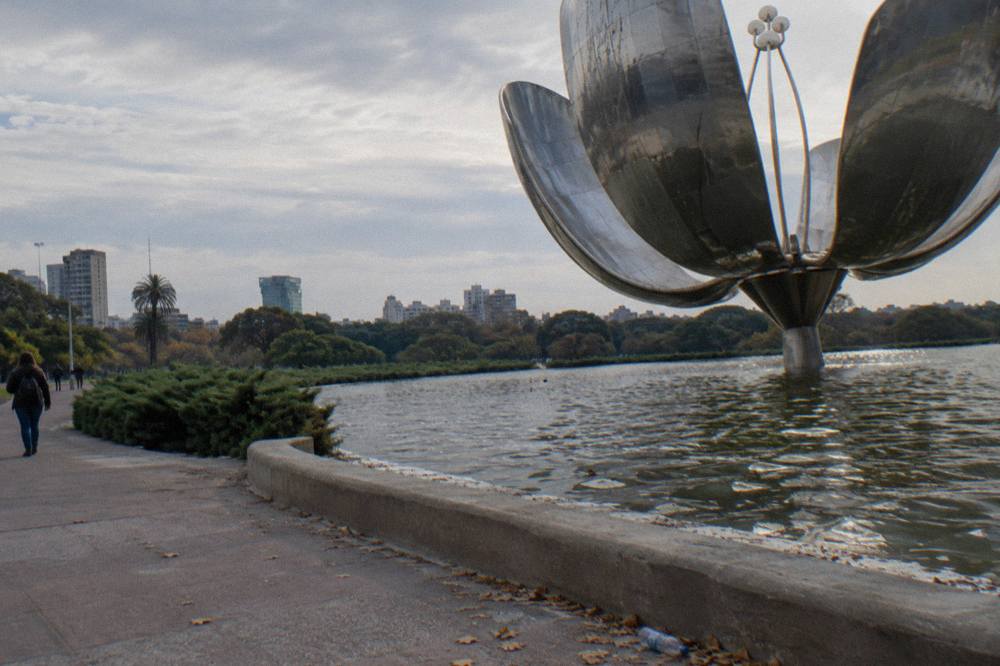
The free visit covers everything visible from the plaza: the sculpture itself viewed from every side, the surrounding lawns and plaza space, photographs from any angle you choose, and unlimited time to enjoy it all, so you can wander, snap pictures, and stay as long as you like without paying anything. There is no perimeter that separates a free view from a paid one, no observation deck behind a desk and no interpretive centre with a ticket line. The free part is not a sample of the attraction, it is the entire attraction. That distinction matters in a city where several famous interiors sit behind paid doors while only the exterior is free, such as the Teatro Colón, whose tours are paid, or the Obelisco, which is free to see from the outside with no public mirador entry listed.
Compare that with the other headline sights nearby and the difference is clear. El Ateneo Grand Splendid is free to enter and walk through, but the books and the café inside cost money. Galerías Pacífico is free to walk into, while the shops are businesses. The Caminito in La Boca is free to walk as a street, while the Boca museum and the stadium experience are paid. In each of those cases the free part is a real, generous experience, but there is a paid interior waiting to catch the wallet. With the flower, no such interior exists. The plaza is the venue.
The free visit also combines well with the other genuinely free green spaces in the same band. The Jardín Botánico Carlos Thays is free for all visitors, closed Mondays. The Parque Tres de Febrero and its lakes are free open space, with only the paddle boats as a paid extra. The rose gardens are free. A visitor can build an entirely free afternoon across this parkland, moving from one open space to the next, and the flower becomes the anchor rather than the exception. The free things to do around Palermo and Recoleta cluster around this same green corridor, which is one reason the area rewards walkers.
What Do You Still Have To Pay For?
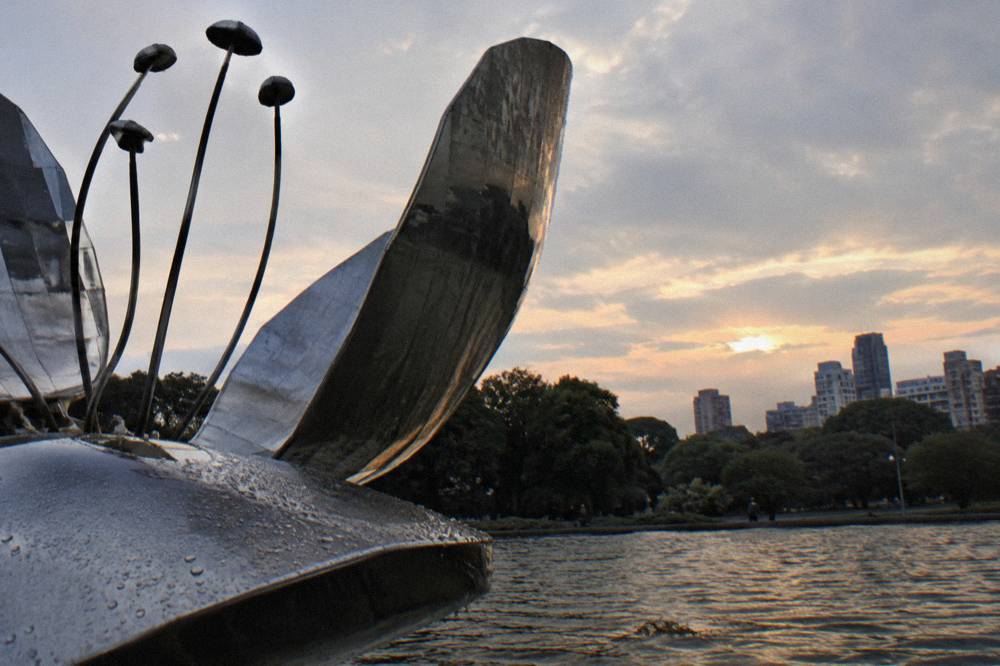
Nothing at the flower itself, but the surrounding parkland mixes free and paid in ways that catch visitors out: the Jardín Japonés is paid at ARS 24,000 for non-residents and ARS 8,000 for residents, the paddle boats on the Parque Tres de Febrero lakes are paid, and the nearby museums each follow their own fee scheme. The flower is the free anchor; the paid gates are all around it, and knowing which is which before you arrive is the difference between a free afternoon and an unexpected spend.
GuruWalk
Most walks here, run by independent guides
Pay what you want
freetour.com
A smaller set, mostly Spanish-led
Pay what you want
| Nearby attraction (price in ARS, November 2026) | Free part | Paid part |
|---|---|---|
| Floralis Genérica | Everything, all visitors | None |
| Jardín Botánico Carlos Thays | Entry for all visitors | None listed |
| Parque Tres de Febrero lakes | The park and lakes as open space | Paddle boats |
| Jardín Japonés | Nothing | ARS 24,000 non-residents, ARS 8,000 residents |
| MALBA | Students, teachers and retirees on Wednesday only | ARS 14,000 general, ARS 7,000 on Wednesday |
| Museo Nacional de Bellas Artes | Free for all, open Wednesday to Sunday | None |
The Jardín Japonés is the trap most worth naming, because it sits close enough to be mistaken for part of the same free parkland and it is not free at all. Its figures are on the GuruWalk listing: ARS 24,000 for non-resident visitors and ARS 8,000 for residents in November 2026. Visitors who budget an afternoon around the flower and then drift toward the Japanese garden expecting the same deal will meet a ticket desk. The MALBA rule is its own trap in reverse: Wednesday is half price at ARS 7,000, not free, and only students, teachers and retirees enter free, and only on Wednesday.
One more paid item belongs on the list for honesty rather than proximity: free walking tours in this city are free in the pay-what-you-want sense, and the guides are tipped at the end, not paid up front. That is the standard model across the 55 walks listed in this directory, on GuruWalk and freetour.com. If a Recoleta walk is part of your plan, the guiding is pay what you want; separate entries, where a walk carries an additional-costs note, are bought on their own. The walk pages state this in each case.
Visitors planning a wider circuit can also fold in the Reserva Ecológica Costanera Sur, free for all visitors, open Tuesday to Sunday with summer hours from 8:00 to 19:00 in force from November to March, and closed Mondays. It is farther afield than the Recoleta parkland but it is the same category of sight: open space, no gate, no condition. The full rundown of free and paid parts across the city's outdoors is in the guide to parks and gardens.
When Is The Free Option Available?
The free option is available at any hour of any day, with no opening times or closing times to plan around. Because the flower stands in open public space with no schedule of its own, visitors can see it whenever they like, from early morning to late at night, and no timing restrictions apply. This is the one large sight in Recoleta with no closing day, no weekly shut day and no seasonal timetable. The museums around it all have rules: the city museums and MAMBA close Tuesdays, the Jardín Botánico closes Mondays, PROA and the national museums open Wednesday to Sunday only. The plaza has none of these constraints, which makes the flower the reliable fallback on a Monday or a Tuesday when half the neighbourhood's doors are shut.
Seasonality changes the surroundings, not the access. The Reserva Ecológica Costanera Sur, farther south, switches to its summer schedule from November to March, opening 8:00 to 19:00, but that is a fenced reserve with a gate; the flower's plaza has no equivalent gate to open or close. No official schedule governs it, and nothing published shows any restricted hours. The only practical limits are daylight and weather, and neither of those comes with a fee attached. Other pages covering the same trip are gathered on Free Things To Do In Buenos Aires.
Timing also interacts with the walking-tour calendar, since most of the Recoleta and Retiro walks run daytime hours set by each guide on their own listing. A common pattern in this city is to take a walk in the morning or afternoon and use the open spaces in the remaining light. The flower fits neatly at either end of that day, precisely because it never closes. Guides on GuruWalk publish their own departure times on each walk's page, so the tour times and the anytime flower rarely conflict.
One annual event worth knowing about in the same season is Noche de los Museos, the November night when museums across Buenos Aires open free of charge from the evening into the early hours. It does not change anything about the flower, which is already free every night, but visitors in town for that night get the rare combination of free museum interiors plus a free outdoor landmark that needs no booking at all.
Where Does The Free Visit Start?
The free visit starts the moment you step into the plaza: because the sculpture stands in open public space in the Recoleta parkland, there is no designated entrance, no visitor centre and no official starting point, so you can simply walk up from the surrounding parkland and the visit has already begun. Unlike the Recoleta Cemetery, where entry is now split between residents with DNI entering free and foreign visitors paying through the city's Entradas BA system, there is no gate to pass and no ticket to show. Any approach from the surrounding streets delivers the same free view.
The location also makes it a natural waypoint between two of the city's walkable neighbourhoods. Recoleta and Retiro sit to its east, Palermo's green spaces to its north and west, and the free open spaces run in an almost continuous band between them: the Jardín Botánico, the Parque Tres de Febrero lakes, the rose gardens. Visitors arriving from Retiro will pass through Recoleta's museum quarter, where the Museo Nacional de Bellas Artes is free for all and open Wednesday to Sunday, a natural pairing with the flower on the days it is open.
This is where the guided-walk options come in, because Recoleta is one of the best-covered neighbourhoods for free tours in this city. On GuruWalk, the Short Retiro and Recoleta Walk by WalkBa Tours is rated 4.87 out of 5 across 385 GuruWalk reviews, runs 1 hour 45 minutes in English, and meets at the San Martín Monument, Plaza San Martín. Guiding is pay what you want, while any extra entries on that walk are bought separately. For a fuller option, the Aristocratic Retiro and Recoleta walk by Vive Buenos Aires is rated 4.87 out of 5 across 212 GuruWalk reviews, runs 2 hours 30 minutes in English and Spanish from the same meeting point at the San Martín Monument, Plaza San Martín, with no additional-costs note on its listing.
Neither walk is a tour of the flower, and routes vary by guide, with each walk's meeting point shown on its GuruWalk or freetour.com page. What they offer is the barrio around it: the aristocratic Retiro and Recoleta that the parks sit beside. Anyone who prefers to skip the framing and see the sculpture directly can simply arrive in the plaza, at any hour, free of charge.
Which Free Walking Tours Cover This?
No free walking tour in this directory lists a route that reaches the flower, so the honest answer is that none can be promised to cover it. If seeing the flower matters to your visit, plan an independent stop, because none of the free walks here promises it; each walk is known by its meeting point and its neighbourhood, and the Recoleta walks are the closest of them. The safest plan is to take a Recoleta or Retiro walk for the neighbourhood context, then visit the flower independently, since it costs nothing and never closes.
The Recoleta and Retiro group on GuruWalk includes several strong options. The Short Retiro and Recoleta Walk by WalkBa Tours, 4.87 out of 5 across 385 GuruWalk reviews, meets at the San Martín Monument, Plaza San Martín. The Aristocratic Retiro and Recoleta walk by Vive Buenos Aires, 4.87 out of 5 across 212 GuruWalk reviews, meets at the same monument. Both are pay what you want at the end. For the wider city context, the Downtown Intro by Vive Buenos Aires runs 3 hours, is rated 4.84 out of 5 across 1,332 GuruWalk reviews, and meets at the Biblioteca del Congreso, Av. Hipólito Yrigoyen 1750. The freetour.com platform also lists Recoleta walks, including the Recoleta-Only Free Walk at 9.5 out of 10 across reviews shown on its freetour.com listing; those review counts are the platform's own aggregate and are never summed with GuruWalk's.
The essential-first-visit walks above all cover the downtown core rather than Recoleta's parkland, so they answer a different question. For the flower itself, the free walking tours overview lists the full directory of 55 walks with platforms, meeting points and languages, and the Recoleta group there is the right shelf to browse.
Mistakes That Trip People Up At Floralis Genérica
The mistakes that trip people up most often at Floralis Genérica are assuming the surrounding parkland is uniformly free, treating Wednesday museum rules as one shared rule, and expecting a free walk to include paid entries; checking each detail before you arrive keeps the visit free of surprises. Each of these costs a visitor either money or a wasted trip, and each is avoidable with one piece of knowledge. The flower itself is the simplest free thing in the neighbourhood, but it sits inside a patchwork of conditions.
The first mistake is bundling the Jardín Japonés into the free parkland. It is paid, at ARS 24,000 for non-residents, and it is close enough that visitors walk toward it assuming the flower's rules apply citywide. The second is assuming the flower must have hours like everything else. It has none; it is open space, and planning a Monday or late-evening visit around museum closing days works perfectly here. The third is the Wednesday trap: MALBA's Wednesday is half price, not free, while MAMBA and PROA are genuinely free for all on Wednesday, and the city museums are free that day only for Argentine residents with DNI. These are three different regimes, never one rule.
The fourth mistake is assuming a Recoleta walk includes the paid entries along its way. The WalkBa Tours Retiro and Recoleta walk carries an additional-costs note: guiding is pay what you want while the extras are bought separately, so the cemetery or museum entries are not part of the free price. The fifth is expecting a walk to deliver the flower as a stop. Routes vary by guide, and no listing in this directory shows one, so the reliable way to see the sculpture is to walk to the plaza yourself, at any hour, for nothing.
Common Questions On This Topic
Is Floralis Genérica Free?
Yes, completely. It stands in open public space in Recoleta with no gate, ticket desk or schedule, and it is free for everyone, with no resident-only condition attached. This is unconditional free entry, not a free day or a free-for-residents scheme, and it applies at any hour of any day of the week.
Can you go inside Floralis Genérica?
There is no inside to enter and no ticketed component. The sculpture is viewed from the plaza that surrounds it, and that full view is the free attraction. No interior access, mirador or paid exhibit exists for it on any official source, so there is no paid upgrade waiting to catch visitors out.
Is the Jardín Japonés free too?
No. The Jardín Japonés charges ARS 24,000 for non-resident visitors and ARS 8,000 for residents in November 2026. Despite sitting in the same band of green space as the flower and the free Jardín Botánico, it is a paid attraction, and visitors should expect a ticket desk there.
What nearby attractions are actually free?
The Jardín Botánico Carlos Thays is free for all visitors and closes Mondays. The Parque Tres de Febrero lakes are free open space, with only the paddle boats paid. The Museo Nacional de Bellas Artes is free for all, open Wednesday to Sunday. MAMBA is free on Wednesday and the last Sunday of the month for all visitors.
Do free walking tours include the flower?
No walk in this directory lists it as a stop, so no free tour can be promised to stop there. Recoleta and Retiro walks on GuruWalk meet at the San Martín Monument, Plaza San Martín, and cover their neighbourhood's story for a pay-what-you-want tip. Visit the flower independently afterwards.
When is the best day to see it?
Any day works, because the plaza never closes. That makes it especially useful on Mondays and Tuesdays, when the Jardín Botánico closes and the city museums, MAMBA and MALBA all close Tuesdays. Pair it with open spaces on those days and save the museums for their open days.
The flower is the anchor of a free afternoon in Recoleta parkland, and the walks below are the city's most-reviewed ways to frame the neighbourhoods around it.