Is The Japanese Garden In Buenos Aires Free?
No, the Jardin Japones in Buenos Aires is a paid attraction: ARS 24,000 for non-residents and ARS 8,000 for residents. Here is what that ticket covers, and everything free around it in Bosques de Palermo.
In Short
No. The Jardin Japones is a paid attraction in Buenos Aires: ARS 24,000 for non-residents and ARS 8,000 for Argentine residents. No free day for foreign visitors is listed. The genuinely free parts of a Palermo park visit are all outside its gate: Parque Tres de Febrero, its lakes, the Jardín Botánico Carlos Thays and the surrounding Bosques de Palermo cost nothing to enter.
This question sits inside the Parks And Gardens In Buenos Aires guide. That guide owns the place: the green spaces, the closing days and the paid gates across Palermo. This post owns one question, the price of the Jardin Japones, answered straight.
Quick Facts
| Question | Answer |
|---|---|
| Is the Jardin Japones free? | No, entry is paid for everyone |
| Price, non-residents | ARS 24,000 |
| Price, Argentine residents | ARS 8,000 |
| Free day for tourists | None listed |
| What is free around it | Free things to do in Palermo: Parque Tres de Febrero, the lakes, Bosques de Palermo, Jardín Botánico Carlos Thays |
| Free walk category nearby | Palermo, Parks And Costanera Sur walks on GuruWalk |
Is The Japanese Garden In Buenos Aires Free?
No. The Jardin Japones is a paid attraction, with two different rates: ARS 24,000 for non-resident visitors and ARS 8,000 for Argentine residents. There is no free day for foreign visitors listed, and no discounted window or evening hour that removes the charge. The free things in this corner of Palermo all sit outside the gate, in the parks and gardens around it.
The short answer disappoints a lot of travellers, because Buenos Aires is otherwise generous with free public space. Plaza de Mayo, the Obelisco, Caminito, the Reserva Ecológica Costanera Sur and the Bosques de Palermo all cost nothing to walk. The Jardin Japones is the exception in this neighbourhood, a landscaped enclave inside the larger park that charges at the door and splits its pricing between residents and everyone else.
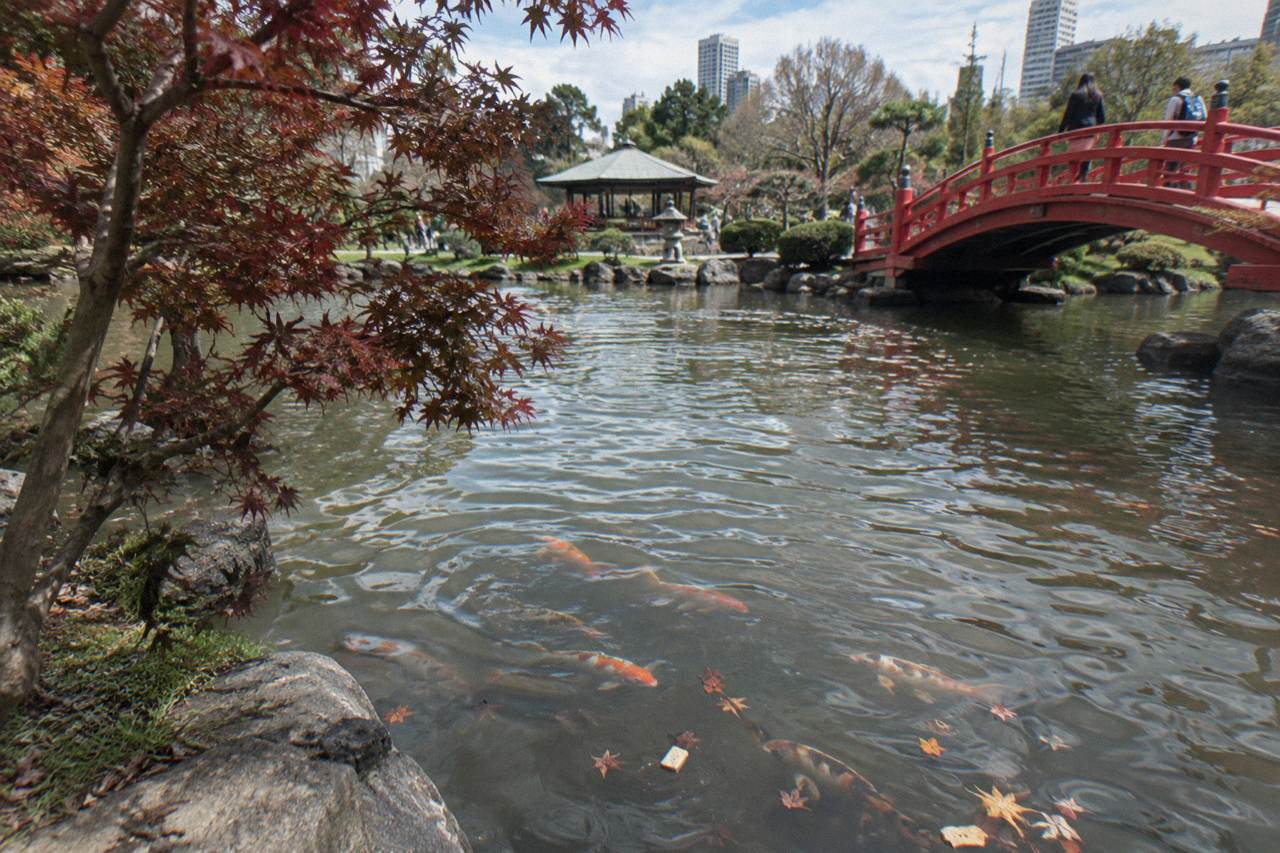
It helps to see the garden as one paid room inside a free house. The house is Parque Tres de Febrero, the great open park that Porteños call the Bosques de Palermo: lawns, lakes, bridges, the Rosedal rose garden, paths under tipa and jacaranda trees. All of that is free, all day, with no ticket booth anywhere. The Jardin Japones sits inside that park as a separately managed space with its own gate, its own hours and its own admission.
So the honest planning answer is that a visit costs money if you want the garden itself, and costs nothing if you are content with everything else within a short stroll of the entrance. The rest of this article breaks down exactly what the ticket buys, what extra costs sit inside, when the free alternatives are open, and how free walking tours fit around a Palermo afternoon.
If a paid garden is not what your budget wants, the money goes further with a guide instead: free walking tours across the city cost nothing up front, pay what you want at the end, and several of the most reviewed are themed around the downtown icons rather than park gates.
What Do Residents And Visitors Pay At The Japanese Garden?
Non-resident visitors pay ARS 24,000 to enter the Jardin Japones, in November 2026, and Argentine residents pay ARS 8,000 on the same ticket system. That is a threefold gap, one of the steepest resident discounts in the city's paid attractions. Neither rate makes the garden free, and no concession that removes the charge entirely appears on the official terms.
The resident-versus-visitor split is the single most useful thing to understand about paid attractions in this city. It runs through the museum sector in the same way: the Recoleta Cemetery is free for Argentine residents with DNI while foreign visitors pay through the city's Entradas BA system, and the Wednesday schemes at the city museums are free for residents with DNI only, with tourists paying the standard rate. The Jardin Japones follows the same logic at its own gate, charging residents a third of the visitor price.
Prices in Argentine pesos move often, so treat the figures as the current rates rather than permanent ones. The proportion, though, has been stable in character for years: residents get a heavily reduced rate, foreign visitors pay the full one. There is nothing published of a day, hour or season when the non-resident charge is waived.
For comparison, here is how the garden sits beside its neighbours in Palermo and the wider paid-attraction set:
| Place | Entry for foreign visitors | Entry for Argentine residents |
|---|---|---|
| Jardin Japones | ARS 24,000 | ARS 8,000 |
| Jardín Botánico Carlos Thays | Free for all | Free for all |
| Parque Tres de Febrero and its lakes | Free for all | Free for all |
| Paddle boats on the park lakes | Paid | Paid |
| MALBA | ARS 14,000, ARS 7,000 on Wednesday | Same rates, plus free Wednesday for students, teachers and retirees |
The contrast within that table is the point. The two great free green spaces of Palermo sit on either side of the paid garden, and the walk between them costs nothing. Anyone budgeting a Palermo day can spend on the garden, or spend on the paddle boats, or spend on nothing at all and still see most of what the neighbourhood is known for.
That choice, pay for one gate or keep the whole afternoon free, is exactly the kind of decision a free walking tour also answers well. The Downtown Intro, 3 Hours walk on GuruWalk is the site's featured free tour for this question: pay what you want, 3 hours, meeting at the Biblioteca del Congreso on Avenida Hipólito Yrigoyen, rated 4.84 out of 5 across 1,332 GuruWalk reviews. It has nothing to do with the garden, and that is the point: it is the free counterweight on the other side of the city.
What Do You Still Have To Pay For?
Beyond the entry ticket, the paid extras inside and around the garden are the cultural activities, the food and the park's amusements: paddle boats on the Parque Tres de Febrero lakes are paid, the garden's own restaurant and tea service are businesses, and any workshop or cultural event inside the garden can carry its own charge. The free parts are the landscape itself: paths, bridges, ponds and the surrounding park.
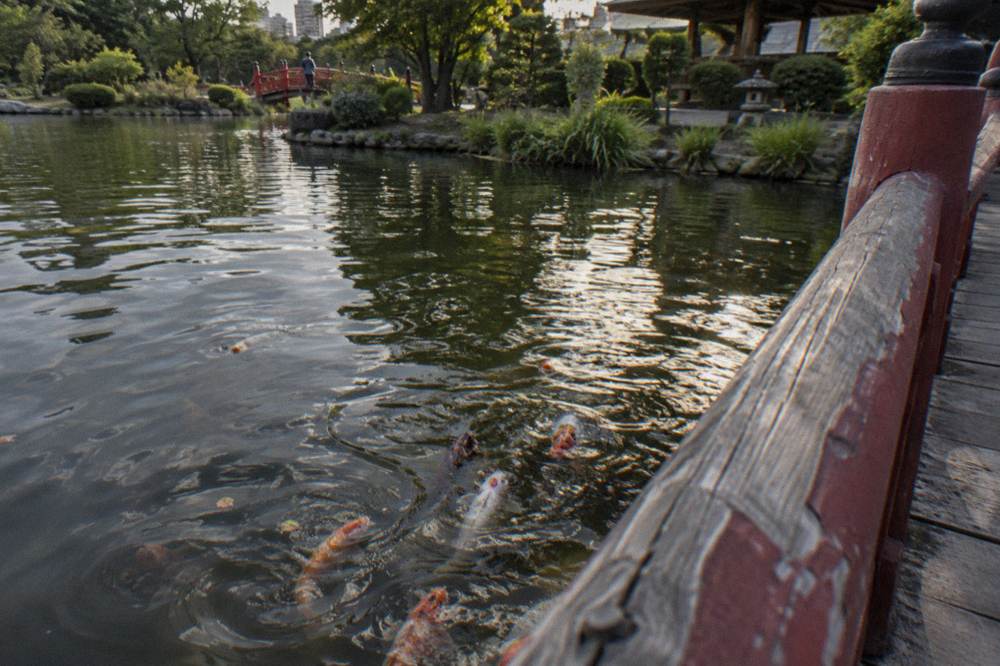
This is the free-outside, paid-inside pattern that recurs across Buenos Aires, and the garden is a clean example. Caminito is free to walk while the Boca museum and the stadium experience in La Boca are paid; Tigre's Puerto de Frutos is free to browse while the trains and boats are paid. Here the split is even simpler: everything you can see without passing the gate is free, everything the gate encloses is inside the ticket, and a few things inside the gate cost more than the ticket.
The two facts always belong in the same sentence. The lakes of Parque Tres de Febrero are free to walk around; the paddle boats on them are a paid rental. The garden's plantings, bridges and pond are inside your admission; the restaurant and the tea service inside are separate businesses. None of the restaurant figures are published in the city's official listings, so no amount is stated here, only the fact that it is a paid stop.
Budget-wise, the honest summary is that the garden is a one-ticket attraction with optional extras, not a cascade of charges. Pay at the gate, and the only further spending is voluntary: food, a workshop, a boat on the lake. Skip the gate, and the free park around it has no booth anywhere.
When Is The Free Option Available?
The free option is not the garden but everything around it, and it is available whenever the parks are open: the Bosques de Palermo, the lakes and the Rosedal have no gate or hours of their own, while the Jardín Botánico Carlos Thays, free for everyone, closes on Mondays. There is no free day for the Jardin Japones itself listed for any visitor category.
This is the section where expectations need to be reset rather than managed. Searches for a free day at the garden return nothing usable, because none exists in official sources: the two-rate ticket applies every day the garden opens. The Wednesday logic that travellers know from the museum sector does not reach here. Wednesday changes entry terms at the city museums, at MAMBA, at PROA and at MALBA, and every one of those schemes is a different rule; none of them touches the garden, whose pricing has no day-of-week dimension at all. Other pages covering the same trip are gathered on Free Things To Do In Buenos Aires.
What the calendar does change is the neighbouring free spaces. The Jardín Botánico Carlos Thays, the other great garden of Palermo, is free for all visitors and closes Mondays, so a Monday itinerary that skips the paid garden and walks the botanical collection needs a different plan. The Reserva Ecológica Costanera Sur, further south on the waterfront, is free for everyone, open Tuesday to Sunday and holidays, and runs its summer schedule, 8:00 to 19:00, from November through March, which covers the whole current season.
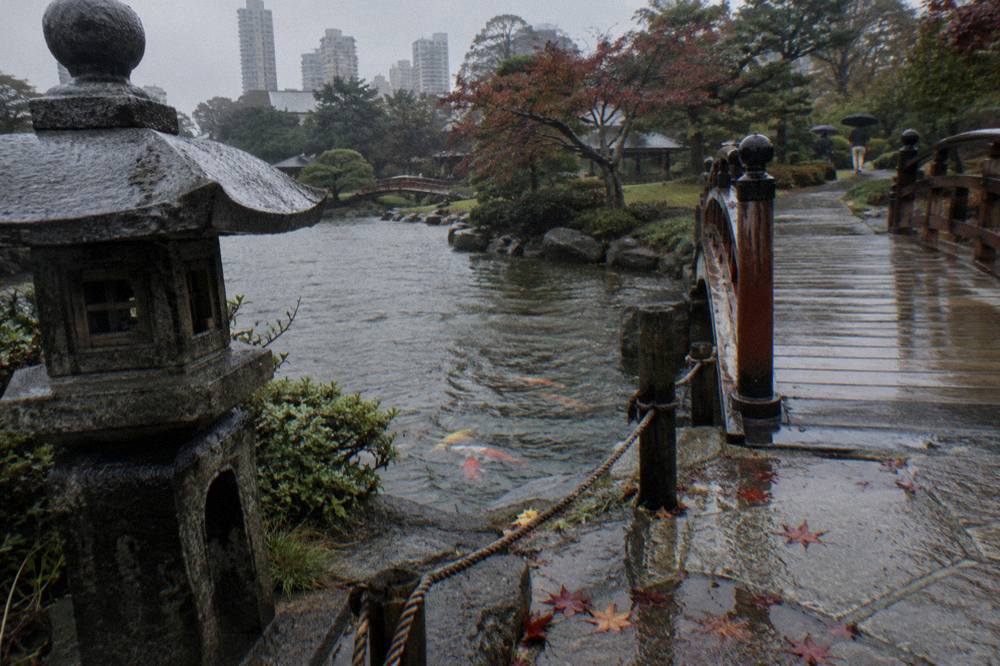
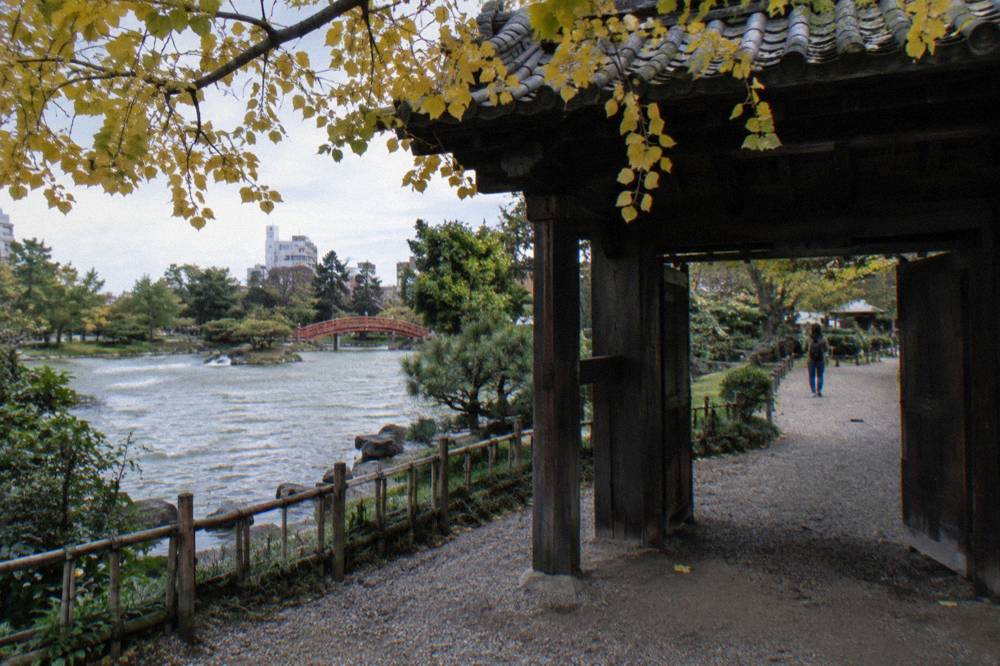
Season matters to the paid garden too, but not to its price. The garden is at its most photographed in spring blossom and in autumn colour, and the park around it shifts with the same cycle. None of that changes the ticket, and none of it gates the free lawns. A visitor who times a Palermo day for the trees gets the colour either way; the question is only whether the Japanese landscaping specifically is worth the ARS 24,000 on that particular day.
The city's own tourism pages track the free events calendar, and the standout for museum lovers is the annual November night when museums open free of charge, Noche de los Museos, an evening-to-early-hours event across hundreds of venues. It has nothing to do with the garden, but it is the strongest free-culture counterweight in the same season, and worth planning around if the garden ticket has already strained a budget.
Where Does The Free Visit Start?
The free visit starts at the edges of Parque Tres de Febrero, the open parkland that surrounds the Jardin Japones on all sides: no gate, no ticket, no closing booth, with lawns, lakes, bridges and the Rosedal free to walk all day. From the garden's own entrance area, the free ground begins the moment you step back into the park.
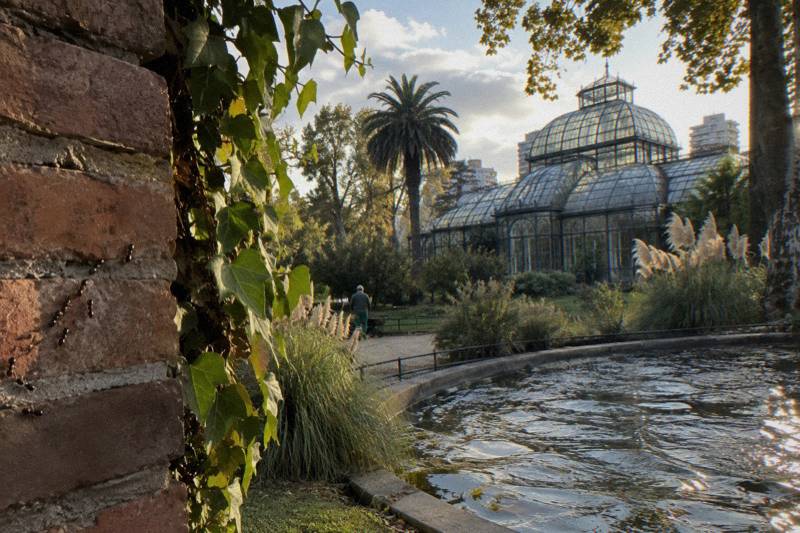
Practically, most visitors arrive in Palermo by way of Avenida Santa Fe, and the Jardín Botánico Carlos Thays fronts that avenue. The botanical garden is the natural free first stop: free for everyone, closed Mondays, and a collection in its own right rather than a consolation prize. Walking onward into the Bosques de Palermo, the landscape opens into the lakes and lawns of Parque Tres de Febrero, and the Jardin Japones sits within that green stretch as the one enclosed, paid space.
The mental map that works is a free park containing a paid room, with a second free garden on the avenue behind you. Plan the day around that shape and the ticket becomes a choice rather than a surprise. Visitors who care about Japanese garden design pay and go in; visitors who care about a long free walk under the trees keep to the park and lose almost nothing of the skyline, the lakes or the afternoon light.
The Floralis Genérica, the great steel flower sculpture that opens and closes with the sun, is another free open-space landmark in Recoleta's United Nations Plaza, a short ride from Palermo and free to see at any hour. Chaining it with the Palermo parks makes a full free day of gardens and green icons, with the Jardin Japones as the single optional paid insert.
Which Free Walking Tours Cover This?
No free walking tour on this directory runs inside the Jardin Japones or makes it a stop; the Palermo walks stay in the parks and streets around it. The closest matches are the Palermo, Parks And Costanera Sur walks on GuruWalk, including the Palermo Parks walk meeting at the Jardín Botánico entrance, and the Palermo Soho Street Art walk meeting at Plaza Serrano, all pay what you want.
GuruWalk
Most walks here, run by independent guides
Pay what you want
freetour.com
A smaller set, mostly Spanish-led
Pay what you want
The walks are specific about meeting points, and that is the honest way to answer this. Palermo's green spaces and its street art are covered by guides who know the neighbourhood; the paid garden is not on any route, and no tour here claims it is. The Palermo Parks and Green Spaces walk, 4.91 out of 5 across 53 GuruWalk reviews, runs 2 hours in English from the Jardín Botánico entrance on Avenida Santa Fe, which places its starting point a short walk from the Jardin Japones gate. The Palermo Soho Street Art Tour, 4.91 out of 5 across 161 GuruWalk reviews, meets at Plaza Serrano and covers the murals of Palermo Soho over 2 hours 30 minutes in English and Spanish.
Neither walk enters the garden, and that matters for budgeting: a free tour plus a garden ticket is a mixed day, not a bundled one. The walks pair naturally with the free parts of the park instead, which is exactly what their meeting points suggest.
Downtown, where most visitors sleep, the free options are broader and better reviewed. The Short City Center History Walk by WalkBa Tours, 4.91 out of 5 across 621 GuruWalk reviews, runs 1 hour 45 minutes in English from the Congress Monument in Plaza del Congreso, a tight, fact-heavy loop for visitors with limited time. It is the natural complement to the longer downtown walks and a good fit for the morning before an afternoon in Palermo.
Beyond Palermo and the centre, the freetour.com platform also lists free walks in Buenos Aires, including a San Telmo Market walk rated 9.6 out of 10 across the reviews shown on its freetour.com listing, meeting at the Iglesia de San Ignacio. Those listings have their own directory page on this site, but they widen the free-walk picture for Spanish-speaking visitors. GuruWalk remains the platform behind most of the city's 55 listed free walks, each run by an independent local guide on pay-what-you-want terms, and this site is not affiliated with either platform: it simply tracks what they list and what the guides actually offer.
For the garden question specifically, the practical pairing is a morning free walk downtown, an afternoon free wander through the Bosques de Palermo and the Jardín Botánico, and the Jardin Japones as a paid insert only if the landscaping is a priority. The walk, 3 hours from the Biblioteca del Congreso, is the anchor most first-time visitors choose for the morning half of exactly that day.
Mistakes That Trip People Up At The Japanese Garden
The recurring mistakes are assuming the garden is free because the parks around it are, assuming a free Wednesday exists because the museums have one, and assuming the resident rate applies to anyone. The Jardin Japones is paid for all, has no free day listed, and splits its price strictly between Argentine residents and everyone else.
The first mistake is the free-park halo. Because the Bosques de Palermo, the lakes and the botanical garden are all free, many visitors assume the whole green complex is. It is not, and the gate is real. Checking the two-rate ticket before travelling saves the surprise.
The second is importing the Wednesday logic. Buenos Aires genuinely has free and half-price Wednesdays, but each belongs to a specific museum: MAMBA free for all on Wednesday and the last Sunday of the month, PROA free for all on Wednesday, MALBA half price on Wednesday, and the city museums free on Wednesday for Argentine residents with DNI only. None of that reaches the garden, whose price is the same every open day. Merging the regimes is the classic error.
The third is the DNI assumption. Tourists sometimes read a resident rate and assume a student card or a foreign ID qualifies. The resident rate is for Argentine residents; the visitor rate is what a foreign passport holder pays, in November 2026, ARS 24,000. The fourth mistake is planning a Monday botanical garden walk: the Jardín Botánico closes Mondays, so the free half of the pairing needs another day.
The last mistake is skipping Palermo's free layer entirely once the ticket is known. The parks, the lakes, the Rosedal and the botanical garden are not a poor substitute; they are the majority of the neighbourhood's green appeal, and they cost nothing.
Common Questions On This Topic
Is The Japanese Garden In Buenos Aires Free?
No. The Jardin Japones is a paid attraction: ARS 24,000 for non-resident visitors and ARS 8,000 for Argentine residents. No free day for foreign visitors is listed. The free alternatives are the surrounding Parque Tres de Febrero, the Bosques de Palermo and the free Jardín Botánico Carlos Thays nearby.
How Much Is The Japanese Garden For Tourists?
Foreign visitors pay ARS 24,000, in November 2026, against ARS 8,000 for Argentine residents. The gap is one of the steepest resident discounts among the city's paid attractions. Prices in pesos move often, so confirm the current figure on the garden's own page before travelling.
Is There A Free Day At The Japanese Garden?
None is listed for any visitor category. The garden's two-rate ticket applies on every open day, and the Wednesday free-entry schemes that exist at MAMBA, PROA and the city museums do not extend to it. MALBA's Wednesday is half price rather than free, and none of these schemes touch the garden.
What Free Parks Are Near The Japanese Garden?
Parque Tres de Febrero surrounds the garden with free lawns, lakes and bridges, and the Jardín Botánico Carlos Thays is free for everyone a short walk away on Avenida Santa Fe. The botanical garden closes Mondays. Paddle boats on the park lakes are a paid rental, the one common extra cost in the free park.
Do Any Free Walking Tours Include The Japanese Garden?
No walk on this directory enters the garden or lists it as a stop. The Palermo Parks and Green Spaces walk on GuruWalk meets at the Jardín Botánico entrance, 2 hours in English, and the Palermo Soho Street Art Tour meets at Plaza Serrano. Both are pay what you want and stay in the free streets and parks around the garden.
Is The Botanical Garden Free If The Japanese Garden Is Not?
Yes. The Jardín Botánico Carlos Thays is free for all visitors, unlike its paid neighbour, and it closes Mondays. It fronts Avenida Santa Fe and works as the free first stop of a Palermo garden afternoon, with the Bosques de Palermo extending the walk at no cost beyond the optional Jardin Japones ticket.